Warm potato salad
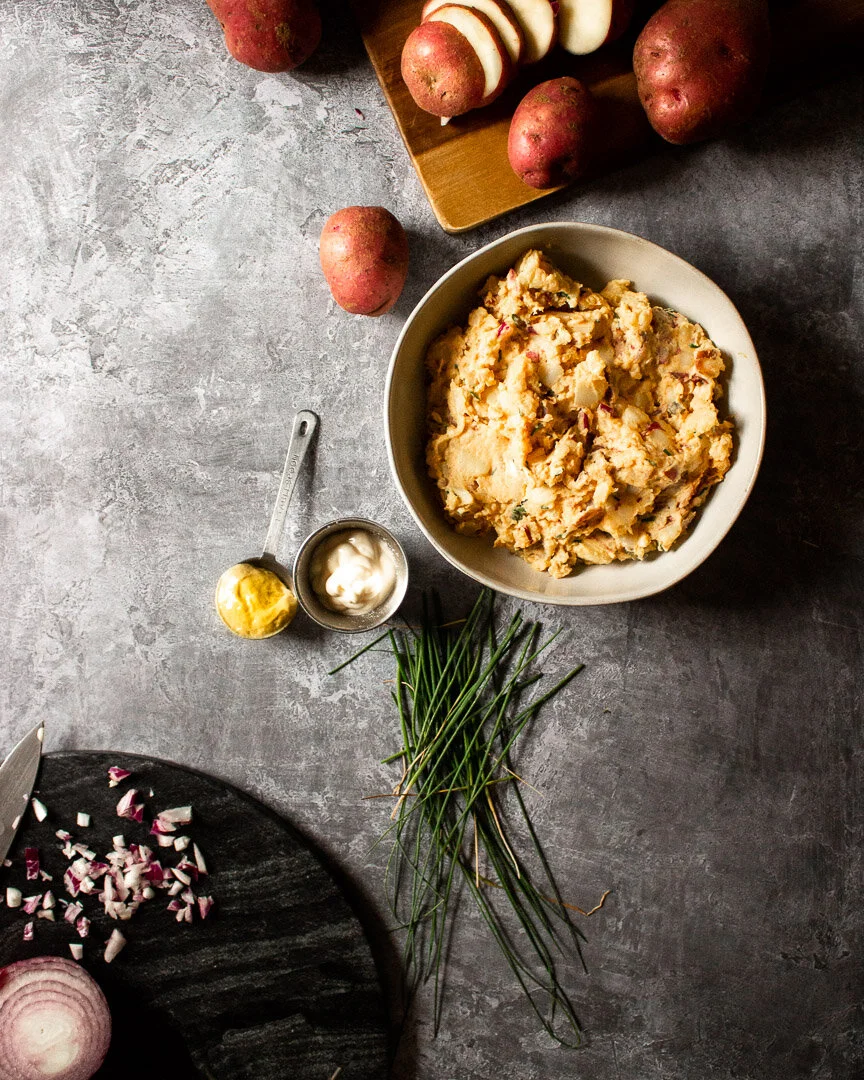
Potato salad might be the perfect transitional food: It’s reminiscent of the BBQs and long summer days that we’re leaving behind, but as we head towards fall, what’s more comforting than a bowl of starchy goodness?

Phew. I am in the thick of this motherhood in a pandemic thing, y’all. (While also trying to be okay with what we have [in-person school half of the time; outdoor, distanced playdates], and what we don’t [travel, grandparents without preplanning, sports, activities]. I was about to actually start this blog post asking, “from where is our worth derived?” And then I said to myself: GET A GRIP BECCA, THIS IS JUST A FUCKING FOOD BLOG.
One thing I’m really missing, and I think we can all relate to this somewhat, is that sense of having discreet portions of the day. I blame the pandemic, the world being both literally and figuratively on fire, and being home all the time, but having a 5.5 month old baby who is, thus far, schedule resistant, also doesn’t help.
Whatever the cause, I miss those few downbeat moments every day where you could switch from one mode to the next. Now I feel like I’m never able to focus on one thing completely. I can’t just test a recipe or take some photos. Instead, I’m doing that while comforting a crying baby and finding a very specific episode of Paw Patrol on the DVR and getting some water and searching for a missing Lego and nursing and and and.
On the flip side, I find myself not tuning in to my kids entirely either, which makes me really upset with myself and this fucking situation we’re in. I think that fear, anger, resentment, and frustration makes it hard for me to find the bandwidth for a really involved pretend game or art project or science experiment. But that sucks for my kids because they aren’t responsible for the pandemic. But I’m also human and I can’t be the perfect mom all day, every day. * PRIMAL SCREEEEAAAAAMMMMM *
But anyway, time marches on and suddenly summer has turned into fall. I don’t know what we did with the warm months. Did they even happen? Who knows.
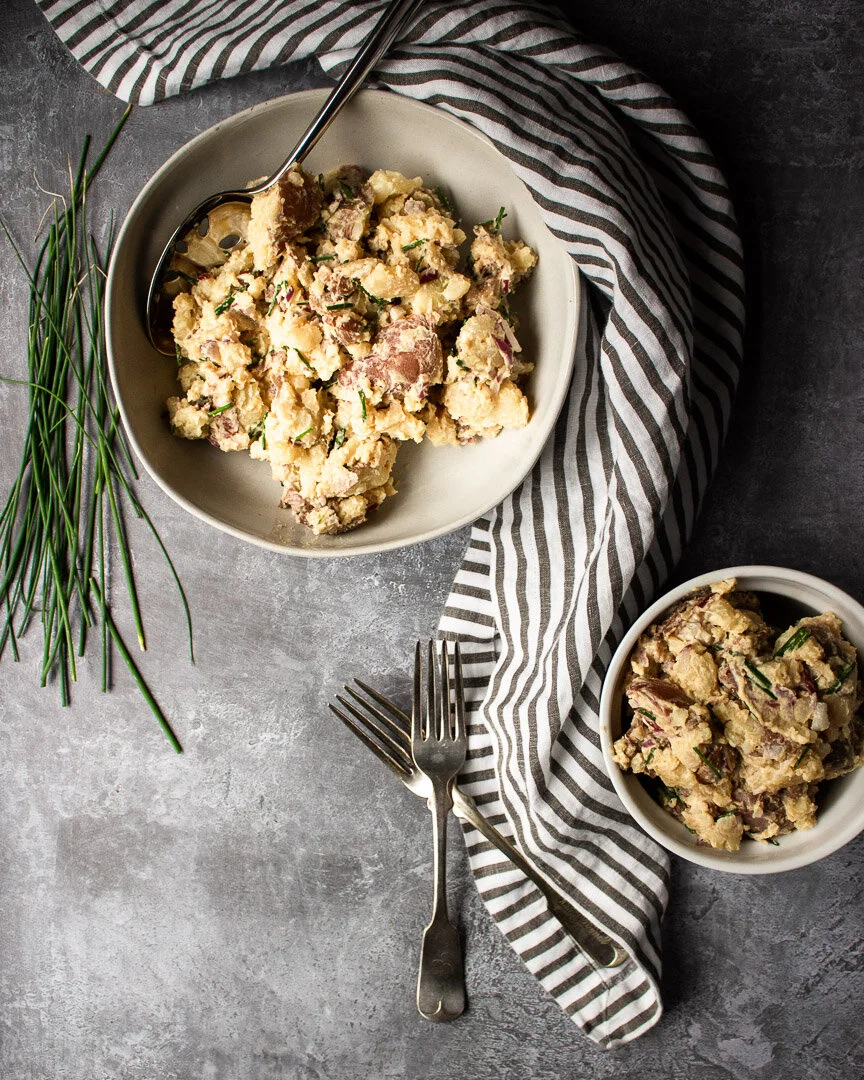
We did celebrate summer produce thanks to our prolific cucumber, zucchini, and basil plants AND our favorite farm stand. Now that fall is bearing down on us, there’s nothing like a meal to mark the changing of the seasons and this potato salad is the culinary equivalent of a light jacket: A nod to both warm and cold, casual and cozy.
While potato salad might seem relegated to side-dishery, I topped this with a runny egg for an unexpectedly fab breakfast. Try it!
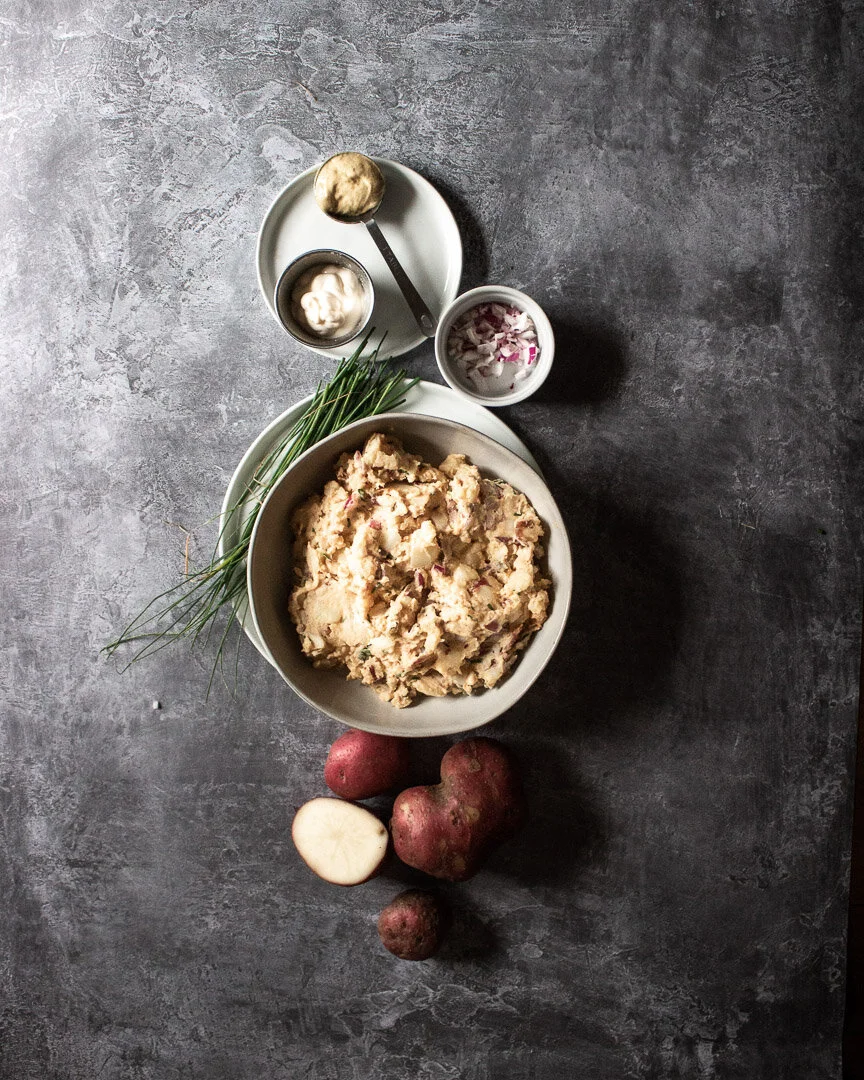
Warm potato salad
Time: About 15-20 minutes, mostly active
Yield: about 3-3.5 cups of salad
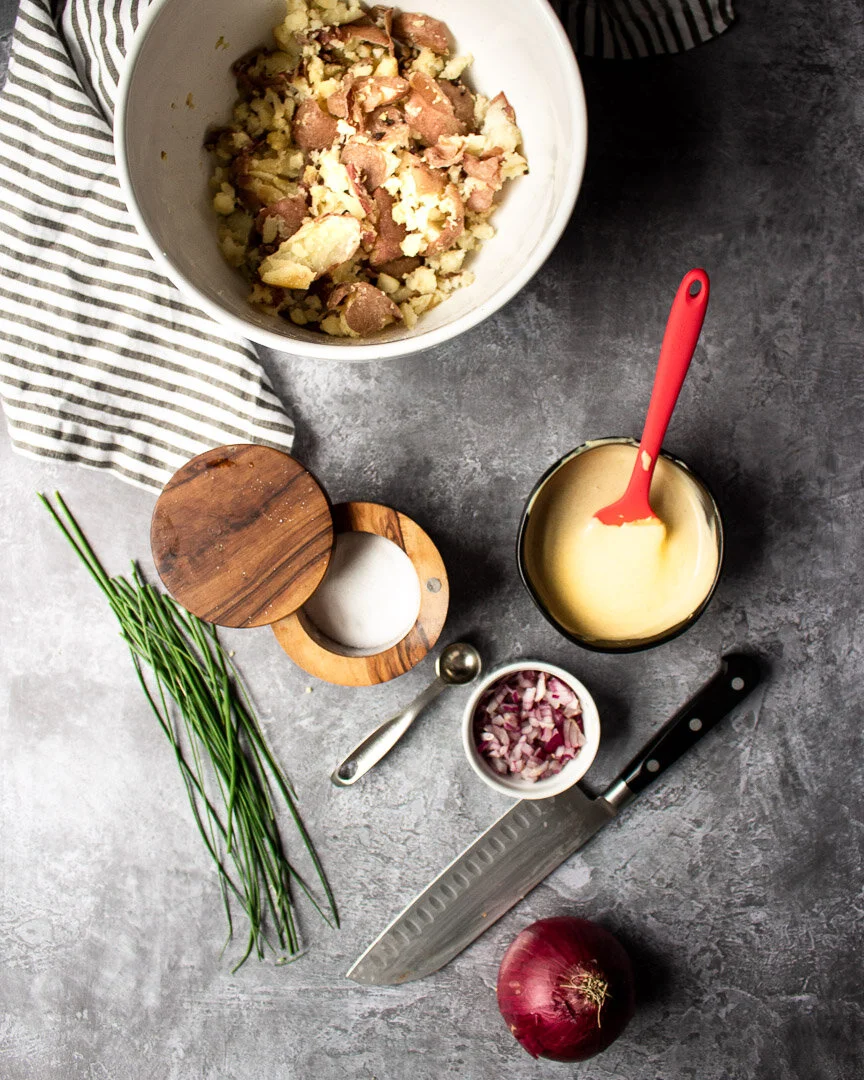
1½ lbs small potatoes (new, fingerling, red, etc; cut any larger ones so that most pieces are about the same size)
¼ cup mayonnaise or Greek yogurt
3 Tbsp dijon mustard
¼ cup chopped red onion (about 1 thick slice from a medium or small onion)
2 Tbsp finely chopped chives
1/4-1/2 tsp kosher salt
¼ tsp smoked paprika
Dash of red wine vinegar or 1 tsp of chopped capers
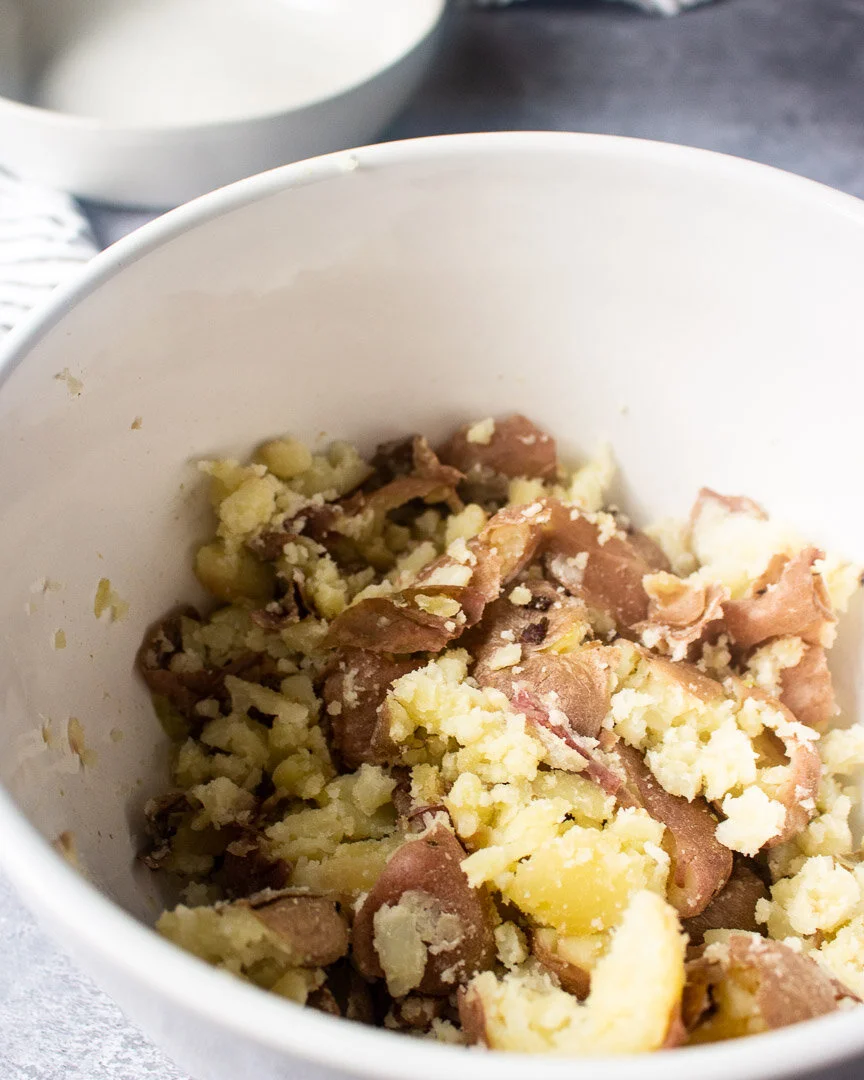
Microwave the washed potatoes in a glass bowl covered with plastic wrap on high for 10 minutes. Or cover the potatoes with cold water until they’re just submerged. Heat over a high flame until boiling. Boil, lowering the flame slightly to avoid the water boiling over, until fork tender, about 12-14 minutes.
While the potatoes are cooking, combine the rest of the ingredients in a large bowl and mix well.
Once the potatoes are fork tender, add them to the mixture and stir to combine. Taste and adjust seasoning as needed.
Pickled veggie pasta salad
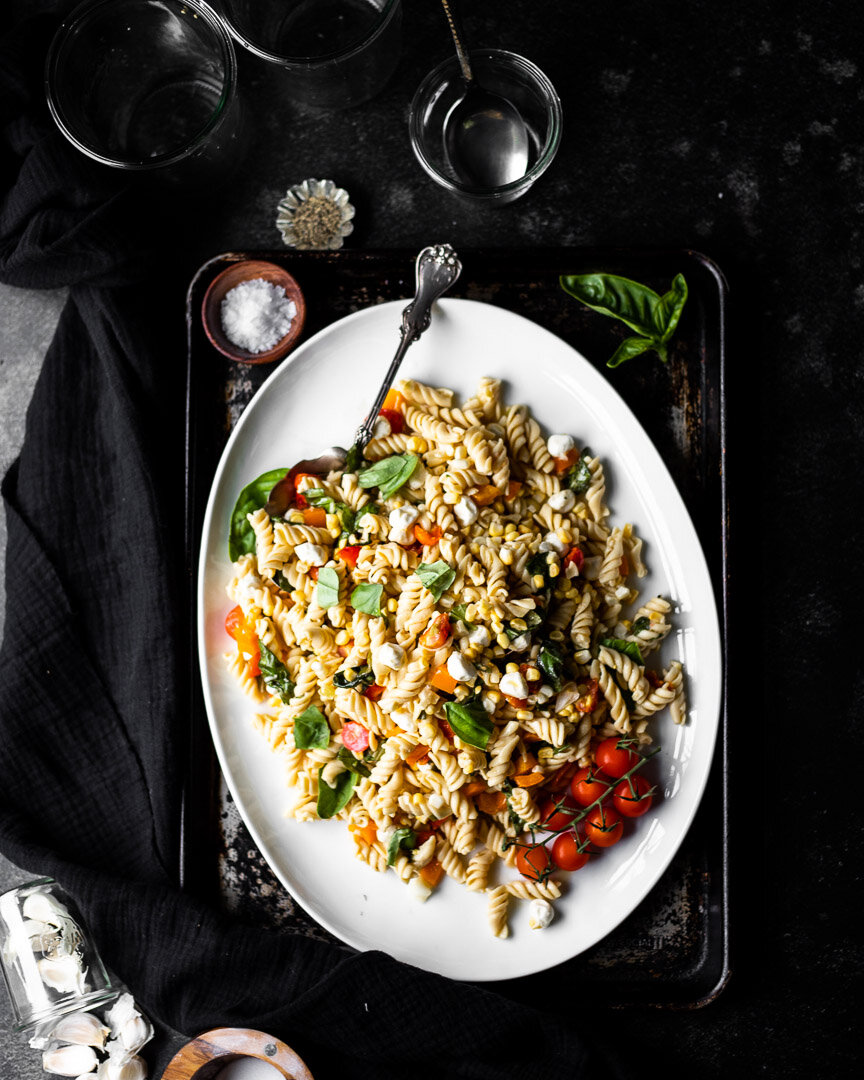
This pasta salad requires a tiny bit of forethought so that you can let the veggies pickle for a few hours, but it’s well worth the effort for a crowd-pleasing, tangy and bright salad that complements any other BBQ dishes. #meandthemoose #pastasalad #pastarecipes #summerbbq #pickles #pickledveggies
This is my platonic ideal of pasta salad: Tangy, bright, and crunchy, but also a little creamy and, frankly, oily. You can’t help but smell a smoky grill, hear kids laughing, and feel the sun in your face with this salad on your plate.
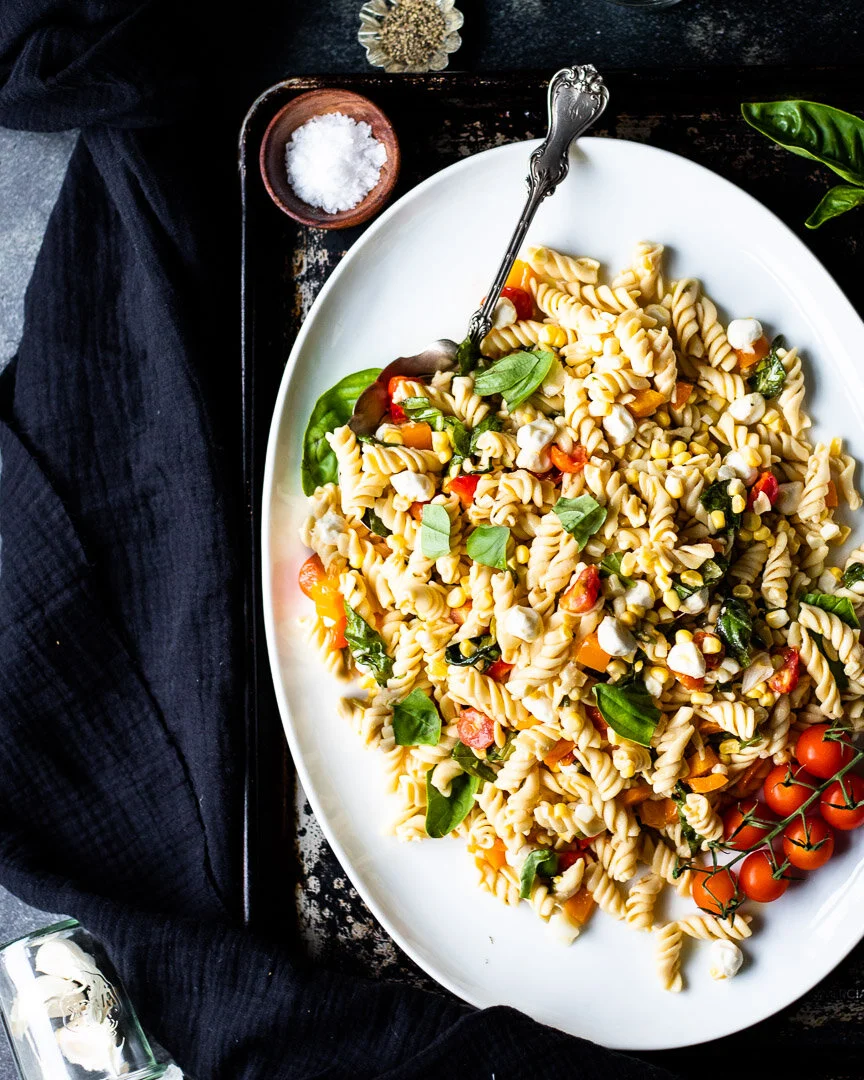
This pasta salad requires a tiny bit of forethought so that you can let the veggies pickle for a few hours, but it’s well worth the effort for a crowd-pleasing, tangy and bright salad that complements any other BBQ dishes. #meandthemoose #pastasalad #pastarecipes #summerbbq #pickles #pickledveggies
So, pasta salad is often an underwhelming affair. It feels necessary at BBQs and is easy to produce in huge quantities. And sans eggs or mayo, it keeps in the sun for hours without risking a side of salmonella. But what a waste when it’s totally boring!
This recipe uses a huge quantity of quick-pickled seasonal vegetables and aromatics, which takes a little pre-planning, but is very worth it. My kid also happens to love pickles, which is a pretty good way to get him to eat veggies.
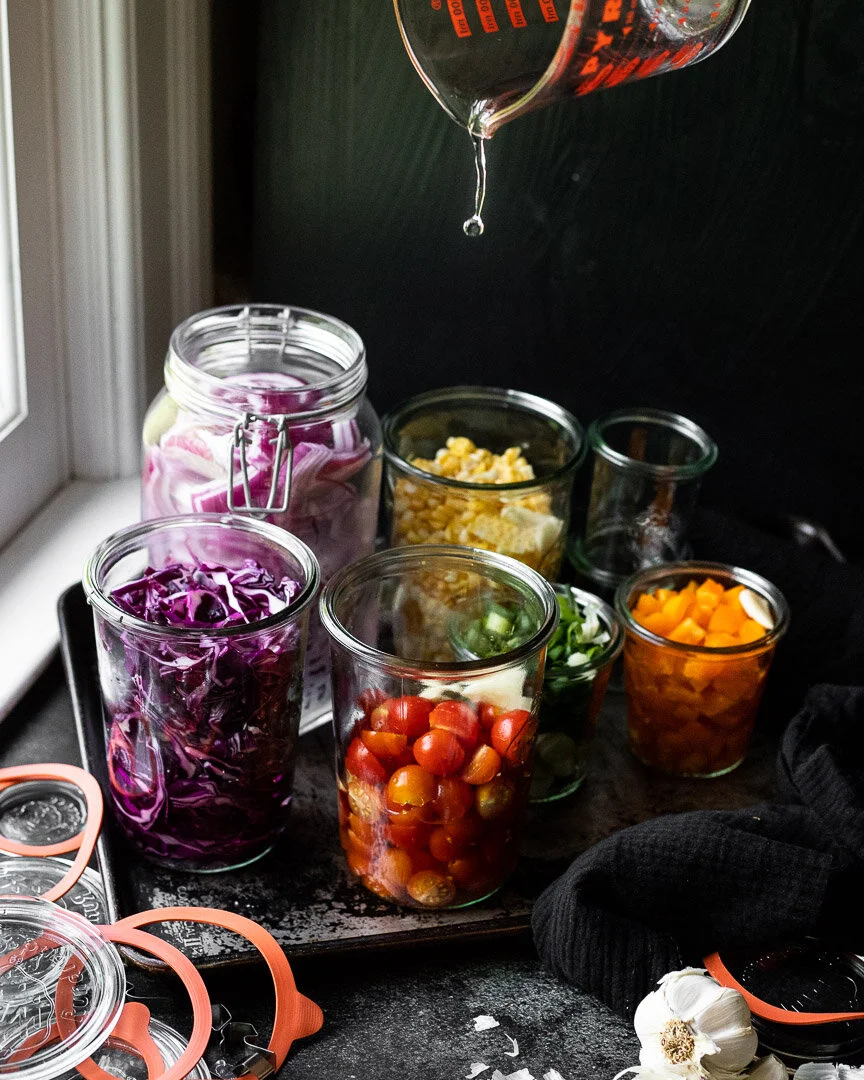
This pasta salad requires a tiny bit of forethought so that you can let the veggies pickle for a few hours, but it’s well worth the effort for a crowd-pleasing, tangy and bright salad that complements any other BBQ dishes. #meandthemoose #pastasalad #pastarecipes #summerbbq #pickles #pickledveggies
The recipe I’ve developed here is best when left overnight, but the veggies can be eaten after about 3 hours and definitely taste pickled. Leaving them overnight helps the garlic to mellow, which can be considered a kindness to your guests, no? But also feel free to omit the garlic if you must.
And while I haven’t included anything but the pasta, dressing, and veggies in this recipe, you can customize this dish in whatever way suits your family. I make this for the three of us with mozzarella balls or feta. I’ve also thought about searing some salmon and flaking it in there or just opening a can of tuna and dumping that in. Also, the pickled veggies remind me of gardiniera, so I’m sure a salami or other Italian cured meat would be amazing in there. Experiment! Go crazy!
This pasta salad requires a tiny bit of forethought so that you can let the veggies pickle for a few hours, but it’s well worth the effort for a crowd-pleasing, tangy and bright salad that complements any other BBQ dishes. #meandthemoose #pastasalad #pastarecipes #summerbbq #pickles #pickledveggies
A couple of notes:
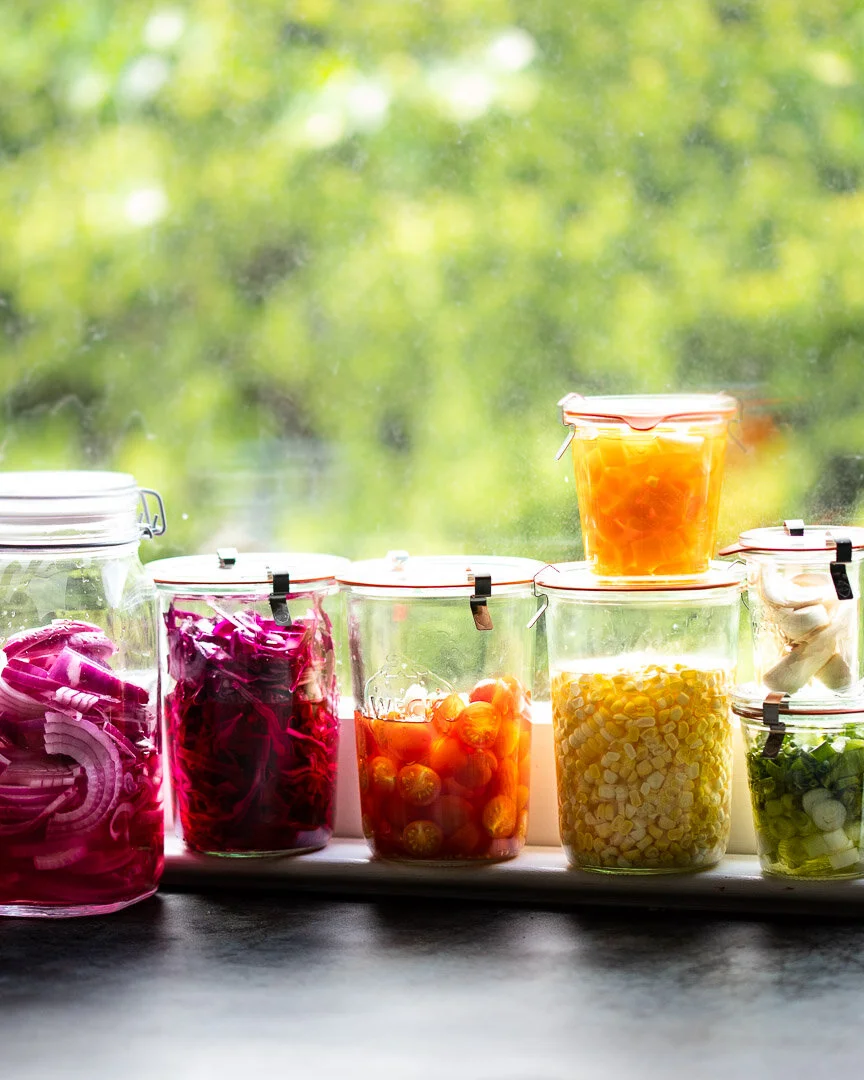
I’ve made this salad by putting all of the veggies into one jar and I’ve made them by separating the different veggies into their own jars. If you do the veggies separately, you might need to increase the amount of pickling liquid. Just double or triple the amount of vinegar, sugar, and salt that you mix together and spread it among the different containers.
I opted for scallions because, though I LOVE a pickled red onion, they turn the pickling liquid (and everything else that’s being soaked) a bit pink.
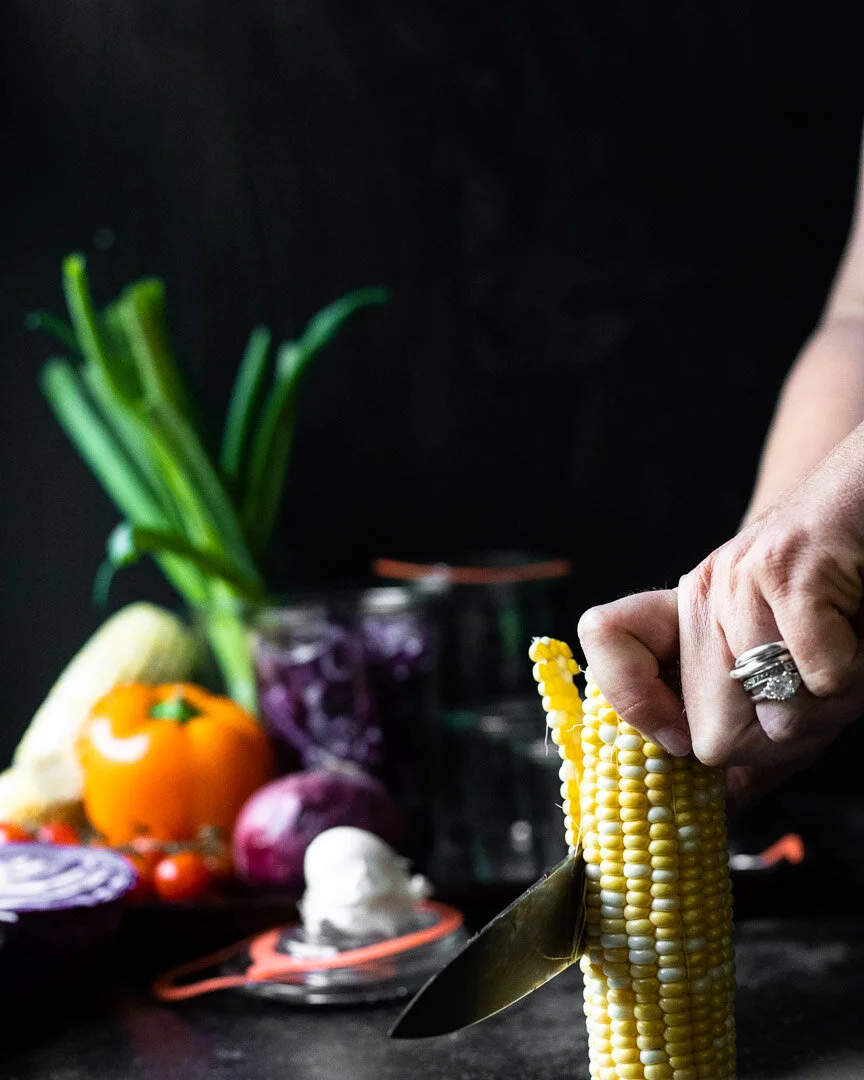
I also used fresh corn because it’s in season and is so sweet and perfect right off of the cob that I can’t imagine not using it. But I’m sure frozen would do the trick too.
I give a range of oil and a range of pasta to use here. Some fancier pasta comes in smaller amounts (12-14 oz is a popular weight), but you can definitely use a whole pound of that’s the amount you have. Obviously, the more pasta you use, the less prominent the veggies will be and the more sauce you’ll need and vice versa.
I’ve also made this with chickpea pasta and, dare I say it, I might PREFER the bean pasta to regular white pasta. Shocking, I know.
This pasta salad requires a tiny bit of forethought so that you can let the veggies pickle for a few hours, but it’s well worth the effort for a crowd-pleasing, tangy and bright salad that complements any other BBQ dishes. #meandthemoose #pastasalad #pastarecipes #summerbbq #pickles #pickledveggies
Pickled veggie pasta salad
Active time: About 30 minutes, mostly spent chopping and mixing
Total time: Anywhere from 3 hours to 1 week, depending on how much you let the pickles sit
Yield: About 9-10 cups of salad
¾ cup white vinegar
1½ Tbsp sugar
¾ tsp salt
3 large cloves garlic, peeled and smashed
½ large bunch scallions (about 4-5 large), trimmed and roughly chopped
1 pint cherry tomatoes, halved
½ large orange bell pepper, roughly chopped
2-3 large ears corn, with kernels removed (or about 1½-2 cups)
12-16 oz dried pasta (depending on the ratio of vegetables to pasta that you prefer)
1/2- 3/4 cup olive oil
2 Tbsp red wine vinegar
½ tsp Dijon mustard
½ tsp kosher salt
¼ tsp fresh pepper
½ tsp dried or 1 tsp fresh oregano, well minced if using fresh
¼- ½ cup fresh basil leaves, torn
For the pickled vegetables:
In a small bowl, combine the vinegar, sugar, and salt and stir until the sugar has dissolved, about 2 minutes. (You won’t hear any more crunching on the bottom of the container.)
In a large container or several smaller containers with a tight fitting lid (see note above about the amount of pickling liquid if making the pickles in separate jars), add the smashed garlic, chopped scallions, and chopped vegetables. Pour in the vinegar mixture, seal the container, and shake a few times.
Place in the refrigerator and leave for 3 hours or up to 1 week.
For the salad:
Cook your pasta according to package directions in well-salted water.
While your pasta cooks, combine the oil, red wine vinegar, dijon mustard, salt, pepper, and oregano in a small container.
Once the pasta is cooked, drain it and add it to a very large bowl. Add half of the olive oil mixture and stir well.
With a large fork or slotted spoon, remove the vegetables from the pickling liquid, transferring as little of the brine as possible (though don’t go crazy). Set aside the garlic cloves and mince the pickled cloves. Add everything to the pasta and stir well.
Add more of the olive oil mixture to taste until you feel that the pasta salad is wet enough.
Mix in and top with the torn basil before serving.
Roasted strawberry and rhubarb butter
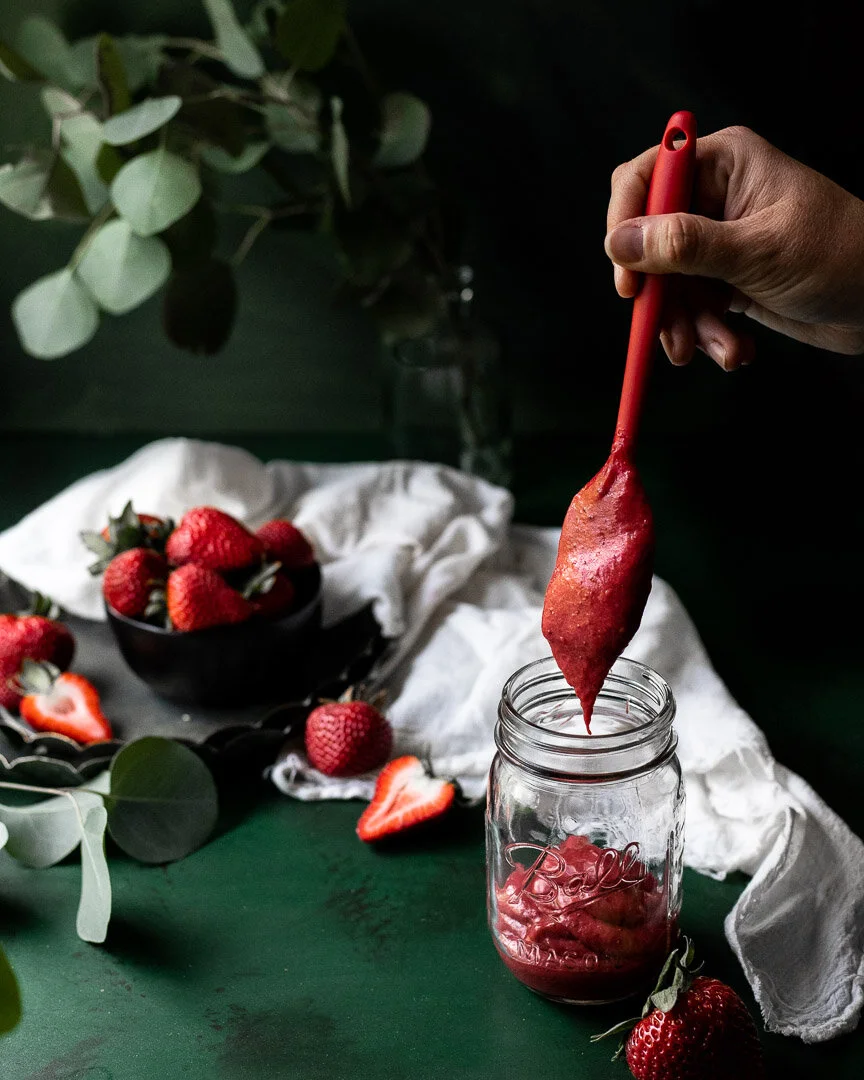
Roughly chop some fruit and toss it in the oven for a spring-y fruit butter that’s naturally sweet, SUPER EASY, and extremely versatile. #meandthemoose #strawberryrhubarb #fruit #fruitbutter #naturallysweet #jam
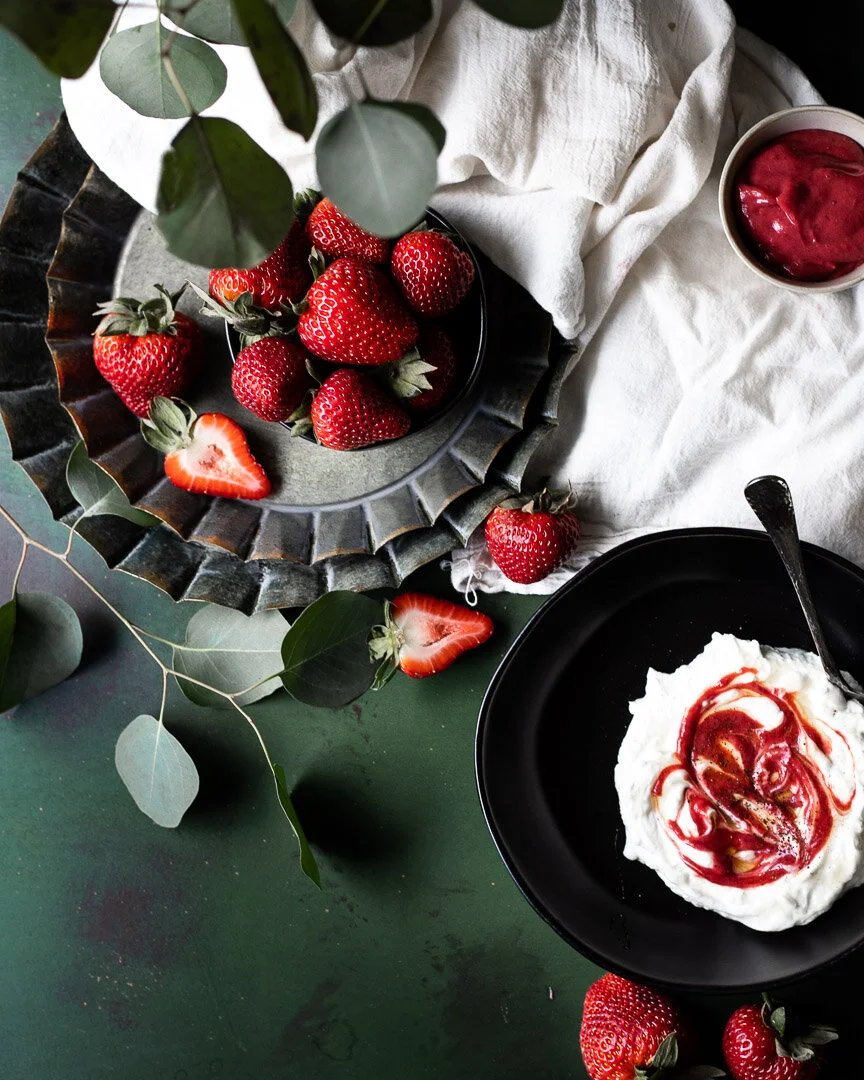
Rhubarb season is here! Turn this tart veg into a thick, spreadable butter to use all day, every day.
Roughly chop some fruit and toss it in the oven for a spring-y fruit butter that’s naturally sweet, SUPER EASY, and extremely versatile. #meandthemoose #strawberryrhubarb #fruit #fruitbutter #naturallysweet #jam
Roughly chop some fruit and toss it in the oven for a spring-y fruit butter that’s naturally sweet, SUPER EASY, and extremely versatile. #meandthemoose #strawberryrhubarb #fruit #fruitbutter #naturallysweet #jam
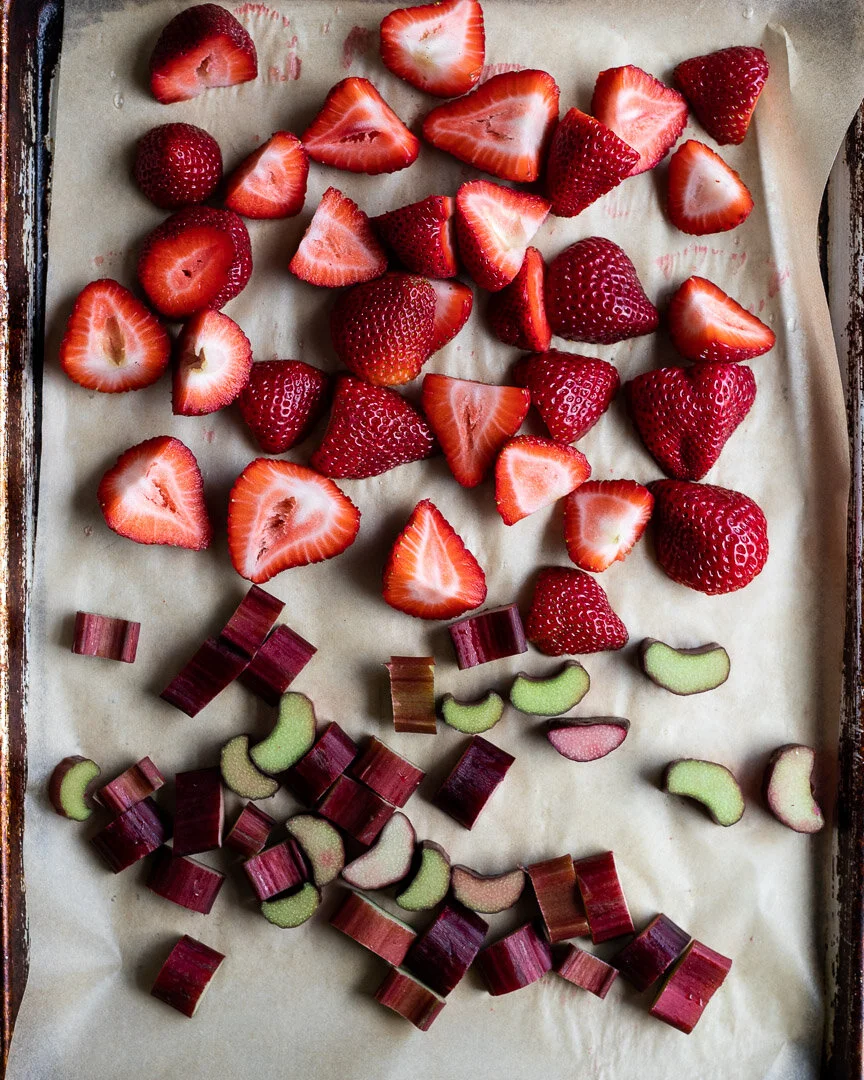
If you’ve searched Instagram recently, it’ll come as no surprise that rhubarb is a very photogenic vegetable. The variations in color lend themselves to ombre-ing and chevron-ing to your heart’s content. But today, we’re keeping it simple by doing neither of those things.
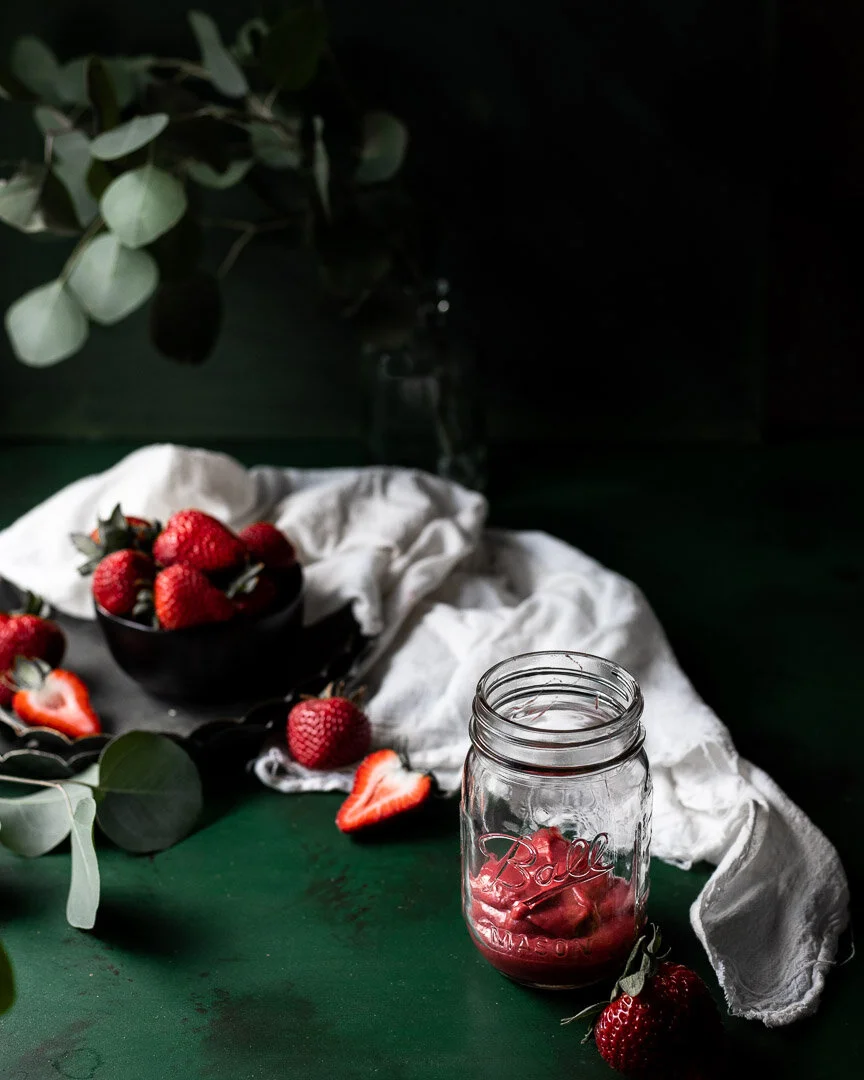
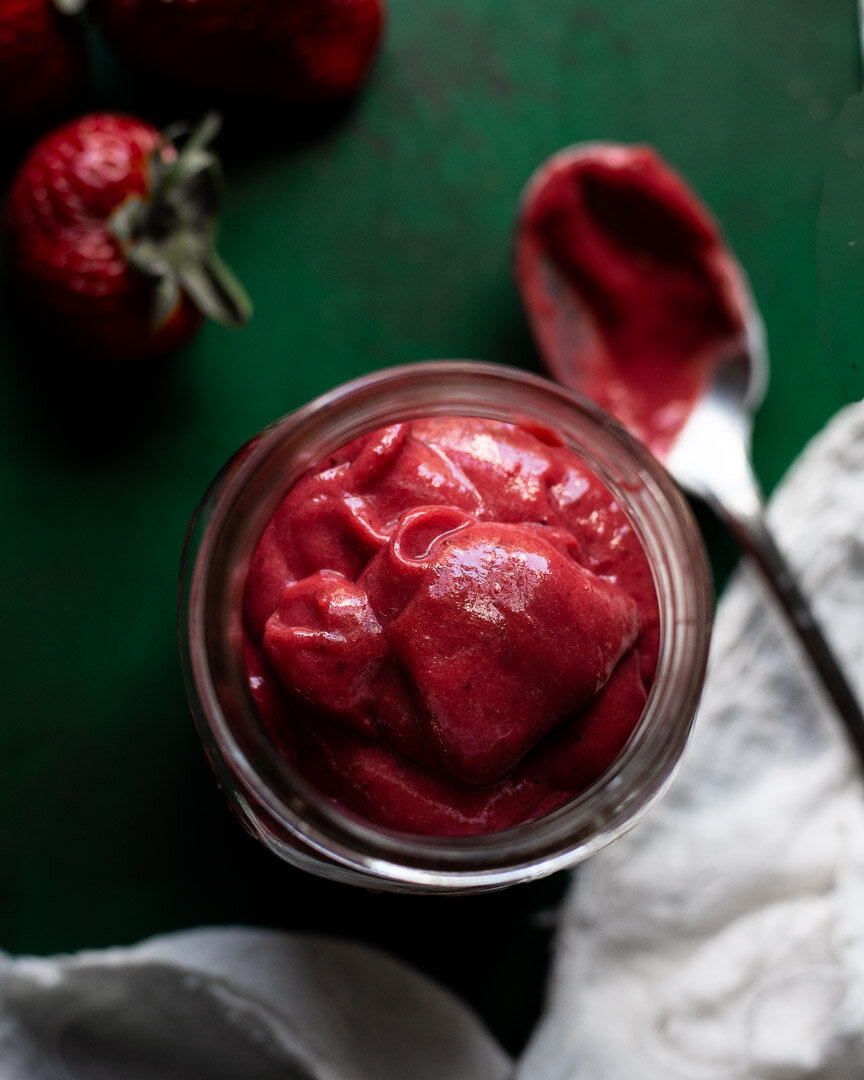
Instead, we’re turning strawberries (fresh or frozen!) and those giant rhubarb stalks you find in the grocery store (or your garden if you’re lucky enough to grow your own) into a butter akin to apple or pumpkin. Because why should fall fruits and vegetables have all the fun?
In early spring, I use frozen berries because it annoys me that strawberry and rhubarb are a perfect combination, but their growing seasons only overlap for a hot minute here in New England. Buuuuut, I found some giant berries in the grocery store recently, so I went for it with the fresh ones a little earlier this year.
Roughly chop some fruit and toss it in the oven for a spring-y fruit butter that’s naturally sweet, SUPER EASY, and extremely versatile. #meandthemoose #strawberryrhubarb #fruit #fruitbutter #naturallysweet #jam
A couple of notes:
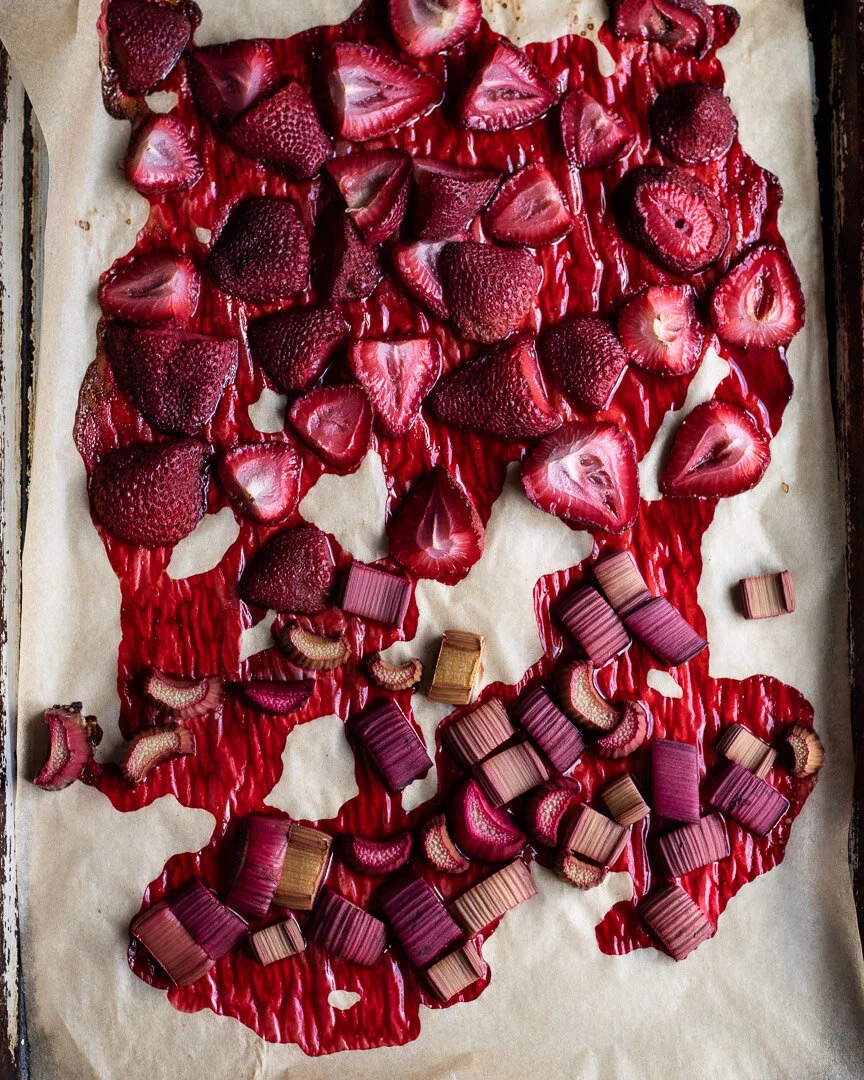
Let the berries and rhubarb cook until the juices start to get a little syrupy. You can test this by sticking a spoon into the hot liquid (DON’T USE YOUR FINGER!!!). If the strawberry juice coats the back of the spoon and doesn’t drip off entirely, you’re about done. Make sure that your berries don’t burn because they can taste bitter.
This is a TART butter because, well, rhubarb is tart and that’s the beauty of it. If you like things a little sweeter, you can add a bit of sugar or use more berries than rhubarb. OR, you can combine the tart butter with sweeter things like cakes, cookies, sweetened yogurt, and whipped cream.
Roughly chop some fruit and toss it in the oven for a spring-y fruit butter that’s naturally sweet, SUPER EASY, and extremely versatile. #meandthemoose #strawberryrhubarb #fruit #fruitbutter #naturallysweet #jam
Roughly chop some fruit and toss it in the oven for a spring-y fruit butter that’s naturally sweet, SUPER EASY, and extremely versatile. #meandthemoose #strawberryrhubarb #fruit #fruitbutter #naturallysweet #jam
Roasted strawberry rhubarb butter
Time: About 1 hour, 45 minutes, about 5 minutes active time
Yield: 12 oz (1½-2 cups)
4 heaping cups strawberries (fresh or frozen)
2 heaping cups chopped fresh rhubarb (about 3 extra extra-large stalks or 6-8 smaller stalks, chopped into 1-inch chunks)
Preheat the oven to 350.
Wash and chop the rhubarb. Combine with the frozen strawberries on a parchment-lined, rimmed baking tray.
Cook for 25-30 minutes, until the fruit is soft, the strawberries have released their juices, and the juice has started to become syrupy (see note above). Watch the berries closely after about 20 minutes to ensure that they don’t burn.
Let the fruit cool completely, about 15 minutes.
Scoop the fruit into your blender. Whatever juice gets onto the spoon is fine, but don’t add any remaining syrup.
Blend until smooth.
Store in the fridge for up to 7 days.