Pumpkin and persimmon butter

Cooking down some canned pumpkin and a few persimmons with maple syrup and spices will make your house instantly smell like the holidays and spice up even the most basic meals. #meandthemoose #pumpkinrecipes #persimmonrecipes #dessert #fruitbutter
Cooking down some canned pumpkin and a few persimmons with maple syrup and spices will make your house instantly smell like the holidays and spice up even the most basic meals.

Cooking down some canned pumpkin and a few persimmons with maple syrup and spices will make your house instantly smell like the holidays and spice up even the most basic meals. #meandthemoose #pumpkinrecipes #persimmonrecipes #dessert #fruitbutter
I’m a sucker for persimmons. I can’t help myself when they arrive in the grocery stores. But I never know what to do with them. I love baking with them, but I’m trying to have fewer baked goodies hanging around in preparation for baked-goodies-hanging-around season. And if I’m going to eat them on their own or in a salad, they need to ripen, which, in my frozen kitchen, takes forever and a day.
This is my grand compromise: A cooked down “butter” that’s thick and slightly sweet that pairs with toast, graham crackers, apple slices, pretzels, Dutch babies, regular babies, cornbread, muffins, oatmeal. etc. One could also use this “butter” as a fruity addition to an autumnal cheesecake or mix it with an ice cream or other custard. My favorite way to use it is mixed with mascarpone and a couple of eggs and then baked with a pie shell for a spin on pumpkin pie.
The best part about this concoction is that you don’t need to ripen the persimmons. You heard me. As long as you use fuyu and NOT HACHIYA*, you’re fine with unripened persimmons. Of course, the more you let them ripen, the better they taste, so it does behoove you to wait at least a little while before making this butter.
*Why not Hachiya, you ask? Well, those are the larger, more ovular persimmons and if you don’t wait until they’re almost completely mushy to eat them, the tannins in the fruit make your mouth feel gluey and dry. It’s awful, trust me.
Anyway, whatever you choose to do with it, you’re only 20-30 minutes away from the endless possibilities, so get to it!

Cooking down some canned pumpkin and a few persimmons with maple syrup and spices will make your house instantly smell like the holidays and spice up even the most basic meals. #meandthemoose #pumpkinrecipes #persimmonrecipes #dessert #fruitbutter
Pumpkin persimmon butter
Time: 25 minutes, mostly active
Yield: 2 cups, depending on how much you cook down the mixture
1 can pumpkin puree
4 fuyu persimmons
1 Tbsp dark brown sugar (light is also fine)
¼ cup maple syrup
½ tsp cinnamon
¼ tsp ground ginger
1/8th tsp ground cloves
1 tsp vanilla extract or vanilla bean paste
1 large pinch of kosher salt
½ cup water
Peel the persimmons and cut into quarters.
Add all ingredients to a blender or food processor and blend until smooth. Transfer to a large pot.
Heat over a medium-low flame until just beginning to bubble. Turn the heat down to low and cook, stirring frequently to prevent burning, until the persimmons totally break down and the mixture has thickened slightly, about 20 minutes.
Cucumber, seaweed, and soba noodle salad
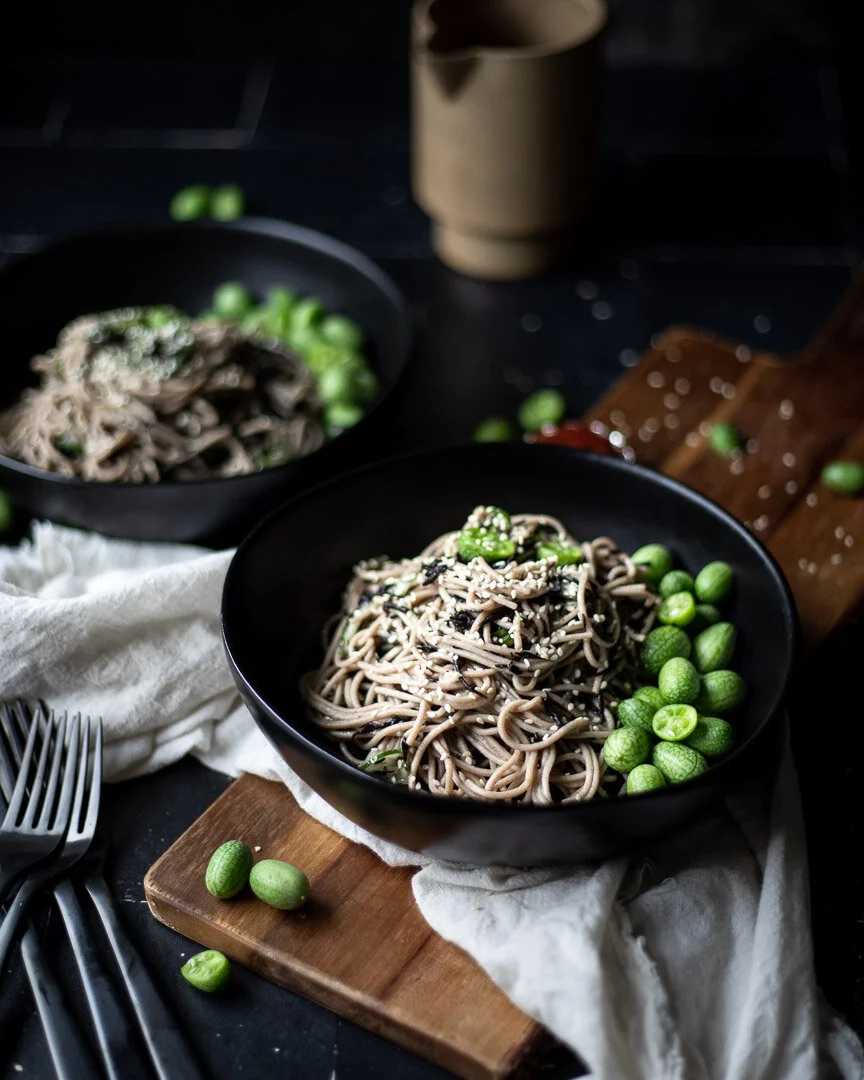
This easy, light salad combines a few ingredients into a subtle, delicious vegan dish that’s ready fast and is a great lunch or dinner option. #meandthemoose #lunch #dinner #recipes #easyrecipes #vegan #vegetarian
Before the well of summer cucumbers runs dry, make this easy, light salad that’s ready in a snap and is, at least in this house, very kid-approved!
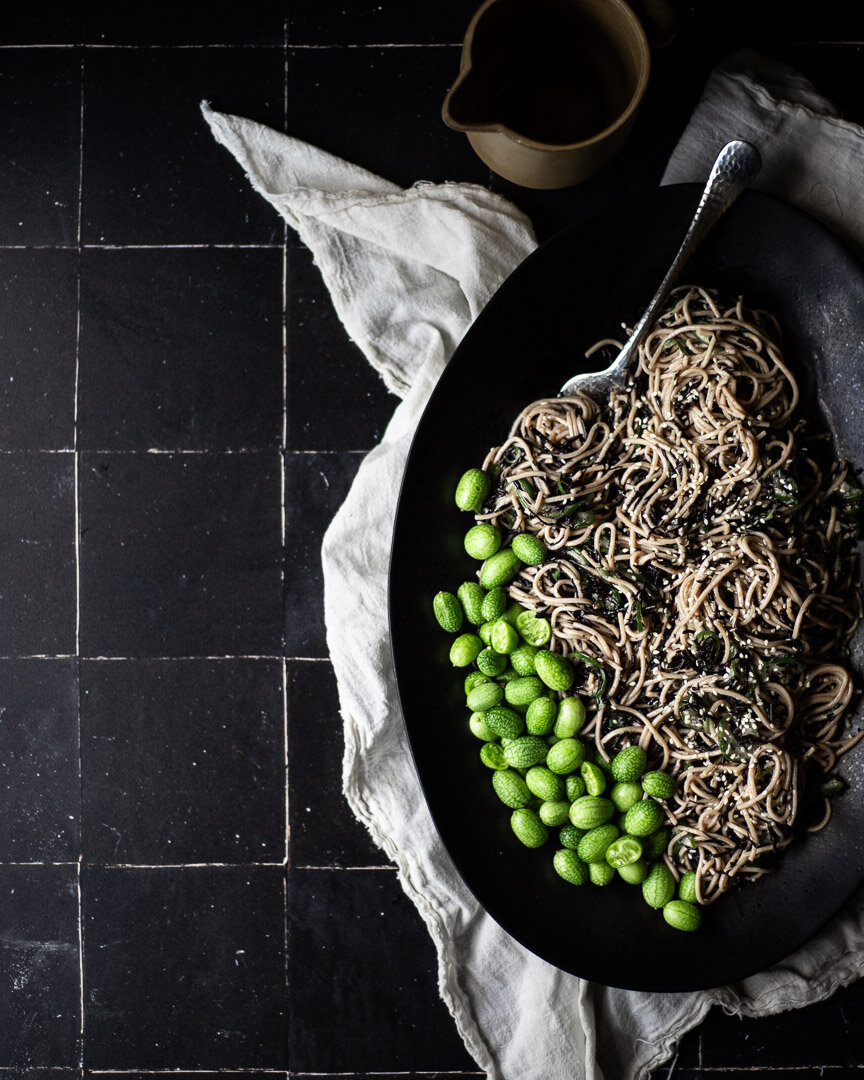
This easy, light salad combines a few ingredients into a subtle, delicious vegan dish that’s ready fast and is a great lunch or dinner option. #meandthemoose #lunch #dinner #recipes #easyrecipes #vegan #vegetarian
We eat a lot of Japanese food in our house, so my love for these ingredients runs deep. I absolutely can’t turn down a seaweed salad. Ditto nutty buckwheat soba noodles. Unlike whole wheat or other whole grain noodles, soba doesn’t have that gummy (unless you WAAAAAY overcook it!) or gritty texture that can plague say, whole what spaghetti, so the flavor of the noodles really shines.
Everything about this salad is subtle. There aren’t any overwhelming flavors and all of the elements are in harmony with each other: A little salty, a little sweet, a little nutty, a little tangy, a little briny, and a little cool. The seaweed adds a salty, funky flavor and a little crunch. The cucumber adds even more crunch and and is a cooler counterpoint to the sauce that’s made of soy, rice vinegar, brown sugar, and sesame oil.
While this is a light salad that we usually eat as a side (though I’ve had it alone for lunch and it’s V satisfying), the soba offer some heft that leaves you feeling pretty full. My 6-year-old loves it because he loves anything with soy sauce and my almost 18-month-old loves it because he would eat noodles all day, every day.
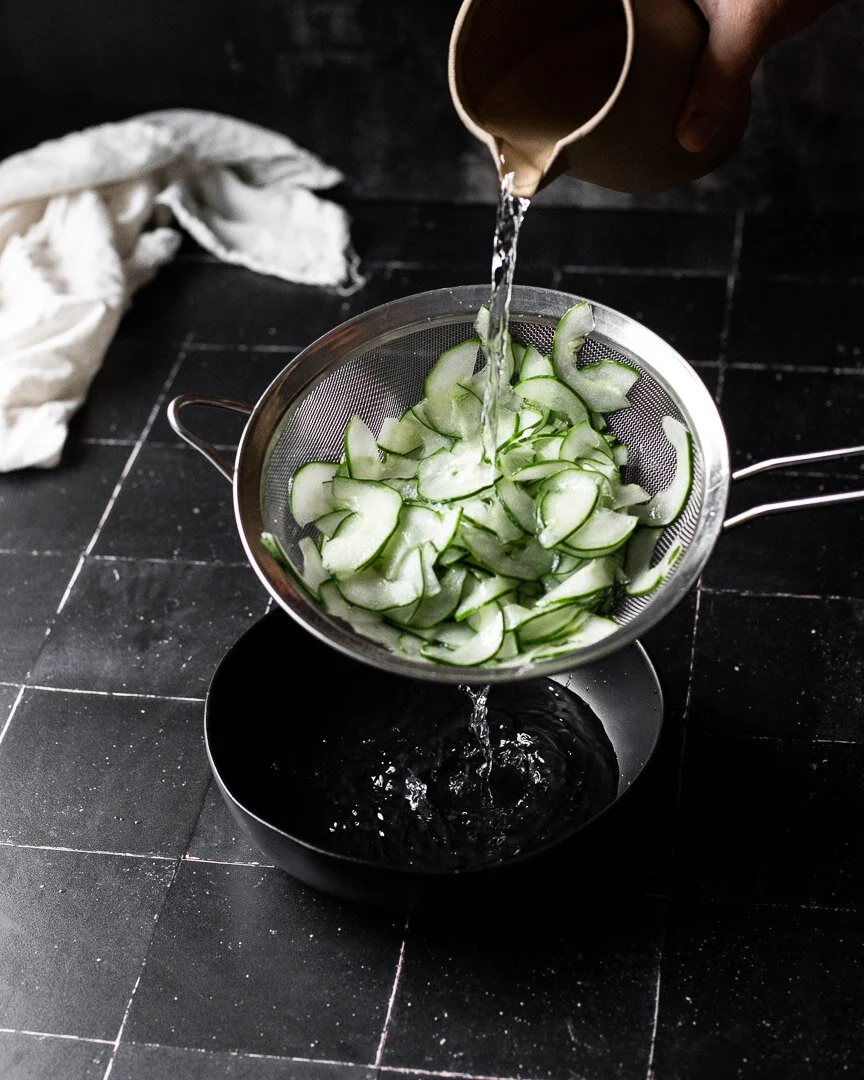
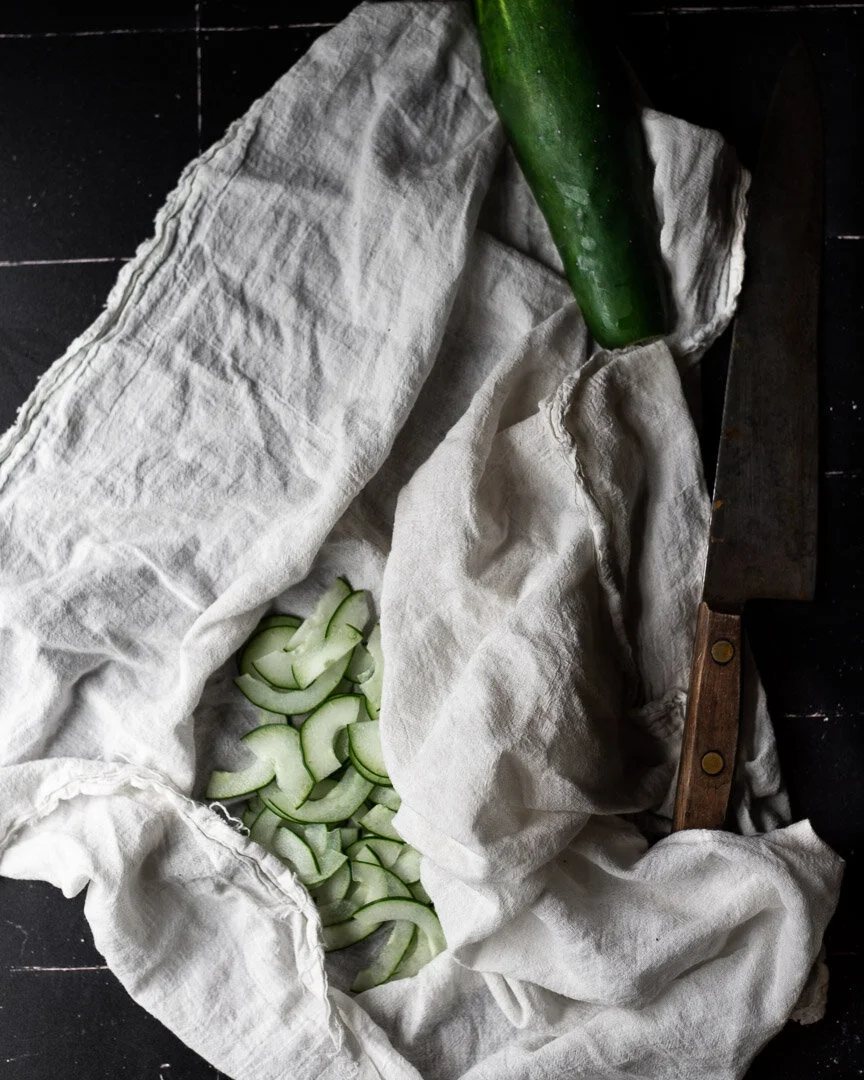
But the real key to this salad is getting rid of the excess water from the cucumbers, noodles, and rehydrated seaweed. It’s a funny recipe because you have to add water to each element before you get rid of it. But the more you squeeze out, the more potent the sauce tastes. It’s worth a little elbow grease!
This easy, light salad combines a few ingredients into a subtle, delicious vegan dish that’s ready fast and is a great lunch or dinner option. #meandthemoose #lunch #dinner #recipes #easyrecipes #vegan #vegetarian
This easy, light salad combines a few ingredients into a subtle, delicious vegan dish that’s ready fast and is a great lunch or dinner option. #meandthemoose #lunch #dinner #recipes #easyrecipes #vegan #vegetarian
A couple of notes:
I used hijiki seaweed in developing this recipe because I love it, but have JUST NOW learned that it naturally contains a really high level of inorganic arsenic, which can be carcinogenic to humans. Whoopsie daisy. Instead, sub in wakame, which doesn’t contain the same levels of arsenic and is prepared roughly the same way—just rehydrate in water while you prep the rest of the salad.
In the US, you can find dried wakame seaweed in Japanese grocery stores, health food stores, or in the all-purpose grocery store (our Whole Foods has it).
Before you add the rice vinegar, check your bottle’s label and see if you have plain rice vinegar or “seasoned” rice vinegar. The “seasoned” variety has some added sugar already, so I decrease the brown sugar a little bit to avoid over-sweetening the sauce. See recipe note for exact changes.
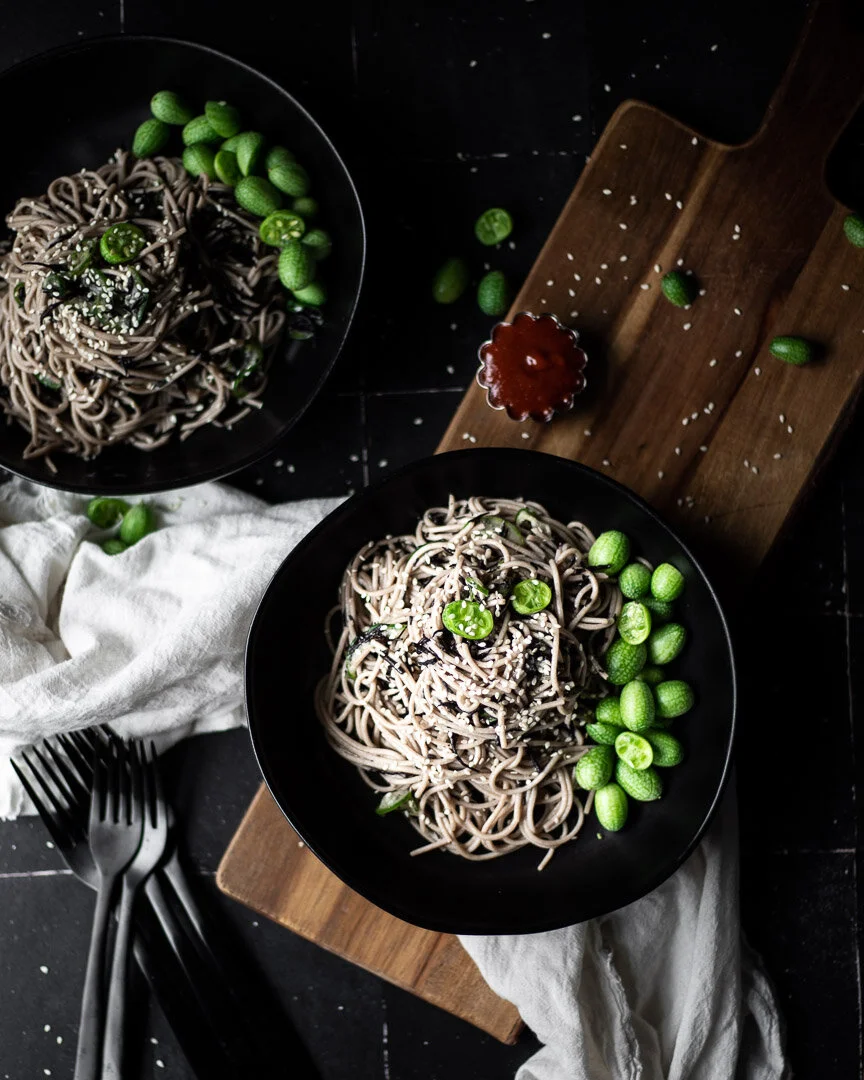
This easy, light salad combines a few ingredients into a subtle, delicious vegan dish that’s ready fast and is a great lunch or dinner option. #meandthemoose #lunch #dinner #recipes #easyrecipes #vegan #vegetarian
Cucumber, seaweed, and soba noodle salad
Time: About 35 minutes
Yield: About 6 cups of salad
6 Tbsp dried seaweed (wakame or hijiki, but see note above!)
2 cups hot water
1 large cucumber, thinly sliced
1 tsp salt
9 oz buckwheat soba noodles (2 bundles)
3-4 Tbsp unseasoned rice vinegar*
1.5 tsp brown sugar*
4 tsp soy sauce
4 tsp sesame oil
2 tsp white or black sesame seeds
*if using “seasoned” rice vinegar, decrease the sugar to 1 tsp
Combine the dried seaweed with 2 cups of your hottest water from the tap (you can use boiling water, but hot water works just fine, in my experience). Set aside.
Slice the cucumber into very thin slices. Using a mandolin is great here, but if you don’t have one, a vegetable peeler also does the trick. Or just practice your knife skills- whatever works!
Place the cucumber slices in a strainer and top with 1 tsp salt. Massage a little with your hands and let sit in the sink to drain while you make the rest of the salad.
Boil the water. When the water boils, add the soba noodles and cook according to the package directions (usually about 5 minutes).
While the noodles cook, make the sauce. Combine the rice vinegar, sugar, soy sauce, and sesame oil in a small container and shake to combine.
When the noodles are cooked, drain very well. I even use a few paper towels to dab up some of the excess water.
Add the noodles to a large bowl and set aside.
Drain the seaweed really well. Again, I use a few paper towels to soak up some of the excess water, but I DO NOT squeeze out the seaweed.
Add the seaweed to the noodles in a large bowl and set aside again.
Rinse the salt off of the cucumbers and drain well. Add the cucumbers to a paper towel, cheesecloth, or dish towel and squeeze to remove as much excess water as possible. Add to the bowl of noodles and seaweed.
Stir the cucumbers, seaweed, and noodles to combine. Top with the sauce and stir well to coat.
Just before serving, top with sesame seeds.
Almond and coconut energy balls
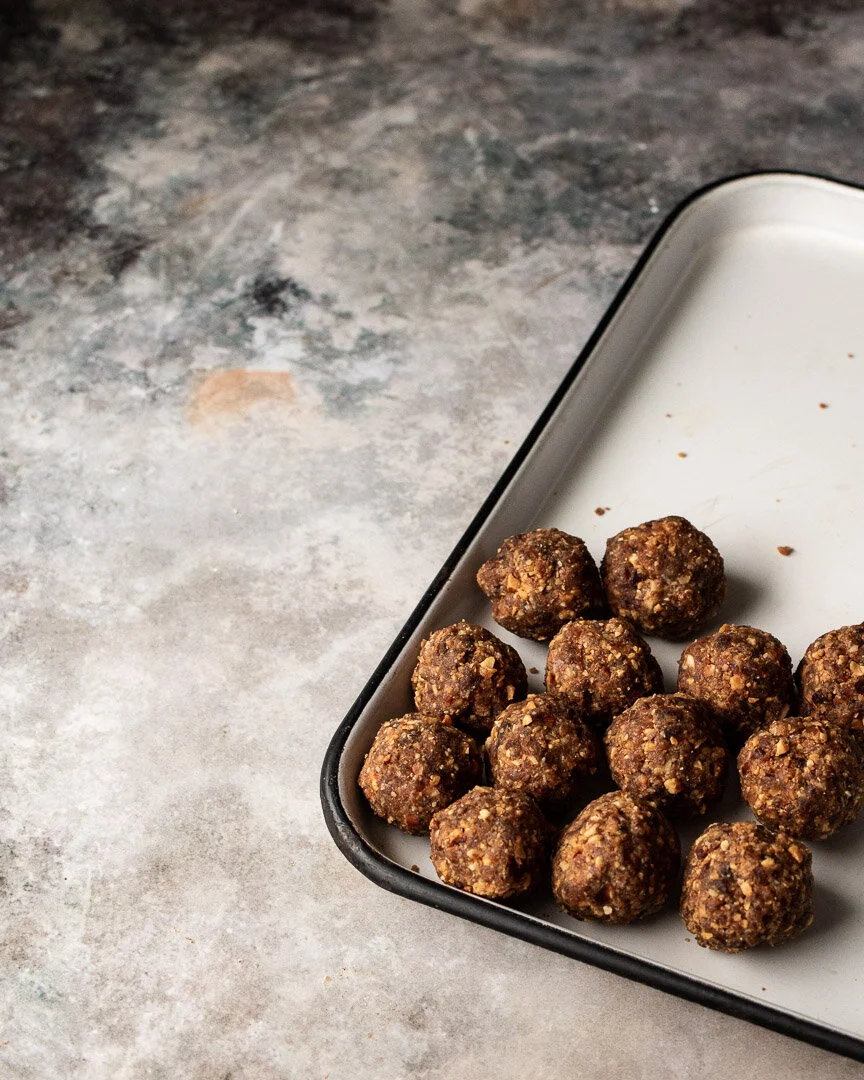
These throw-together snacks are easy to make and store for a filling, quick bite on the go.

Let’s talk energy balls, shall we? Sometimes called “energy bites,” these sticky, two-bite goodies are naturally sweetened with dates and come together in a food processor in minutes. They require minimal ingredients, can be modified to suit your tastes, and are surprisingly filling for such a tiny treat. Best of all, when stored in the fridge, they last for weeks.
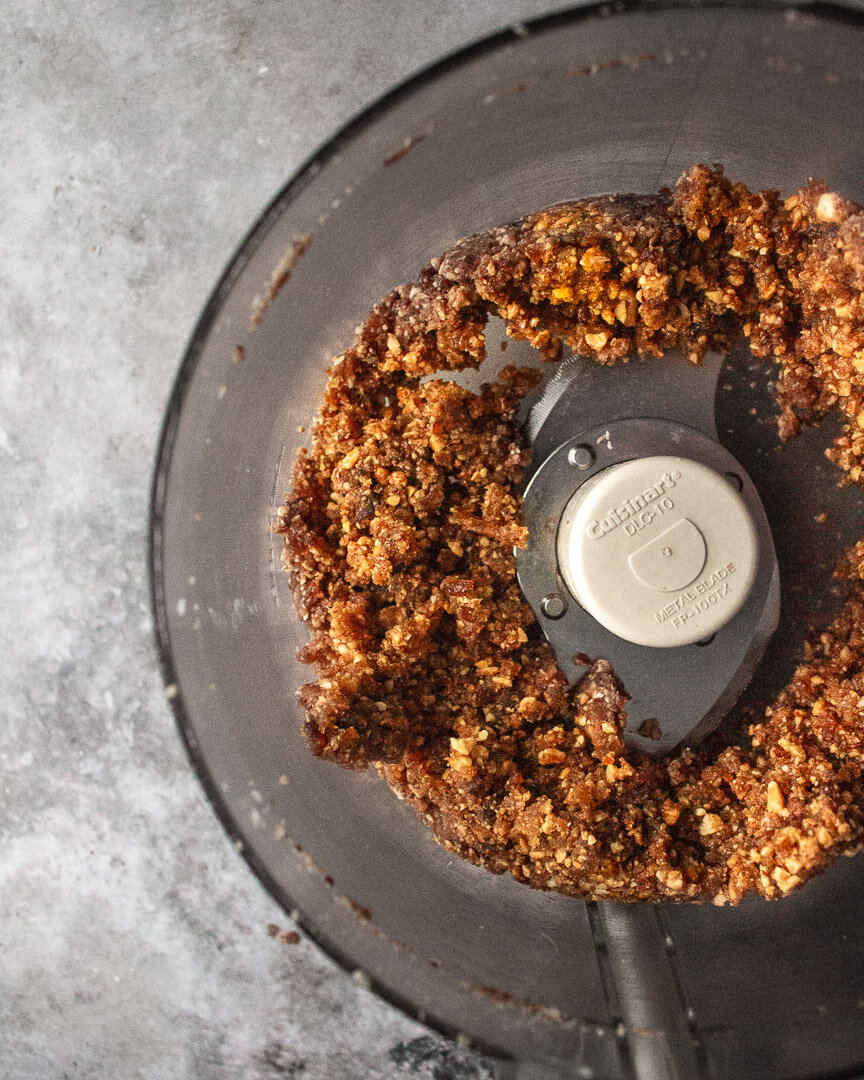
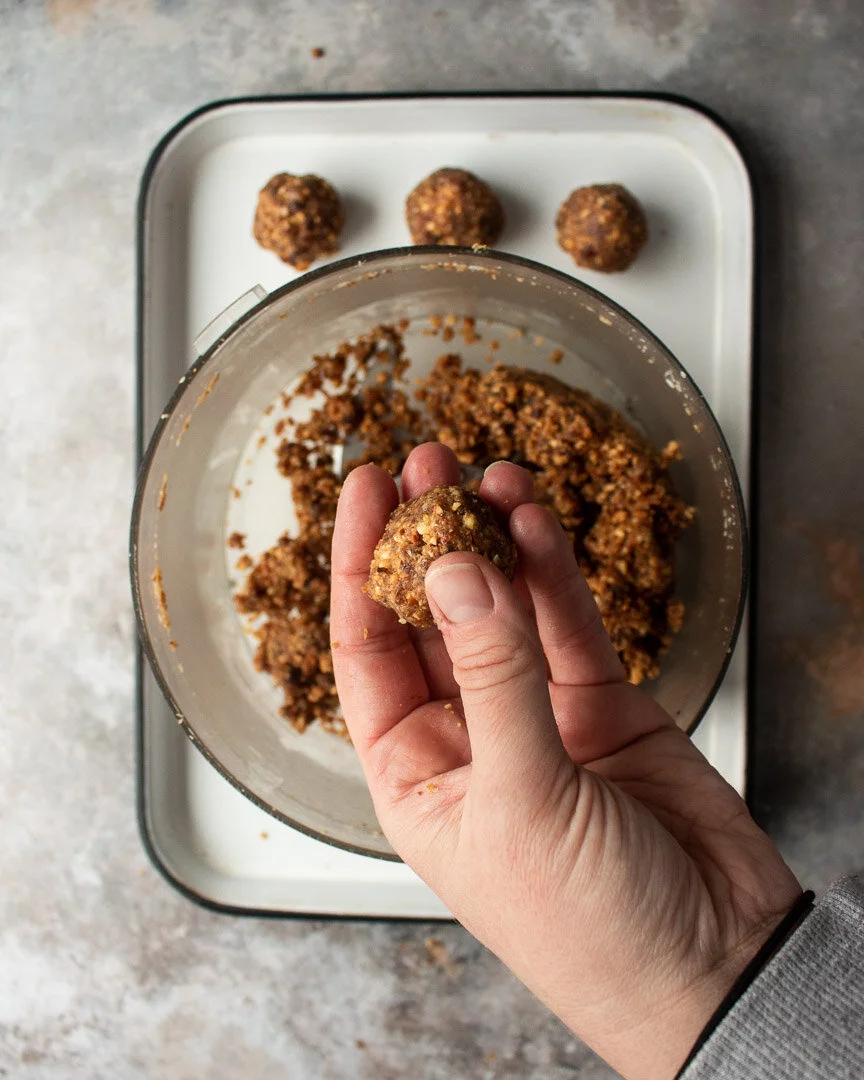
This is the thing I grab when I absentmindedly open the fridge, looking for something (in both food and existential senses).
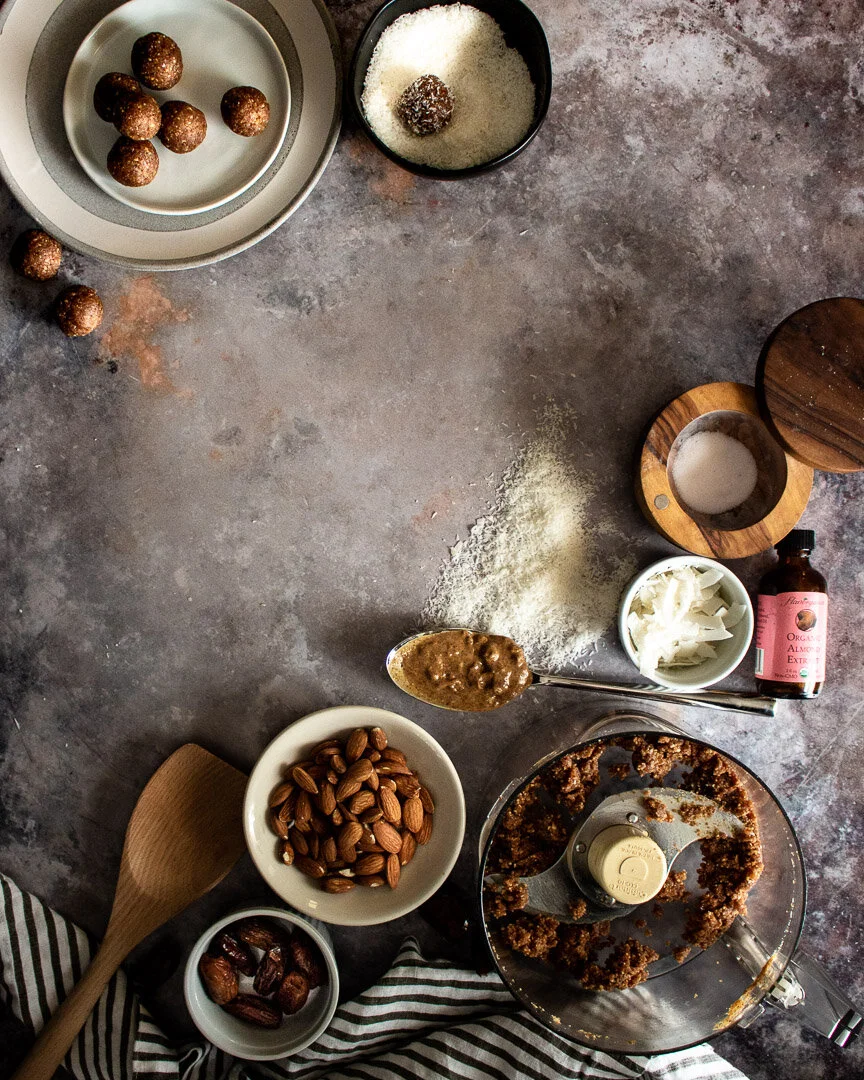
A couple of notes:
Make the balls small! The mixture is pretty caloric, so I make them no more than about 1 Tbsp each.
Do toast the almonds and coconut. That little bit of browning really enhances the flavor and makes the balls less sweet.
Test your dates before using. If they don’t squish almost effortlessly, they may be a bit too tough or dry. If that’s the case, cover them with boiling (or just really really hot) water and let sit for 5 minutes.
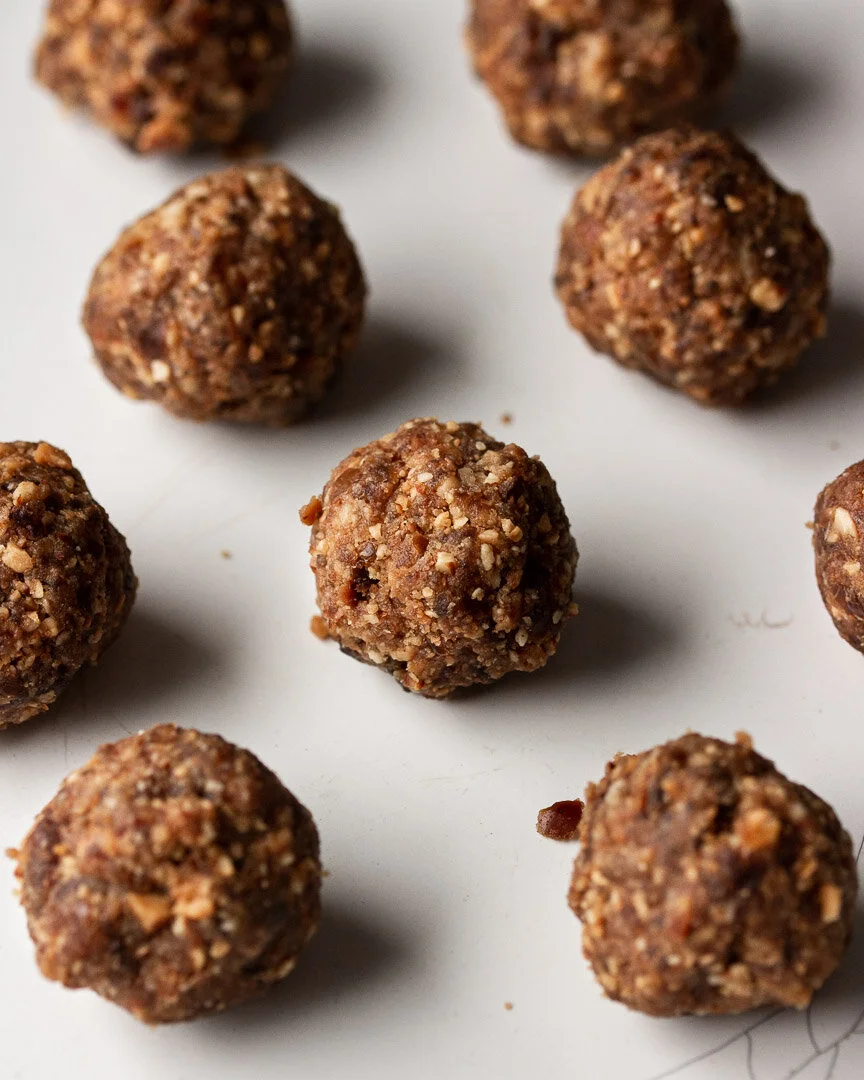
Almond and coconut energy balls
Time: 15 minutes
Yield: 16 balls
1/2 cup raw almonds
1/2 cup unsweetened shredded or flaked coconut
16 pitted dates, rehydrated if too tough or dry
2-3 Tbsp almond butter
1/8 tsp almond extract
Pinch of salt
Water, as needed
Preheat the oven or toaster oven to 350. Spread the almonds and coconut out onto a baking sheet and toast until the coconut is just beginning to brown on the edges and the mixture smells nutty, about 3 minutes. Keep a close eye on the mixture to ensure that it doesn’t burn.
Put the toasted almonds and coconut in a food processor along with the dates, almond butter, almond extract, and salt. Whizz in the processor until the mixture comes together in one large mass, about 4-5 minutes. If the mixture doesn’t come together, sprinkle in about 1/2 tsp of water and try again, repeating about every 30 seconds until you have a large mass.
Scoop about 1 Tbsp of the mixture into wet hands and roll into a ball.
Chill the balls in the refrigerator to help them set.