Quick(ish) Meat Sauce

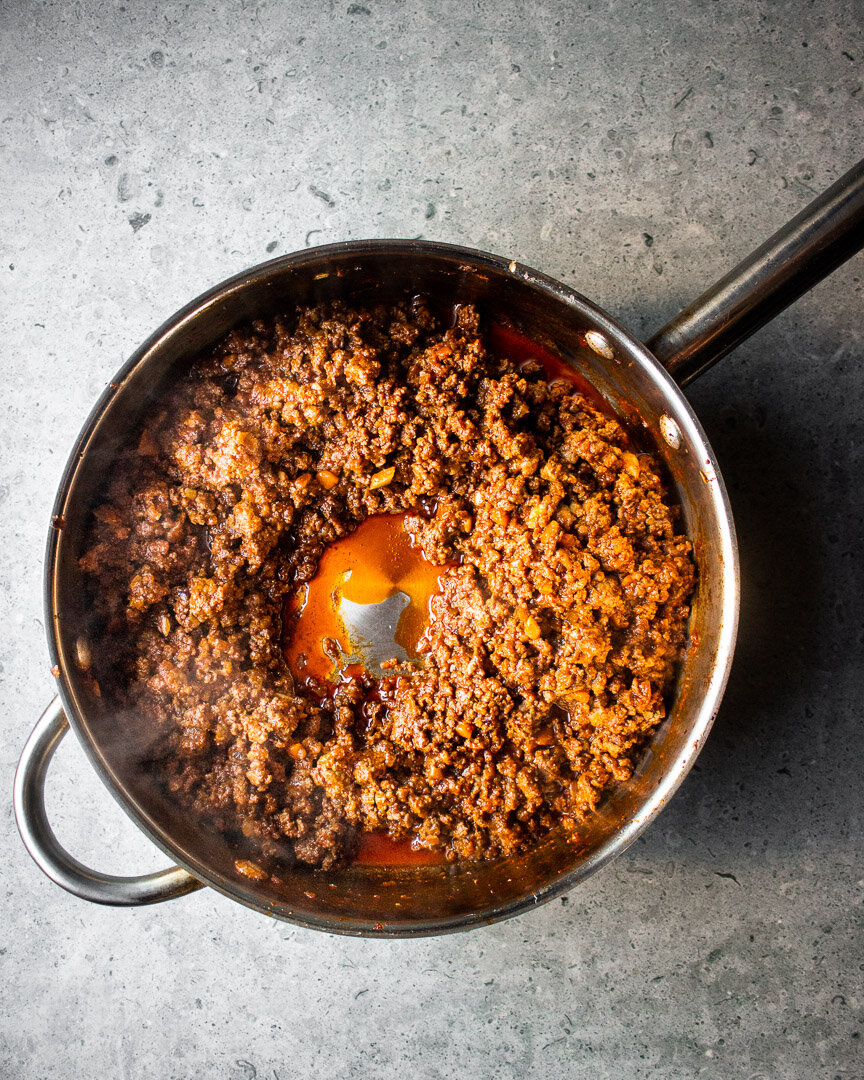
Meat sauces are usually long and slow affairs, but this version speeds things up with high heat and beef stock to mimic the flavor of a cooked-all-day sauce in a fraction of the time.
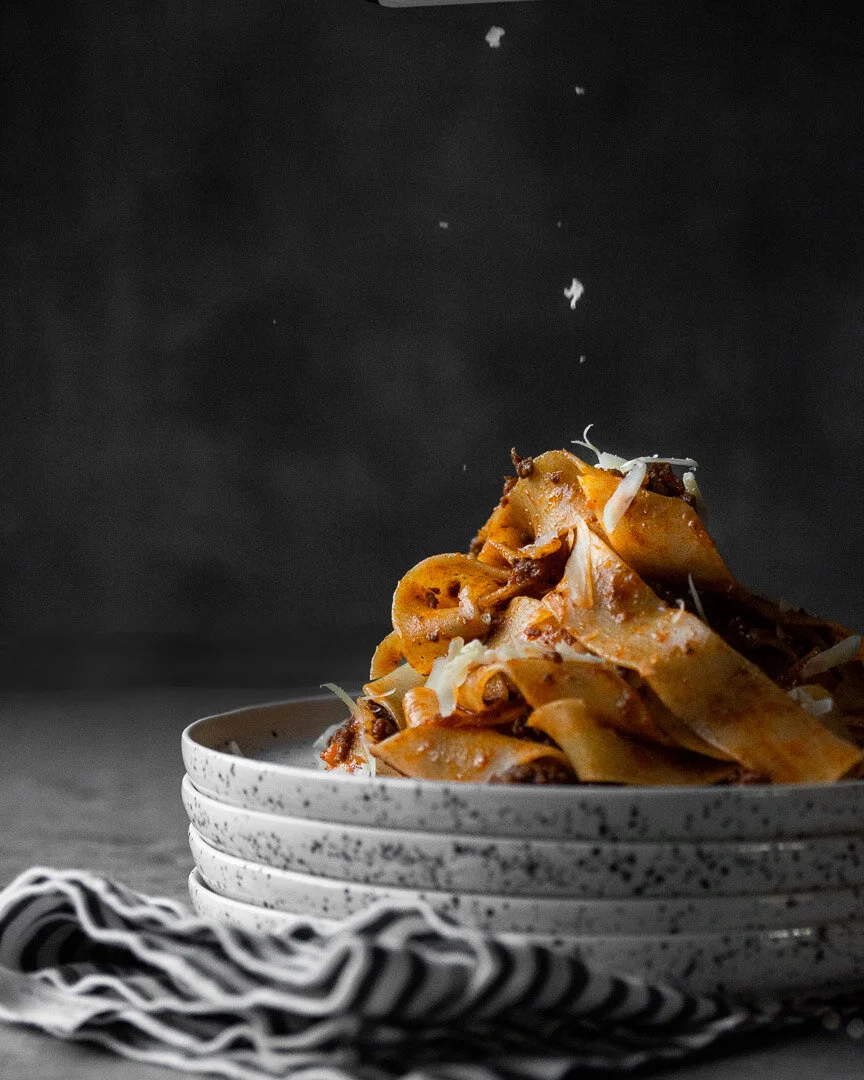
I love a great, long-simmered, deeply flavored, unctuous Bolognese more than almost anything. That falling apart meat with a hint of acidic tomatoes all clinging to some wide flat noodles with a sprinkle of salty, nutty parmesan? Swoon.
But realistically, we never have time to make one. Even during these quarantined weekends we need flexibility for when the children inevitably short circuit and need a change of scenery.
It’s hard to achieve that depth of flavor without the long, slow simmer, but I’ve tried! And I think succeeded! However, there’s a reason why I call this a “meat sauce” and not “Bolognese.” It’s not the original. But it is a delicious approximation in about an hour.

A couple of notes:
Use the leanest beef you can find. If you can’t get 90/10 or 85/15, use half of the amount of pork listed or leave it out entirely
This recipe is meant to be made mostly at high temperatures, but you’ll need to keep an eye on the sauce at every step to ensure that the liquids are evaporating fast enough, but that nothing is burning. We want the heat to caramelize and brown everything, but we don’t want anything to burn and turn bitter. You may have to do a significant amount of fiddling with the temperature throughout the cooking to speed things up or slow them down at intervals.
I list a range of amount of the tomato paste. I like it less tomato-y, but my husband likes it with a little more. The largest amount (6 oz) is one small can of tomato paste.

Quick (ish) meat sauce
2 Tbsp olive oil
½ large onion, finely chopped (about 1 cup)
1 large stalk celery, finely minced (about ½ cup)
1 small carrot, finely minced (about ½ cup)
5 large garlic cloves, smashed
1 lb ground beef (90/10 if you can find it)
¼ lb ground pork or sausage, casings removed
1 tsp kosher salt
4-6 oz tomato paste (5-6½ tbsp)
¼ cup red wine
2 cups beef broth
Pepper to taste
Time: about 1 hour for the sauce and the pasta, mostly active
Yield: 3-4 cups of sauce, or enough for 1 lb of pasta
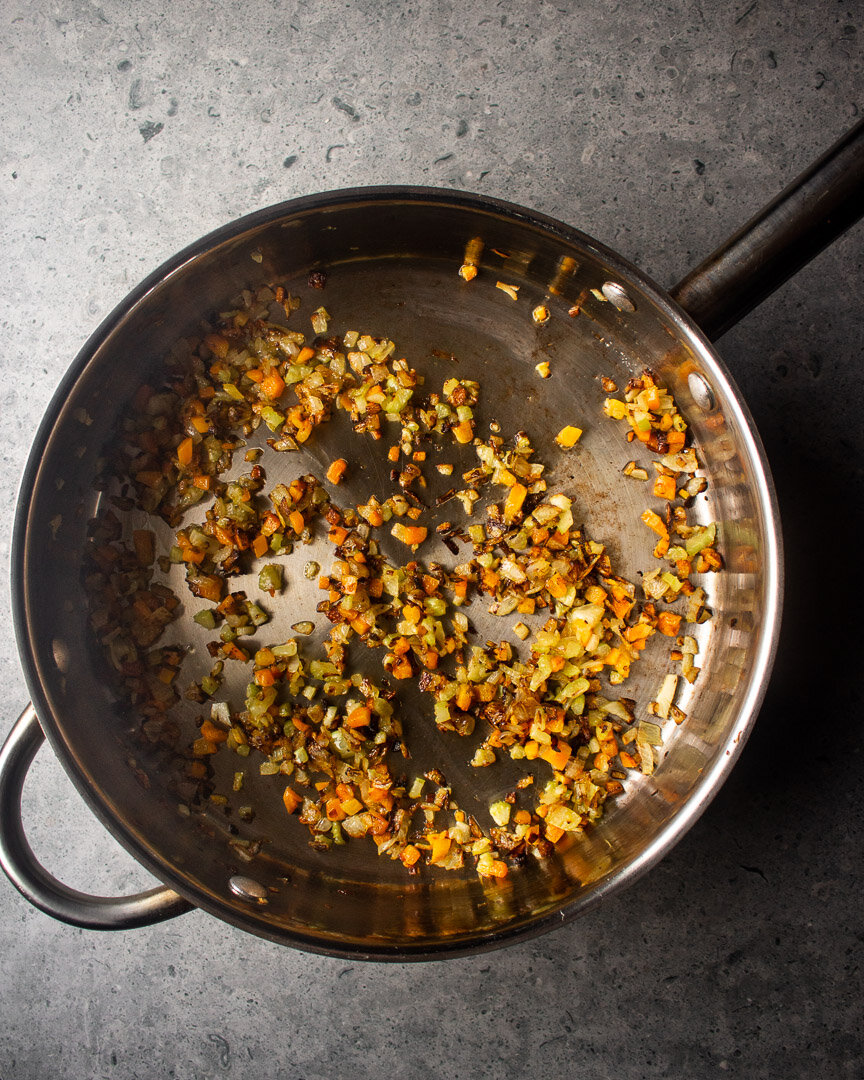
Heat a skillet over a medium flame. Add the oil and heat until the oil is shimmering and slips easily around the pan. Add the onion, celery, and carrots, and cook for about 10 minutes, stirring frequently, until the veggies soften and begin to brown.
Add the garlic. Cook until fragrant, 1-2 minutes, being careful not to burn.
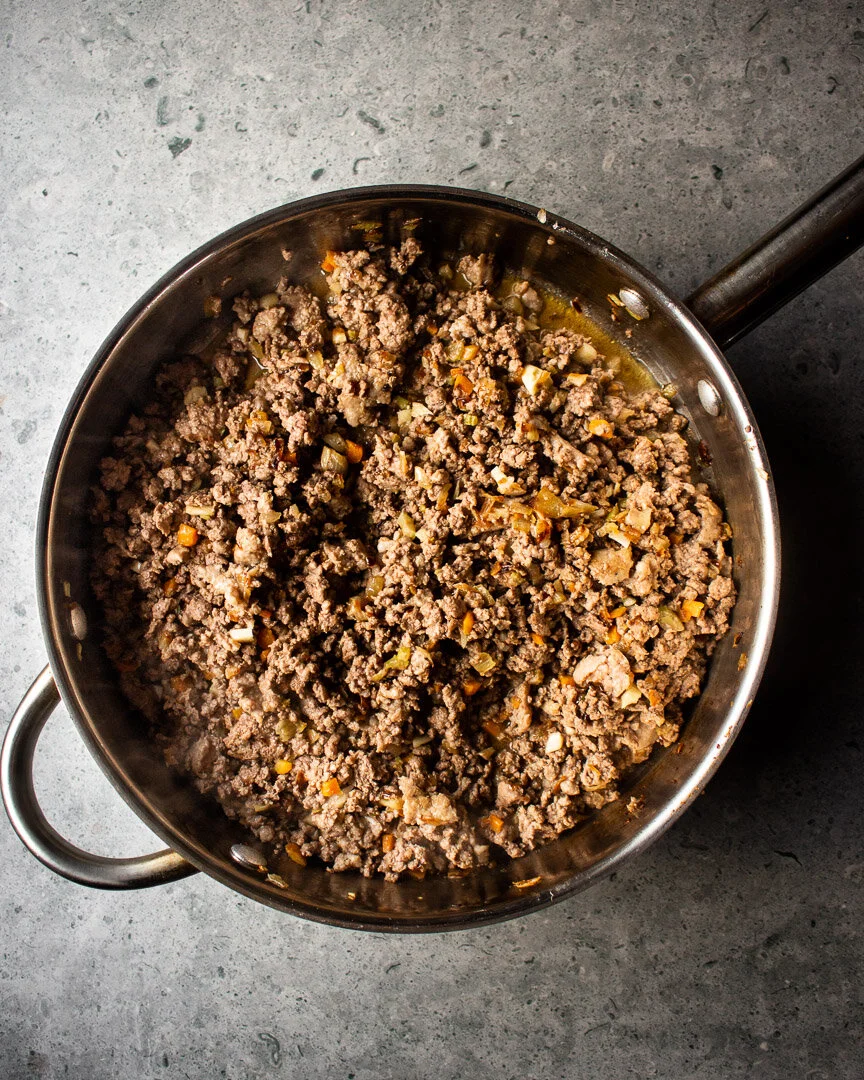
Add the meat and turn the heat back up to medium if you turned it down earlier. Stir and chop up the meat with your spatula breaking it into small pieces while cooking until no pink remains, about 5 minutes.
Stop stirring and let the meat cook, undisturbed, until browned on the bottom, about 5 minutes. You should hear it sizzling and bubbling. If not, turn up the flame.
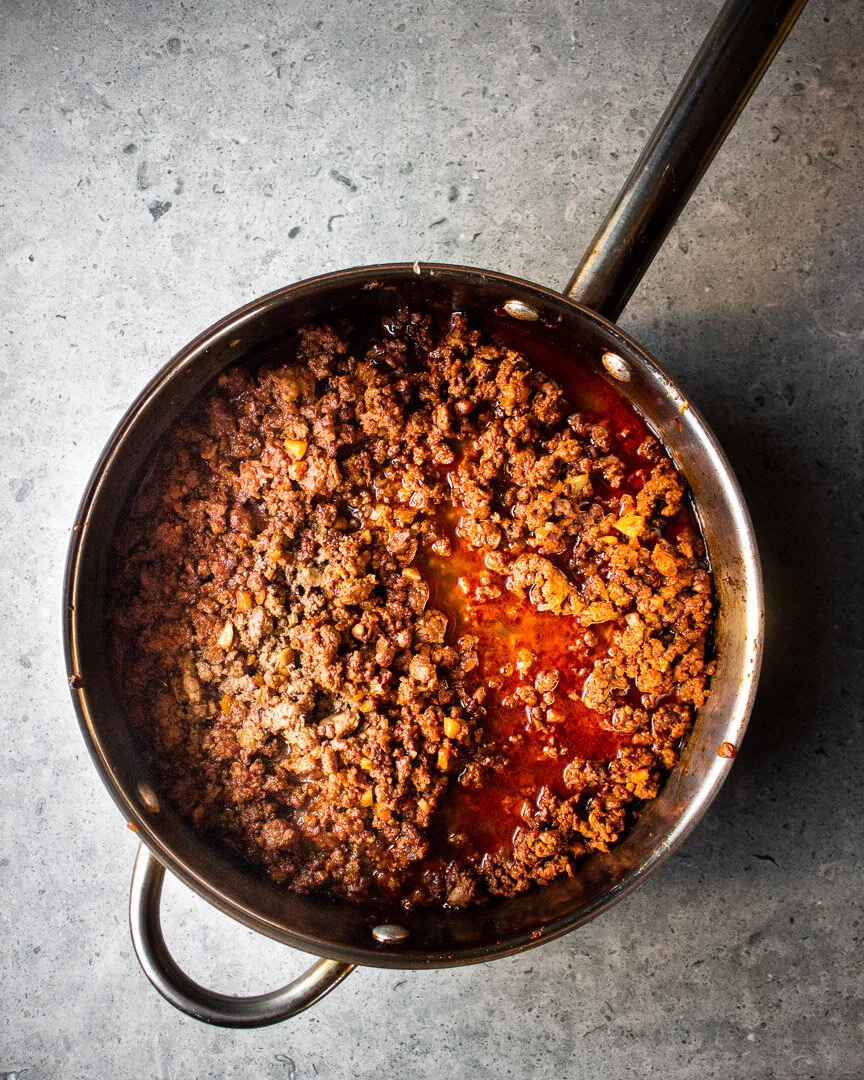
Add the tomato paste and wine and stir well to combine and deglaze the pan. Cook, stirring constantly, until the wine has evaporated, about 2 minutes.
Add 1½ cup of beef broth and cook, stirring often, until it has evaporated, about 8-10 minutes. If the liquid isn’t evaporating fast enough, turn up the flame.
Add the final ½ cup of broth, turn the heat all the way down, and cover. Let simmer on the lowest heat while you cook your pasta.
Bring your water to a boil and cook the pasta according to its package directions. Stir the sauce every few minutes while the pasta cooks.
Combine and serve.
Dumpling lettuce wraps
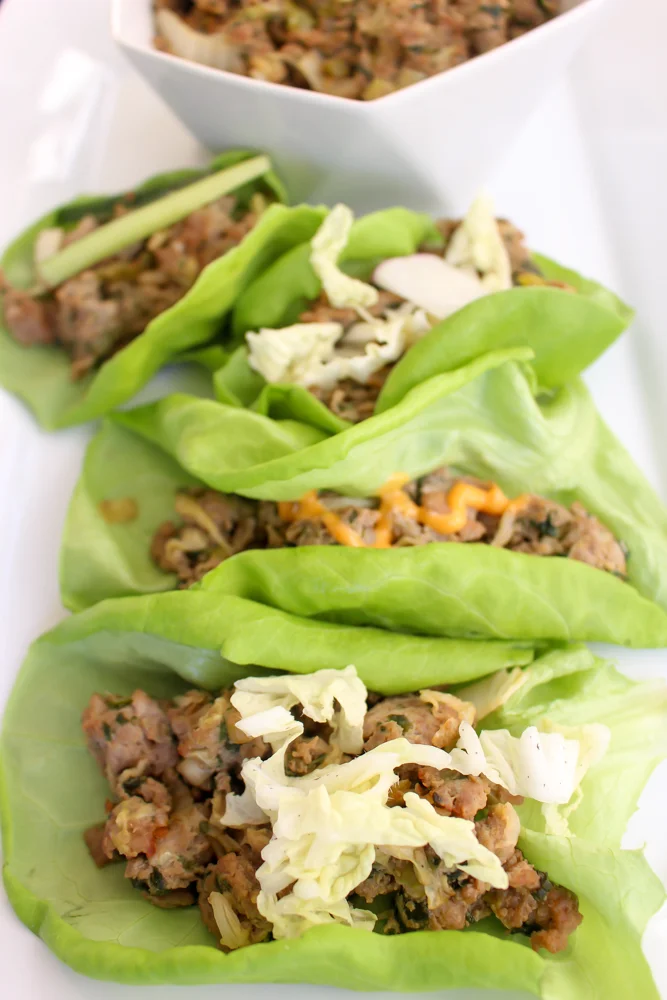
This dish is a so simple and ready in less than 30 minutes, so basically the easiest route to a delicious dinner. AND it can be customized to suit different tastes, which usually makes for a less stressful dinner time in our house.
For example, we served the pork in lettuce wraps to lighten it up for the adults and used it to top brown rice for M who’s in a “rice bowl” phase. Don’t ask.
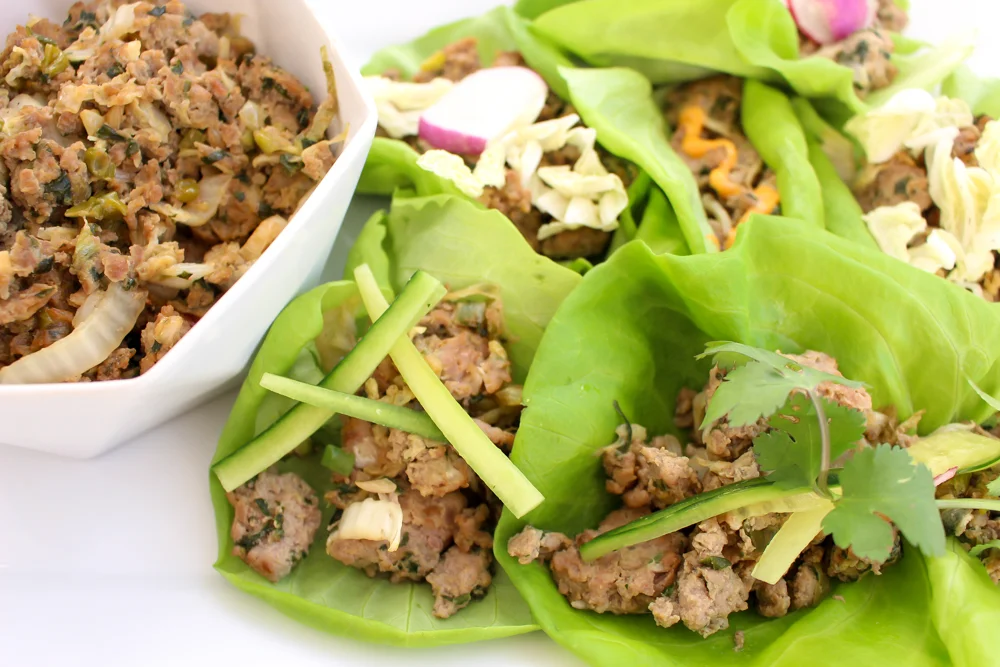
M has been obsessed with dumplings since time immemorial, so, obviously, we made our own a few weeks ago for Lunar New Year. I, obviously, got lazy half way through the giant stack of dumpling wrappers and decided to saute the rest of the filling and call it a day.
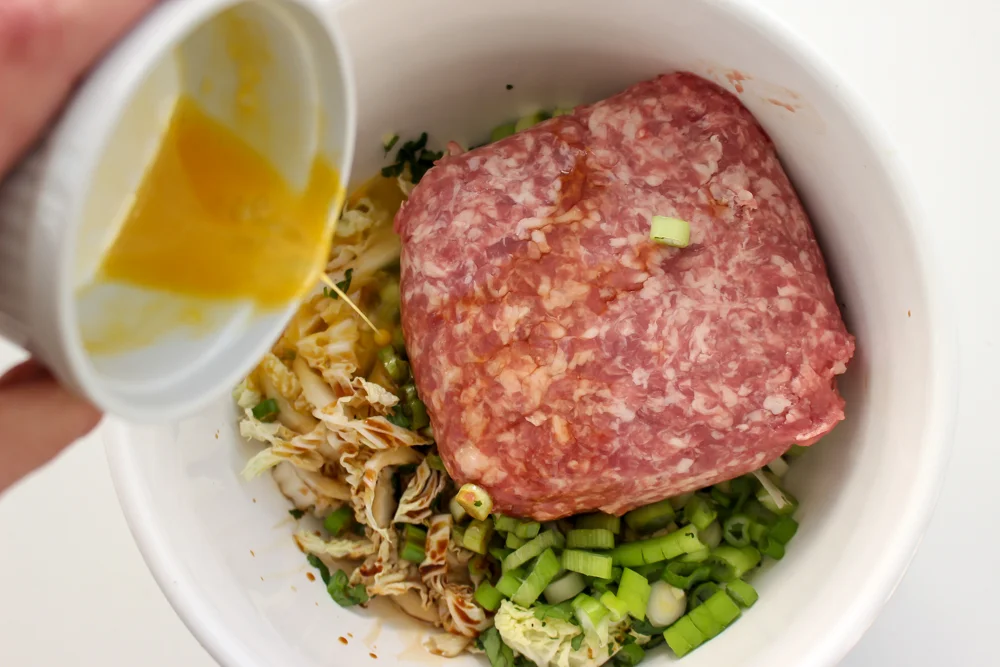
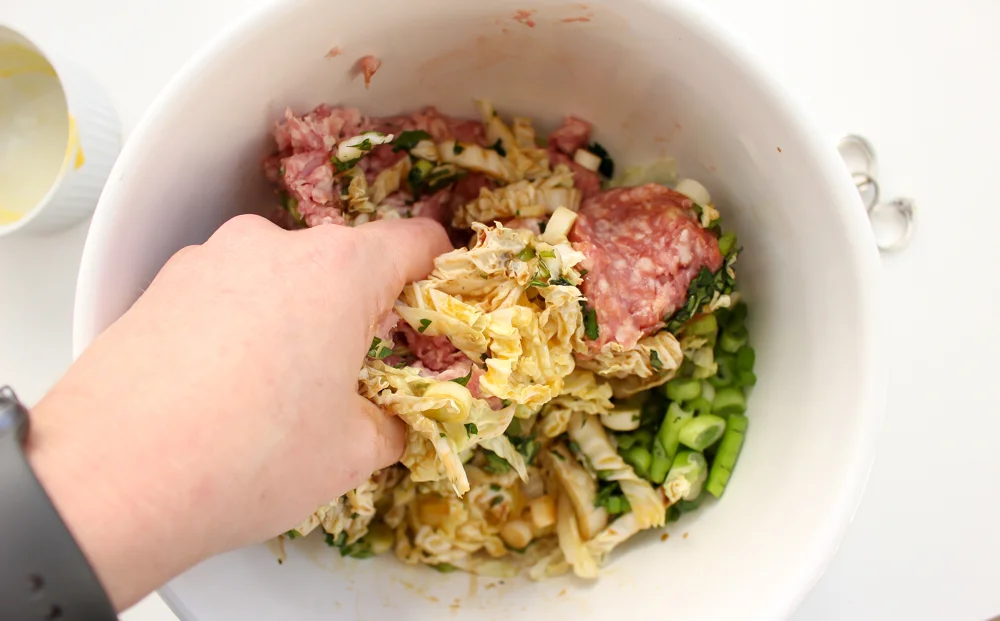
The saltyness from the soy sauce as well as the garlic and scallions cut through the fatty pork. There’s also a lot of cabbage in there that M doesn’t even realize he’s eating. You could probably throw in a host of other veggies too if that’s your bag.
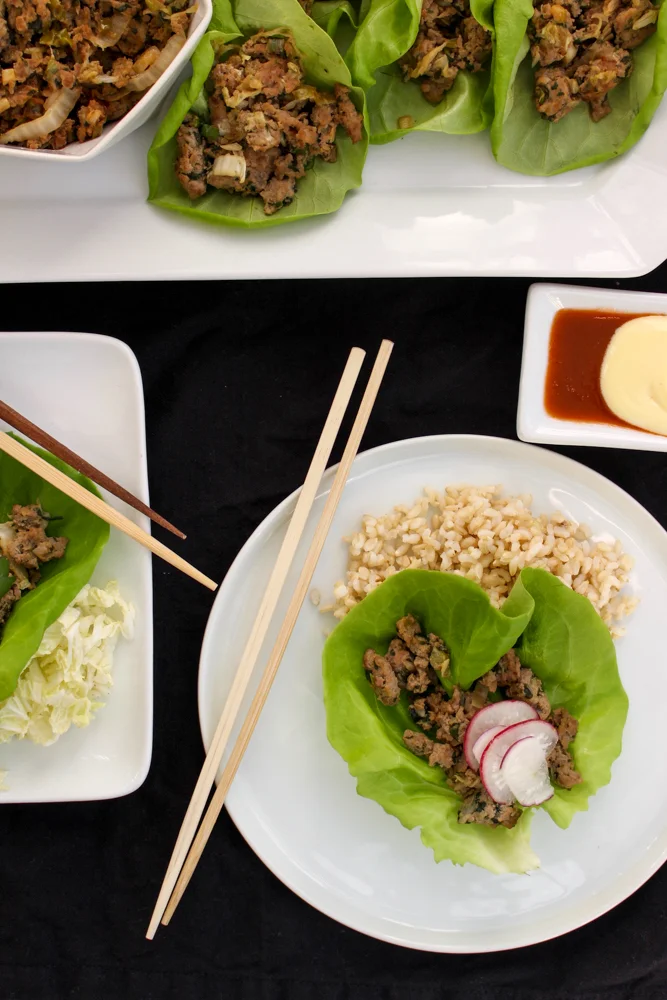
One could also swap out half or all of the pork for a less fatty ground meat or shrimp to lighten this up a bit too.
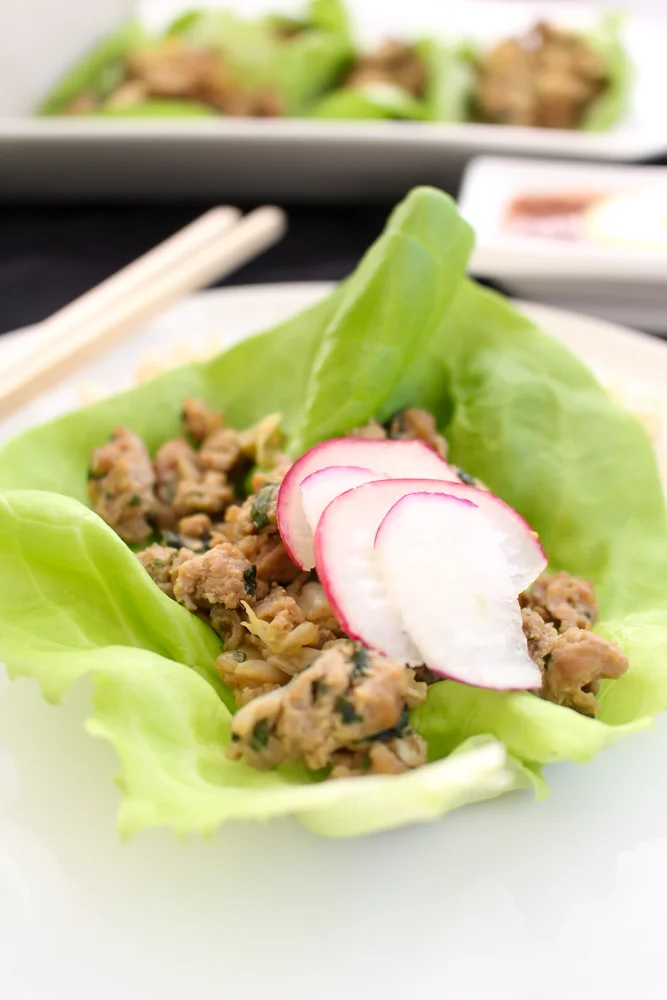
Seriously, there are a lot of dinners out there that claim to be ready in less than 30 minutes, but aren’t really done that fast. This is sincerely one of the quickest dinners in our repertoire.
Dumpling lettuce wraps
1 lb ground pork
3 cups green cabbage, finely chopped (about ½ of a small Napa cabbage)
6 scallions, minced
2 large cloves garlic, minced
½ bunch cilantro, minced (stems and all)
2 Tbsp soy sauce
1 Tbsp fish sauce
1 Tbsp sesame oil
1 egg, lightly beaten
For serving:
Thinly sliced radishes
Sliced cucumbers
Sriracha
Spicy mayo
Raw cabbage
Cilantro
Pickled onions
Kimchi
Chop the cabbage, scallions, garlic, cilantro, sauces, pork, and beaten egg to a large bowl and mix well tom combine.
Heat the oil in a large skillet over medium heat until hot. Turn the flame to medium low.
Add the meat mixture to the skillet and cook until no pink remains, about 10-12 minutes, adjusting the heat as necessary.
There may be a lot of liquid that comes out in the cooking. If so, turn up the heat to medium high and cook for 1-2 minutes, until the water has evaporated and the meat has browned underneath.
Serve in lettuce leaves, wraps, tortillas, or over rice, cauliflower rice, or anything else.
Yield: about 3.5 cups of filling, or about 3-4 servings with toppings.
Barley and squash "faux"sotto

Swapping barley for the arborio rice adds a nuttier taste that stands up to the hearty squash and sage while reducing the amount of stirring.

Friends, can we talk about toddlers refusing to eat (and the blinding rage that sometimes results!)? Despite my best efforts, this happens all the time (mostly the hunger strikes; sometimes the rage). I work HARD not to take it personally because I know it's developmentally appropriate (oral stage, exerting control, changing taste buds, yadda yadda yadda). One thing I can say with certainty is that it always passes. This is our basic game plan, which I’m writing down mostly as a reminder to myself when the going gets tough:
1) If he's not eating, maybe he’s just not that hungry? Most of the time, we let M determine how much he wants. We encourage him a little if he says "all done" after two bites because sometimes he's referring to the high chair and not the food. I'm not particularly good at recognizing my own hunger/satiety cues, so I want to help M be more attuned to his body.
2) Push the veggies and protein when he’s the hungriest. M is a morning eater and tends to gobble up whatever we put in front of him before 11 am, so I pack that meal with as much goodness as possible. I offer the fruit/veg, protein, and fat in all of his meals, but if he only eats the strawberries for lunch...so be it.
3) Don't "hide" veggies, cook with them. Find the happy medium with more nutritious food. I agree with folks like Amy Palanjian from Yummy Toddler Food about not "hiding" veggies. It undermines their trust if you offer a “pancake” and they discover a bit of green or a funny taste and realize that they’ve been duped! But that doesn't mean you have to serve your kids a head of steamed broccoli and call it a day. If you're making a grilled cheese, throw in some spinach and tell them that it's in there.
4) Offer a “safe” food. I’m not suggesting you make an entirely different meal for your kids, though we’ve definitely done that. If we’re offering something new or that I’m not sure will be a hit, I include something on the table that I KNOW M will like. Sometimes he refuses to eat because he's tired or too hungry and a few bites of something familiar can help him calm down and eat the other food too. And sometimes the “safe” food is all he eats and that’s okay too!


All of that to say, the first few times I made this "risotto" M loved it, until last night when he acted like it was RANCID. I assure you, this dish is delicious and though there are a few steps, they can be done simultaneously, so it's less effort than most risotto dishes. And there's barely any stirring!
I used Kabocha squash, which has a creamier consistency when roasted than butternut or delicata squashes and a thicker texture than the pumpkin or acorn varieties. But feel free to swap in any squash you can find in your store or have on hand. Also swap in spinach or any other greens for the kale, and/or turkey, chicken, or beef for the pork sausage. I wouldn't recommend adding fish to this guy, but serving a veggie version alongside a piece of fish would be great. Last note: I used hulled barley instead of pearled barley, which is the browner of the two in the bulk bins of your Whole Foods. It takes longer to cook, but is more nutritious if you don't mind the extra cooking time.

Barley and squash “faux”sotto
Time: about 60-75 minutes, mostly active
Yield: About 8 servings, ¾ cup each
3 cups water
1 cup hulled barley
2 cups chicken stock
½-1 bunch kale, stems removed and chopped into pieces
1 cup roasted Kombucha squash, about half of a small squash
1/2 cup grated Parmesan cheese
8 oz pork sausage, de-cased
2 medium shallot
1-2 large cloves garlic
10 fresh sage leaves or ½ tsp dried sage
Combine barley and water in a large pot and bring to a boil. Reduce heat and simmer, covered, over low heat until water is absorbed, about 45-60 minutes.
Meanwhile, cut squash in half and place cut side down on a parchment-covered baking sheet. Roast at 400 degrees for 30- 45 minutes or until the flesh is easily pierced with a fork. Let cool slightly and scoop out 1 cup of the cooked squash and set aside.
In a separate pan, brown the sausage. When fully cooked, remove and drain on a paper towel and add the shallots and garlic to the pan with the leftover pork fat and saute until translucent, about 5 minutes. Add the sage and cook until aromatic.
When barley is done, add chicken stock and bring back to a boil. Add chopped kale and cook until wilted, about 5 minutes. Reduce heat and add squash, parmesan, salt, and pepper. If the barley seems too wet, let simmer for a few minutes until enough liquid has evaporated, but remember that the grains will firm up as they cool. (Basically, you want the mixture to be oozy, but you shouldn’t see any excess liquid.) When ready, add the sausage, sage, onion, and garlic mixture and let heat through. Serve with a sprinkle of parmesan cheese on top.
Need ideas for using the leftover squash? Try these grain-free waffles but swap in squash for the sweet potato.
