Sheet pan dinner: White fish with potatoes and fennel

This sheet pan dinner is ready in about 45 minutes (start to finish) and combines mild base flavors with all kinds of dynamic toppings so you can please even the pickiest palate.

Well hello anxiety, my old friend!
Question for the caregivers out there: Are you able to separate your own happiness from that of your kids? It’s a tough question because if your child is having a hard time in any area of his/her/their life, it can feel weird to say that you’re happy anyway. It’s also hard to actually be happy anyway. But at the same time, it’s a lot of pressure for a kid to have that much impact on their caregiver’s well-being.
We’ve had a couple of good weeks recently. You know the ones: You suddenly realize that the littles are more agreeable, they actually eat the food that you cook, and they can entertain themselves with toys that they already own!
We were on one of those streaks when M suddenly had a really tough week last week. I felt myself getting more and more anxious about it. Then I tried talking to him about a specific situation at school and he wouldn’t tell me because, he said, “I don’t want to make you mad and sad.” CRY FACE EMOJI.
I realized that my sensitive butterfly could tell that I was getting upset about his tough times and that it was stressing him out.
On the one hand, it’s good for kids, especially in these self-centered toddler and preschool years, to know that their actions and words impact others. I mean, it’s our job to teach them about consequences. But it’s also not a kid’s job to make sure that their parents are happy. So how do you balance your kids’ “stuff” with your own? Do you feel happy even when your kids are having a rough time?
I have no answers. Just putting this out into the universe in the hopes that someone smarter than me has some guidance.
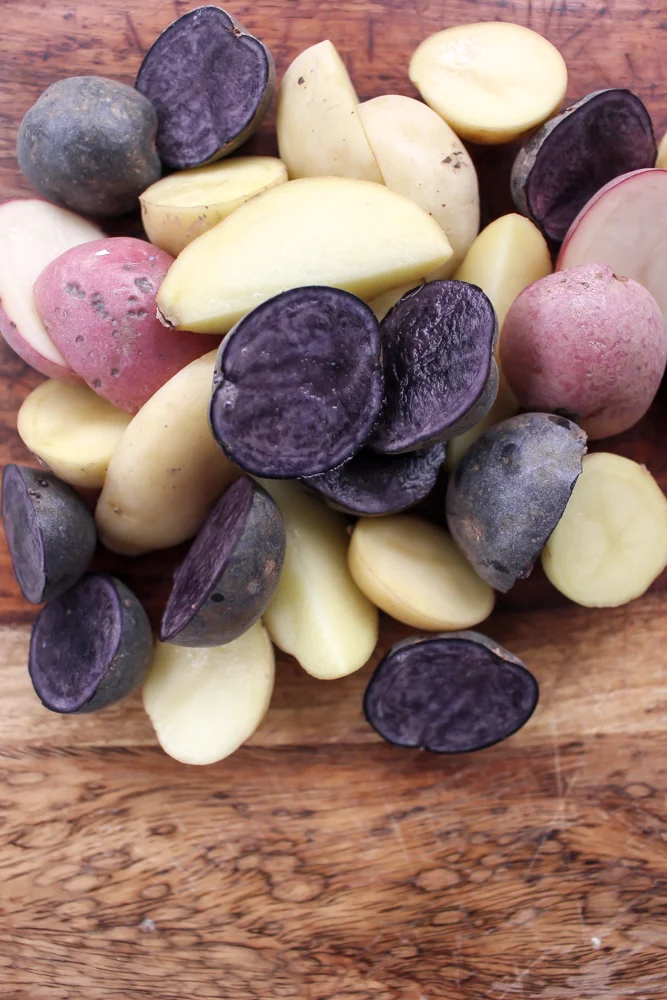
When I feel anxious, as I have this week, I gravitate towards the “easier” food —the quick ones that pack a salty or sweet punch— which always make me feel worse. So instead, I made this sheet pan dinner and it has done the trick. Every flavor is represented here: Creamy, tangy feta; briny, salty olives; sweet, piquant roasted red peppers; and crunchy, sour pickled onions. Throw on some aromatic fresh oregano and garlic butter and this simple fish, potato, and fennel dinner is all dressed up in a more interesting package.
The various components cook at different rates, which is the only slightly tricky part of this meal. But good news: You can prep the next step while the earlier one is cooking.

Sheet pan dinner: White fish with potatoes and fennel
Time: About 40-45 minutes
Yield: 4 servings
½ lb small potatoes, halved or quartered
2 large bulbs of fennel, white part only, trimmed and thinly sliced
2 Tbsp olive oil
½-1 tsp salt, divided
Black pepper, to taste
4 white fish fillets, about 6 oz each, fresh or frozen
2 Tbsp butter
2 cloves garlic, minced
Toppings (all are optional!):
½ cup green or black olives, pitted and chopped
2-3 oz feta, crumbled
Fresh oregano
Quick pickled red onions (See recipe below)
Roasted red peppers, sliced
Lemon wedges
Flatbreads, Naan, or Pita
Preheat the oven to 425.
Prep the potatoes and place on a parchment-lined baking sheet. Toss with 1 Tbsp of olive oil and sprinkle with salt. Bake for 5 minutes.
While the potatoes roast, slice the fennel into 1/8th inch slices. Add the fennel to the roasting pan and toss with the other 1 Tbsp of oil and another large pinch of salt. Bake for 12-15 minutes or until the fennel starts to brown and the potatoes are fork tender.
While the fennel roasts, wrap your fish in parchment packets. Cut a piece of parchment 2-3x as large as your fish filet. Place the filet in the middle and bring the two longer ends together and fold down. Fold up the remaining sides.
Add the fish on top of the veggies and cook until it flakes easily. This will take slightly longer if you’re cooking the fish from frozen. (If using thawed, check the fish after 10 minutes; if using frozen, check after 15-18 minutes. Open up one parchment packet and try to flake the fish with a fork. If it comes apart easily, it’s done.)
While the veggies and fish are roasting, prep your toppings. Set aside until ready to eat.
Mince the garlic. Combine with 2 Tbsp of butter and heat in the microwave for 30 seconds or until the butter is just liquid. Add a pinch of salt and stir. Set aside.
Remove the sheet pan from the oven and carefully open the parchment packets. Discard the paper and the water that’s collected in the packets while the fish cooked.
Top the fish fillets with the garlic butter.
Top the sheet pan with any of the toppings you choose.
Quick pickled red onions
1 large red onion, sliced into 1/8 inch slices
1/2 cup white vinegar
1 Tbsp granulated sugar
1/2 tsp kosher salt
Combine the onions with the pickling ingredients in a large container and shake a few times. Let sit in the refrigerator for at least an hour, or up to 1 week.

Spinach and kale tots
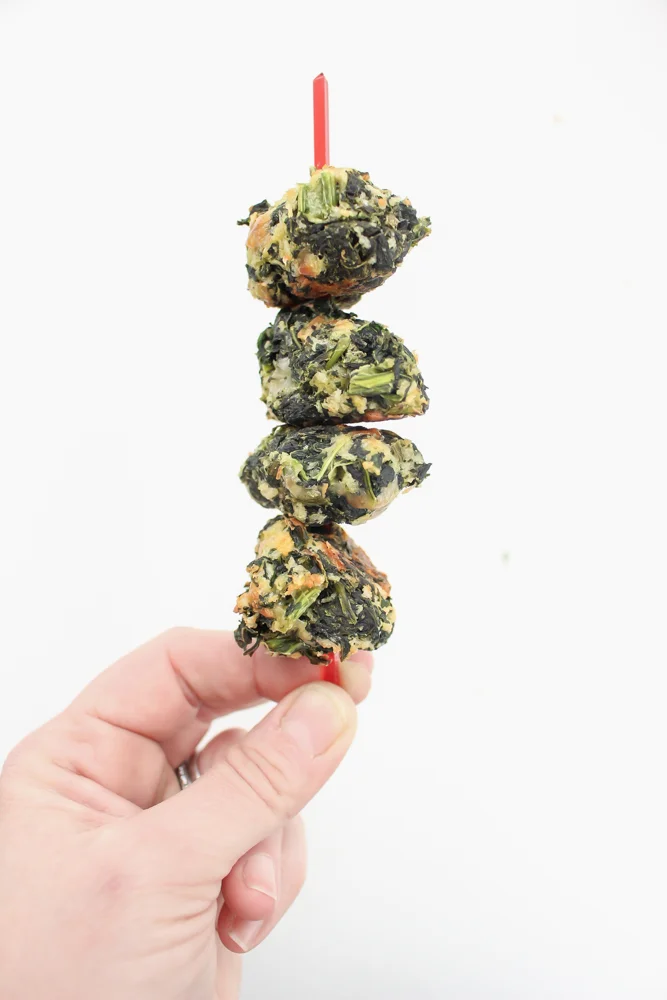
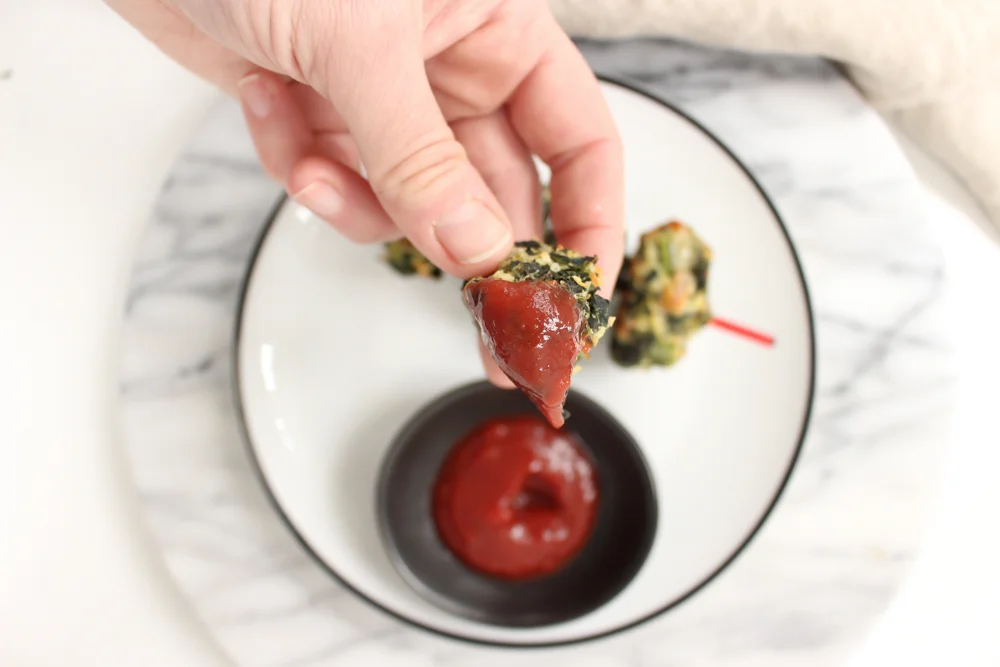
One reliable way I could get some greens into M was to present things as a “tot.” He really loved the Spinach and Kale Bites from Trader Joe’s, but our store has been out of them for weeks. So here is my copycat version.
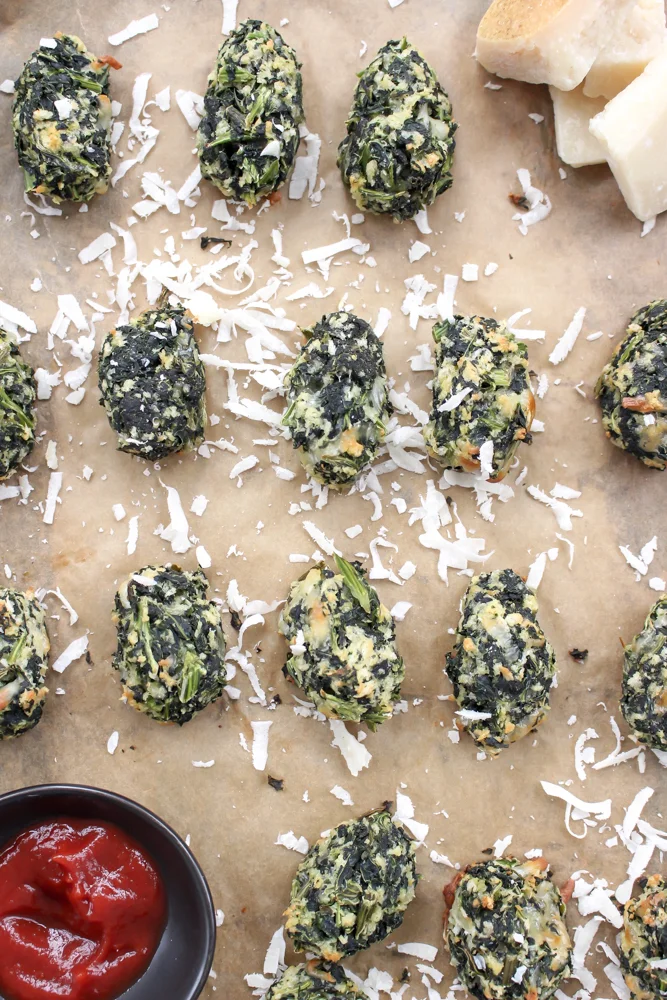
Note my use of the past tense up there.
M is still in his picky phase that I’ve mentioned before. He’s off of hummus, but full steam ahead with smoothies. One day he loves yogurt and the next he won’t touch it. Some days, carrots are a safe food and other days broccoli is his only vegetable. One day he’ll ask for a bowl of peas (straight up with nothing on them) and another day he’s picking them out of his mac and cheese. It’s maddening.
However, food refusal is a normal part of eating for kids. It’s hard to learn how to eat! Their taste buds are changing, their caloric needs swing wildly from day to day, and part of a preschooler’s job is to push against boundaries, so if there are rules around food in your house, they’ll try to break them. It’s how kids operate.
One of my big things is making the same food for the whole family, so the good news here is that I really like these tots and they’re packed with veggies, so they make a good snack for the grownups as well.
Make these tots! One day my kid will eat them, I’m sure. And until then, I’ll eat them.
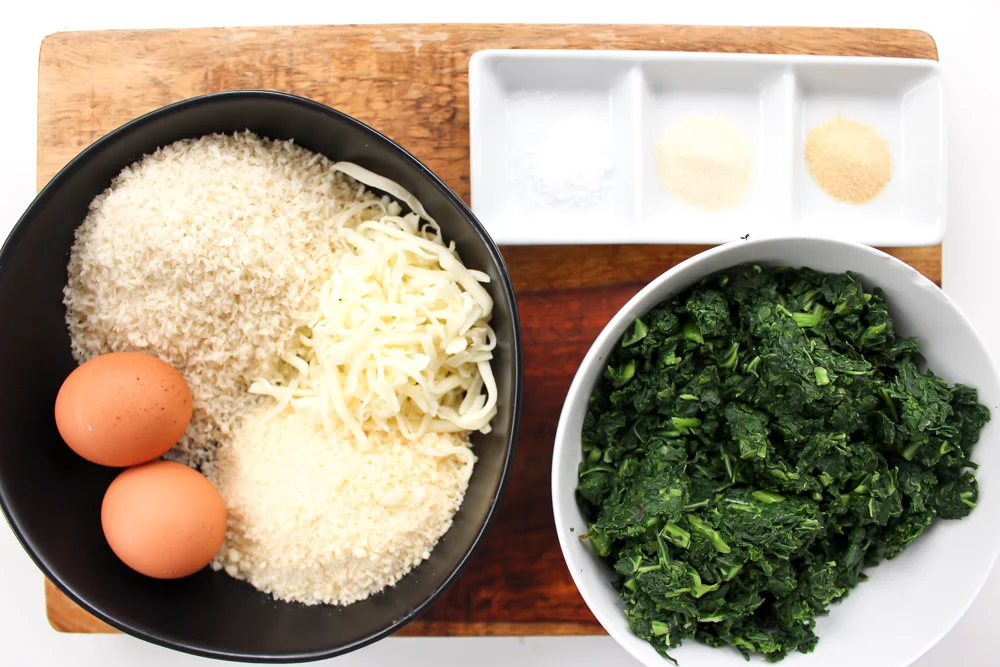
Spinach and kale tots
1 bag frozen spinach, thawed and squeezed dry
1 bag frozen kale, thawed and squeezed dry
¾ cup panko breadcrumbs
¾ cup grated Parmesan
½ cup shredded mozzarella
Heaping ½ tsp sea salt
Heaping ½ tsp onion powder
Heaping ½ tsp garlic powder
2 eggs
Preheat the oven to 350.
Thaw and squeeze dry a bag of spinach and a bag of kale. To achieve a smoother texture in your tots, pulse the dried greens in a food processor 10-15 times. You may need to squeeze with another towel if more liquid is released.
Place the squeezed dry greens in a large bowl and add the rest of the ingredients. Mix well to combine.
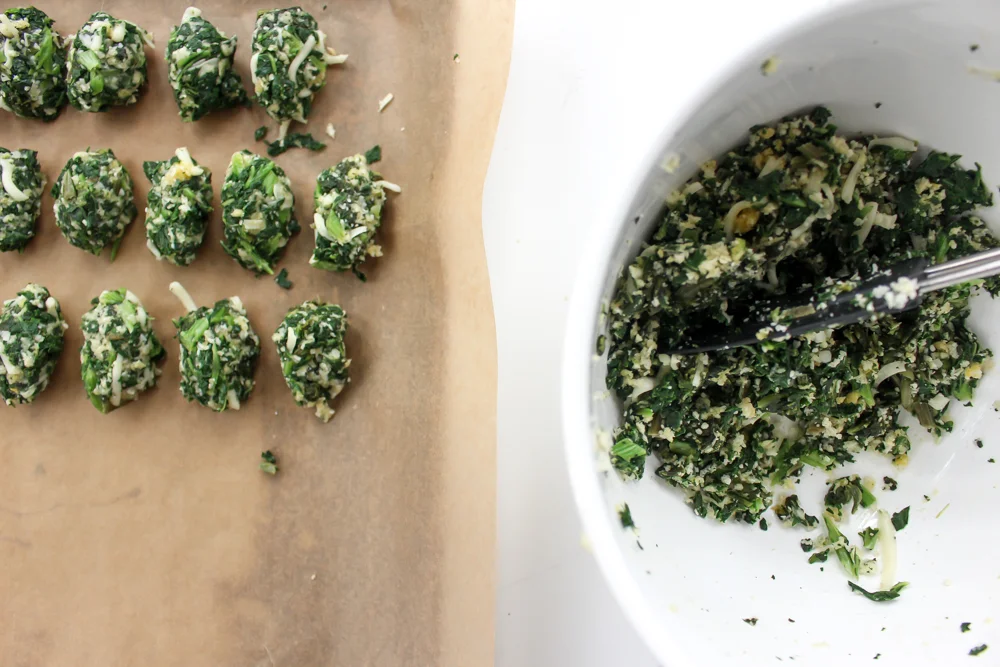
Take about 1½-2 Tbsp of the mixture and press into a nugget shape with your palms.
Place on a parchment-lined baking sheet and bake for about 25 minutes or until the nuggets feel solid when you push on them lightly.
Yield: about 24-26 tots
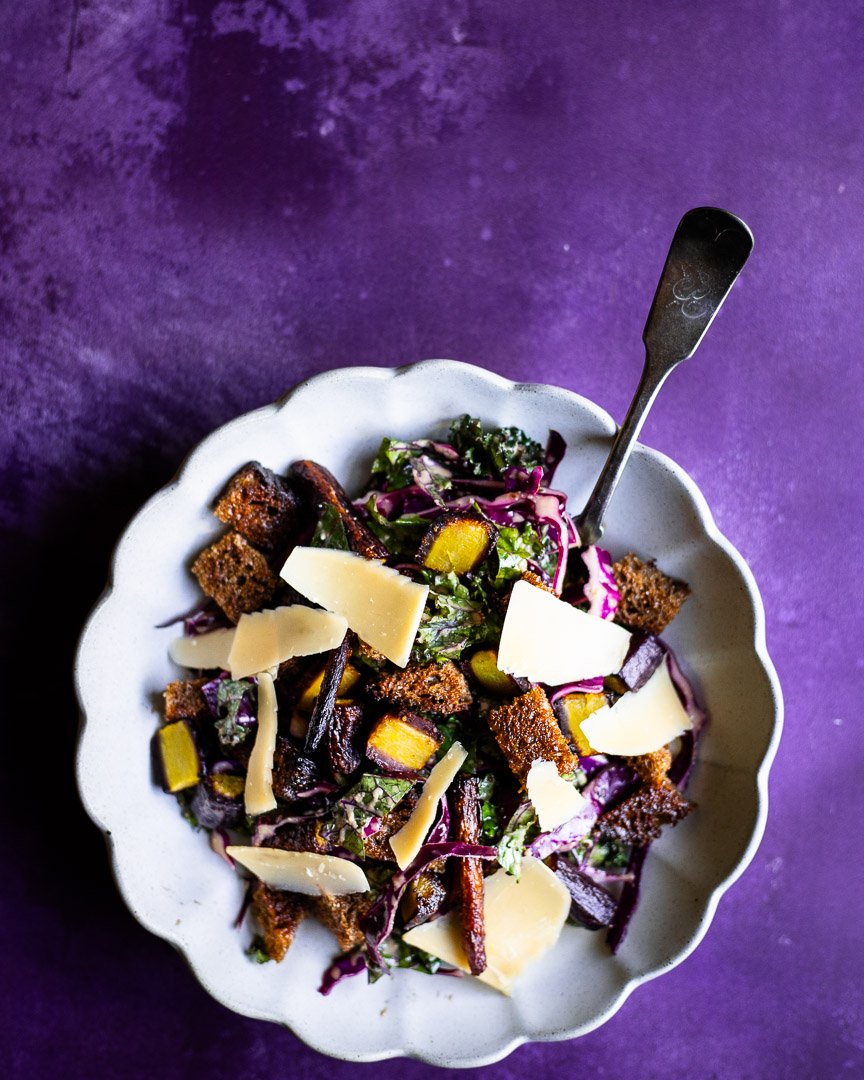
Purple kale and cabbage salad
Yada yada yada…take me to the recipe
Do your kids eat salad?
Leafy greens are hit or miss around here, as are all foods these days. M is doing a lot of refusing to eat at meals— and not just healthy stuff, but ALL stuff— and the struggle is real.
I follow @kids.eat.in.color on Instagram and her feed is a sanity saving reminder that kids’ appetites change dramatically from day to day and week to week for a variety of reasons, so I’m trying not to sweat this testing phase. I think it has a lot to do with control and independence because when he gets really hungry, he eats. Last night he took down about 8 homemade dumplings, peanut noodles, broccoli, and scallion pancakes.
I actually talked to a dietitian friend about it and her mealtime strategy is to serve everyone the same main dish, but to also put bread and hummus on the table so that her kiddos have an alternative if they aren’t into the main. If they ask for something else, her response is a gentle but firm, “Sorry, that’s not on the menu tonight.”
I LOVE this strategy and am going to implement it on our table. An apple with almond butter is M’s go-to if he doesn’t like what I’ve made. So instead of letting that be the end point of a power struggle, I’m just going to start putting it out on the table as a way to de-fang this dinner time dance we’re doing.
I just want to make sure that I don’t take the joy out of eating for M, you know?
I recently read the book The Eating Instinct and it was fascinating. The author talks about how we start off using food for comfort and connection when feeding infants, but pivot to a whole different way of looking at food for older kids and throughout our lives. Sure, food is medicine and can be vital to our health, but it’s also love and community and comfort and it should be all of those things.
Another of my takeaways from the book is that our culture’s messaging around food really undermines our ability to trust ourselves to know what and how much to eat. I really don’t want to do that to M. I want to trust him that if he’s had two bites of dinner, he really is done.
I realize what a privilege it is that I get to worry about my kid not eating a kale salad. I mean, it may not get bougier than that, right? So, I also want to let that bit of perspective slow my roll when I start to get worried or frustrated that he isn’t eating.
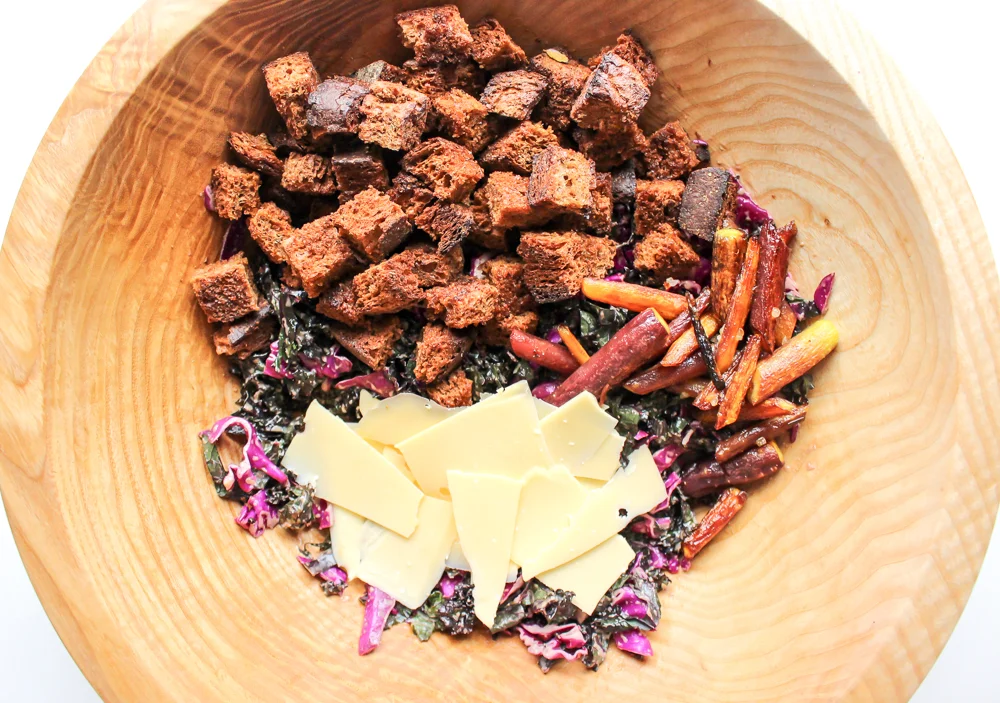
Anyhoo, when things are working normally, I have a few tricks to getting M to eat salad:
1) Let him help with mixing the salad and tossing in the dressing.
2) Cut everything really small.
3) AAC, or Always Add Croutons: Bread is pretty safe for most kids and the added crunch can be a fun textural element.
4) Deconstruct: If your kids like to isolate textures, you can also deconstruct the salad so they eat each element on its own.
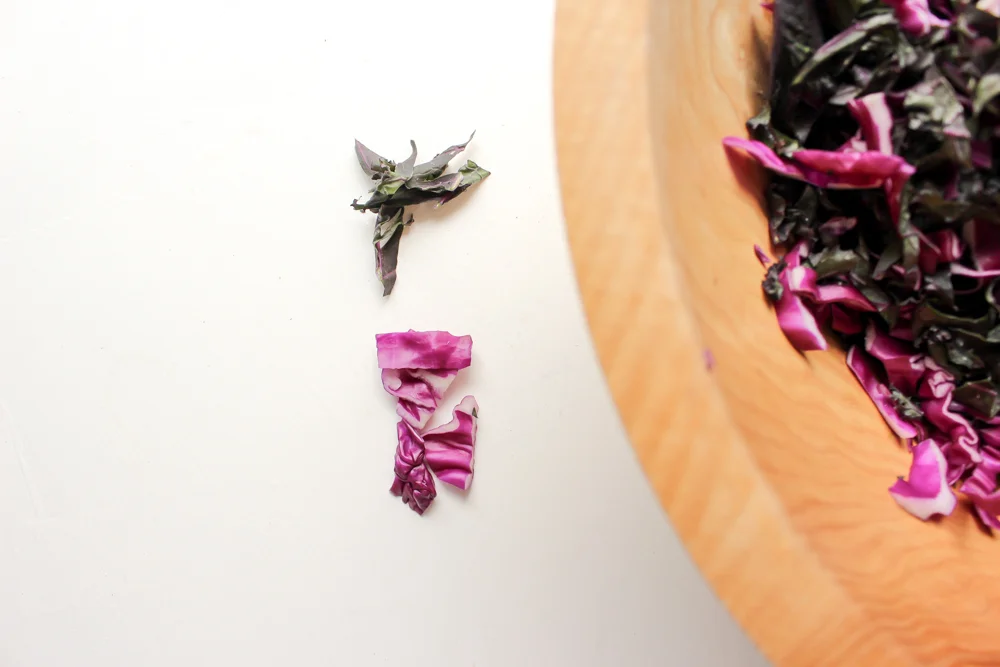
This salad is lovely and complex, but shockingly simple. I made it with just carrots the day I took photos, but it’s better with the roasted radishes and carrots. The carrots are sweet, which is great for kids, but the radishes add a slightly bitter edge that balances that sweetness. Roasting the radishes also takes away about 99 percent of the bite, though, so they’re very mellow.
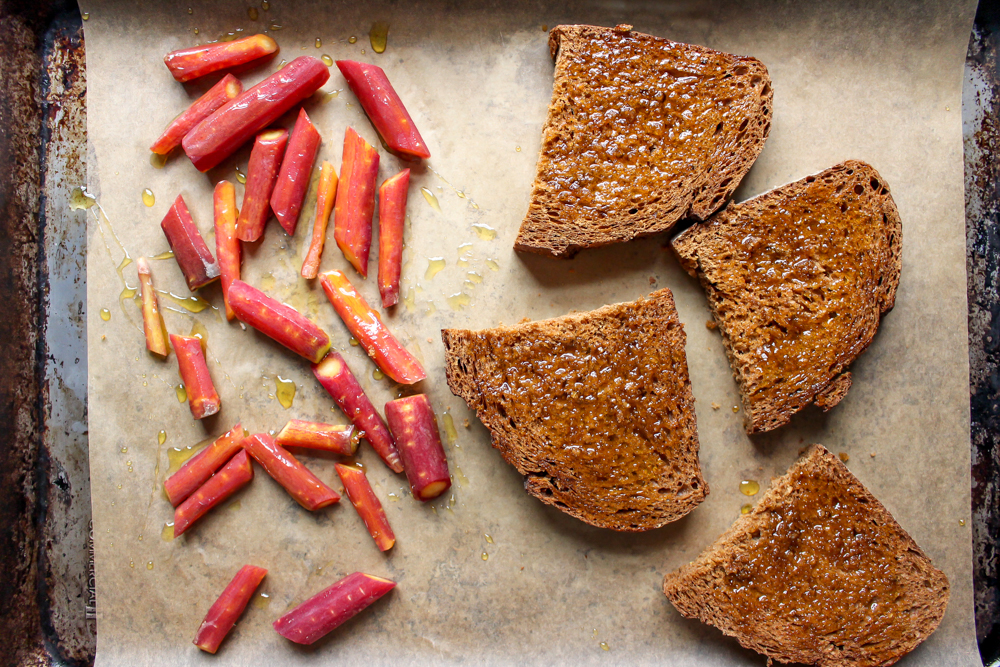
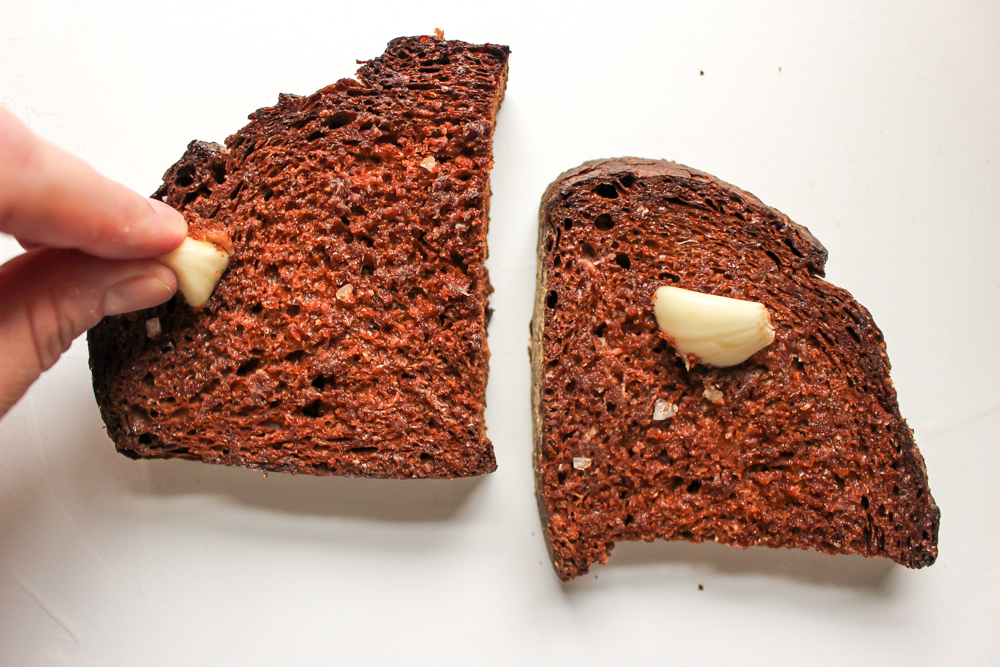
Don’t skip rubbing the bread with garlic once it’s toasted and before you cut it into croutons. So so good.
And don’t be shy with salt. Salads are so much better with salt.
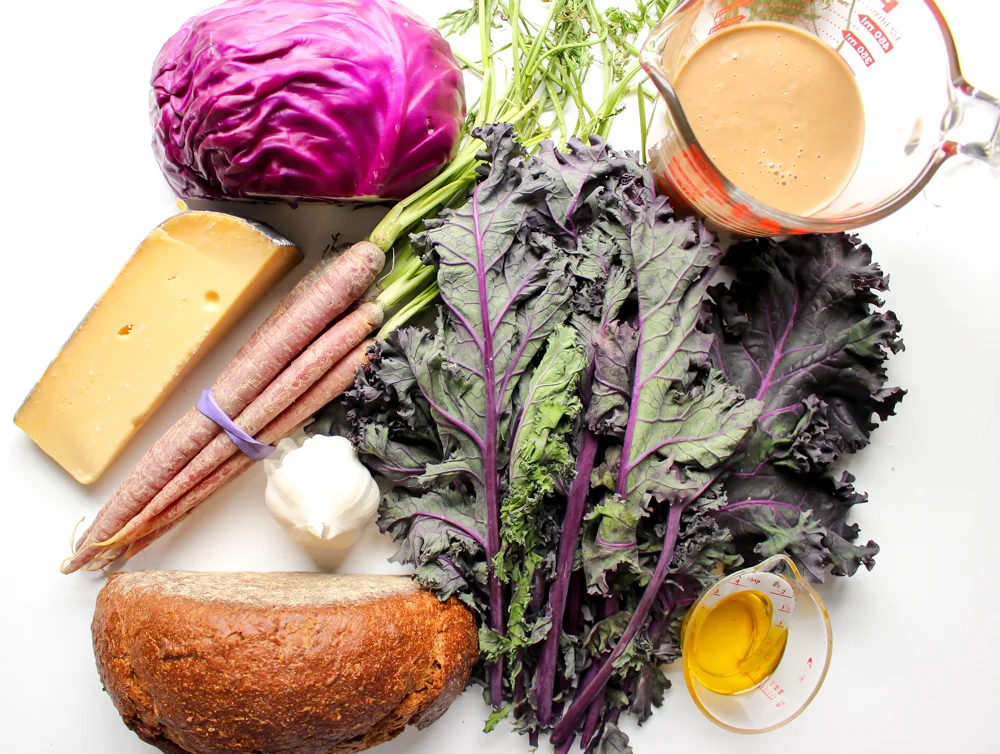
Purple kale and cabbage salad
1 small bunch purple carrots, peeled and sliced into large chunks
3-4 thick slices of pumpernickel bread
2-3 Tbsp olive oil
Large pinch of salt
1 bunch purple kale
½ small purple cabbage
½- ¾ cup balsamic vinaigrette (recipe below)
1 large clove garlic, cut in half
Aged gouda (optional)
Preheat the oven to 425.
Make the dressing (see recipe below).
Prep the carrots. Toss with 1 1/2- 2 Tbsp olive oil and a pinch of salt.
On the same sheet pan, place thick slices of bread and brush with the remaining olive oil and top with a pinch of salt.
Roast the carrots and bread for 10 minutes. Remove the bread slices and return the veg to the oven. Cook, checking for doneness every 5 minutes.
While the vegetables and bread are roasting, chop the kale and cabbage into very small pieces and toss well with the dressing. Set aside.
When the bread is still hot, but you’re able to handle it, rub the raw garlic over the crusty bread. Cut into small cubes and set aside.
(If you plan to make this salad ahead and serve after a few hours, stop assembling at this step. Store your cheese, croutons, and roasted vegetables separately and assemble the components just before serving.)
Add the carrots and croutons to the salad and toss. Top with slices or shreds of cheese and serve immediately.
Balsamic vinaigrette
1 small or ½ large shallot
1 small garlic clove
½ cup olive oil
¼ cup balsamic vinegar
2 Tbsp red wine vinegar
½ tsp kosher salt
½ tsp Dijon mustard
Pepper to taste
Add all ingredients to a small blender or food processor and blend until smooth. Check the seasoning. Dressing will keep in the refrigerator, covered, for up to 2 weeks.
Yield: about 1¼ cups or 9 oz
