Browned butter and leek mashed potatoes
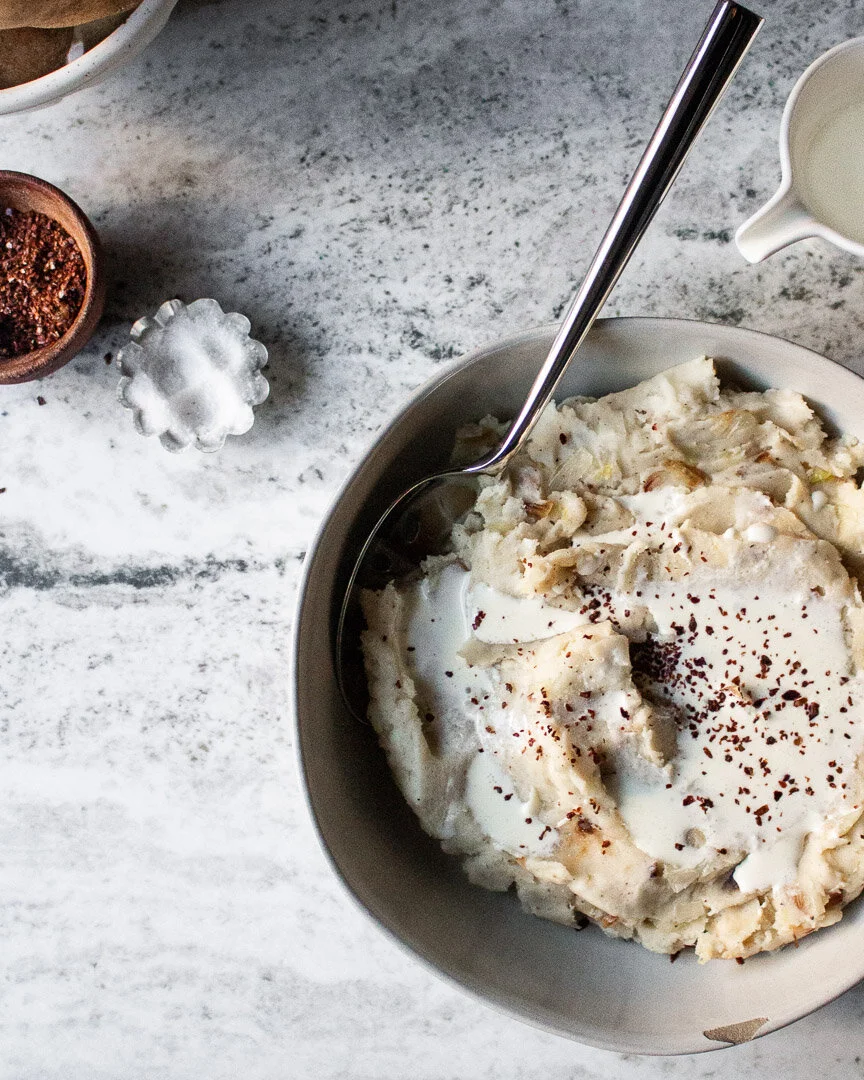
These browned butter and leek mashed potatoes are ultra creamy and decadent. A spring-y, quick, and special take on a comforting side dish for your holiday tables. #mashedpotatoes #springrecipes #holidayrecipes #easterrecipes #passoverrecipes
What’s better on your Easter or Passover table than some decadent (browned butter! cream!), spring-y (leeks!) mashed potatoes?
These browned butter and leek mashed potatoes are ultra creamy and decadent. A spring-y, quick, and special take on a comforting side dish for your holiday tables. #mashedpotatoes #springrecipes #holidayrecipes #easterrecipes #passoverrecipes
Spring holidays are the best. They feel like a gateway to blue skies, warmer weather, and, this year, like we’re one step closer to some sense of safety and normalcy. Maybe that’s overstating it, but last year’s holidays were SO WEIRD, right?. I was about 5 minutes postpartum with Z, so I’m sure everything felt worse in that state, but I remember being so afraid. We knew so little about Covid and how it spread. We wiped down our groceries with BLEACH. I was afraid to go in our front yard. We left our mail outside for WEEKS. WHAT THE FUCK.
Anyway, this year has been wild. I was actually imagining talking about it in the future. It’s going to be one of those conversations where the other people all went through the same thing, but we all need to talk about it like we were the only ones.
These browned butter and leek mashed potatoes are ultra creamy and decadent. A spring-y, quick, and special take on a comforting side dish for your holiday tables. #mashedpotatoes #springrecipes #holidayrecipes #easterrecipes #passoverrecipes
Anyway, about the potatoes. These are so quick and easy, but a little fancy and extra, which is what I like on a holiday table.
But let’s talk about ricing your mashed potatoes for a sec, shall we? I’m an avowed lazy cook/cleaner. I think it was years of dishwasher-less NYC kitchens that conditioned me to avoid extra dishes at any cost, so I really resisted using a ricer for a long time (and I still don’t use it unless it’s a special occasion). Some people are ricer devotees for achieving those ultra fluffy, creamy potatoes. And when you’re making straight-up, unadorned mashed potatoes, I do think the ricer makes a difference.
However, there are going to be lumps in these potatoes because we’re adding leeks, so I recommend skipping it and saving yourself some time and dishes.
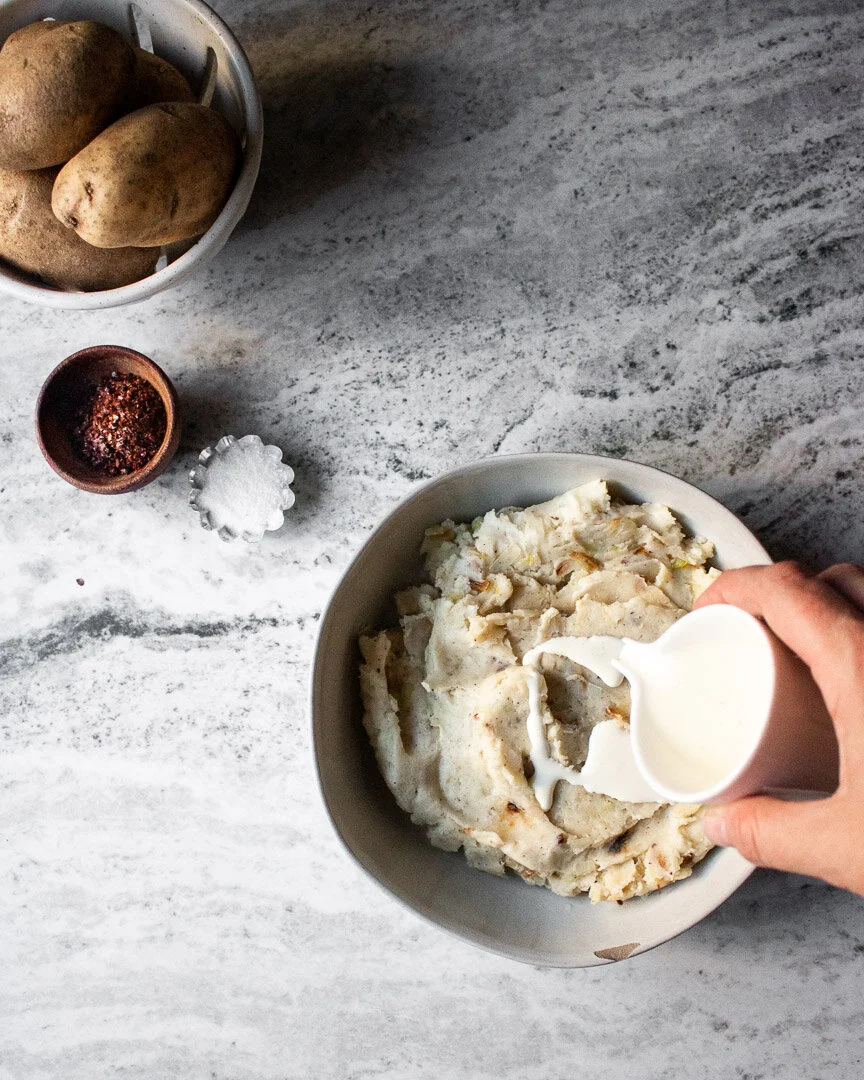
Want to make these extra decadent and fancy? Add a drizzle of cream on top of the potatoes along with a sprinkle of flaky sea salt and some Aleppo pepper to finish it off. It’s *chef’s kiss*.
These browned butter and leek mashed potatoes are ultra creamy and decadent. A spring-y, quick, and special take on a comforting side dish for your holiday tables. #mashedpotatoes #springrecipes #holidayrecipes #easterrecipes #passoverrecipes
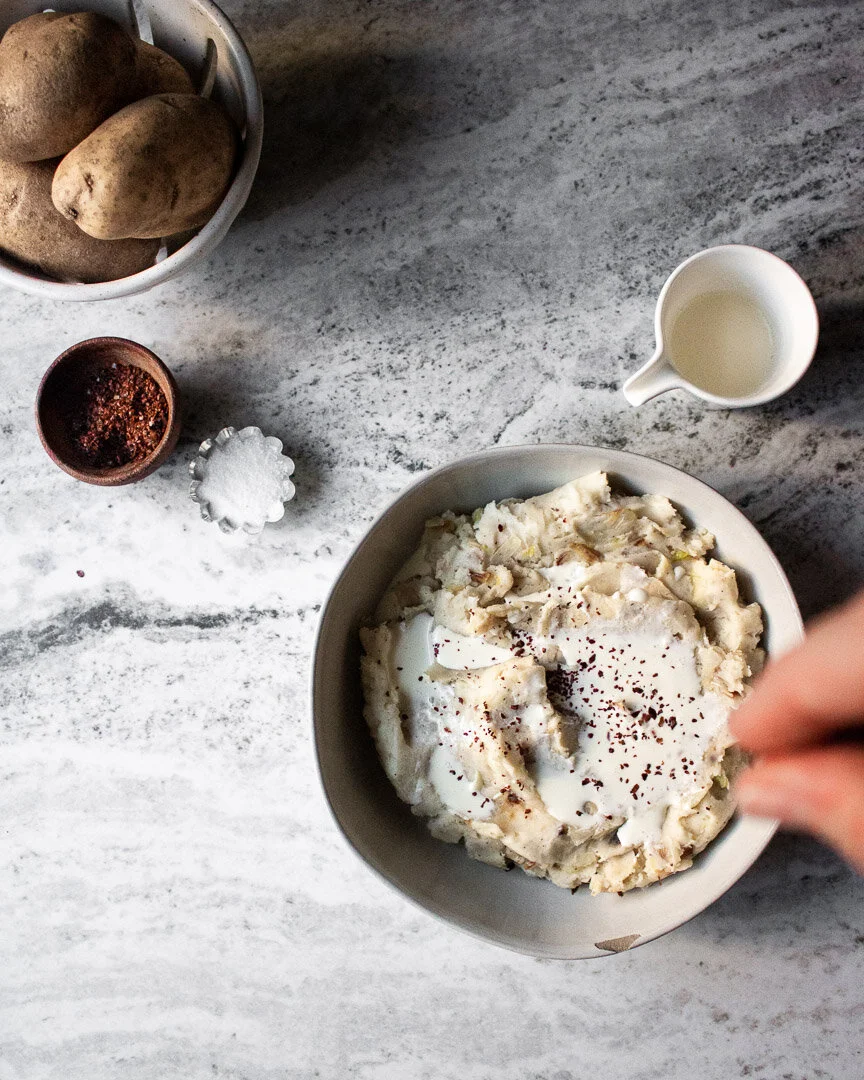
These browned butter and leek mashed potatoes are ultra creamy and decadent. A spring-y, quick, and special take on a comforting side dish for your holiday tables. #mashedpotatoes #springrecipes #holidayrecipes #easterrecipes #passoverrecipes
Brown butter and leek mashed potatoes
Time: 20 minutes, all active
Yield: About 4-6 side servings
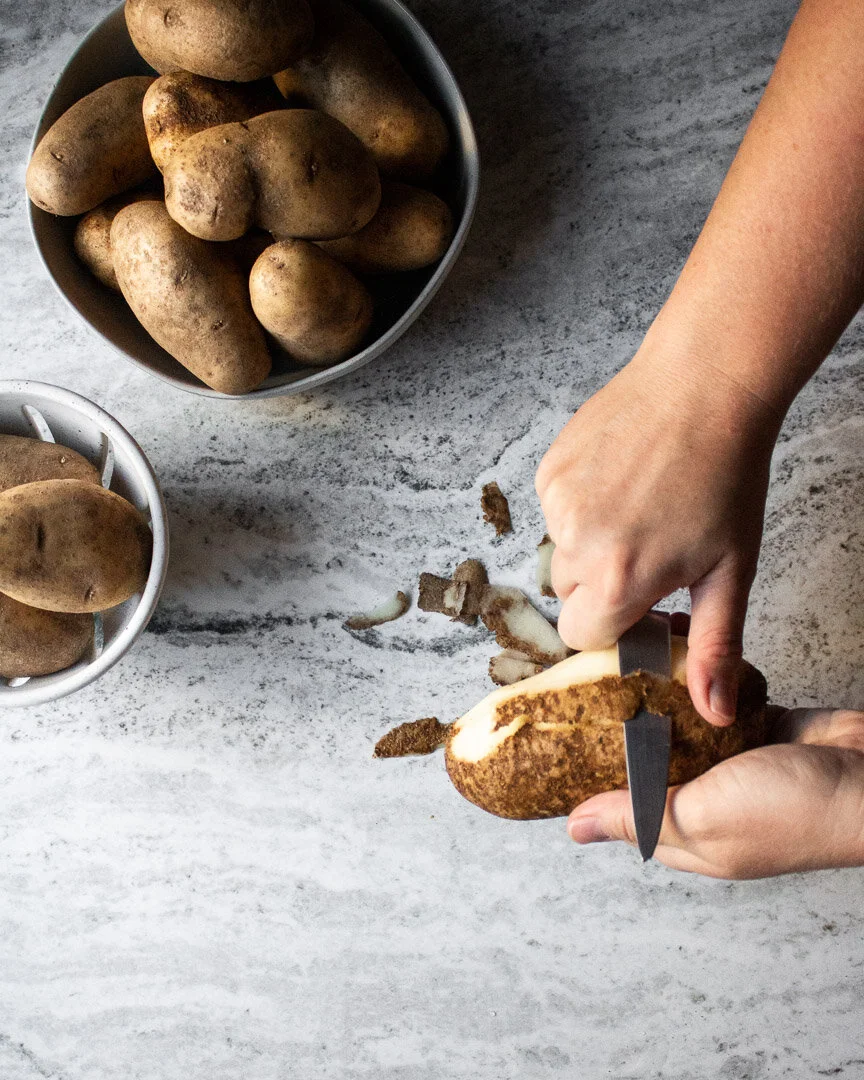
1 lb Russet potatoes, peeled and chopped into 1-inch pieces
¼ cup heavy cream + more for drizzling
1 tsp kosher salt, divided
4 Tbsp butter
1 small leek, trimmed, quartered and sliced
¼ tsp pepper
Pinch of Aleppo pepper (optional)
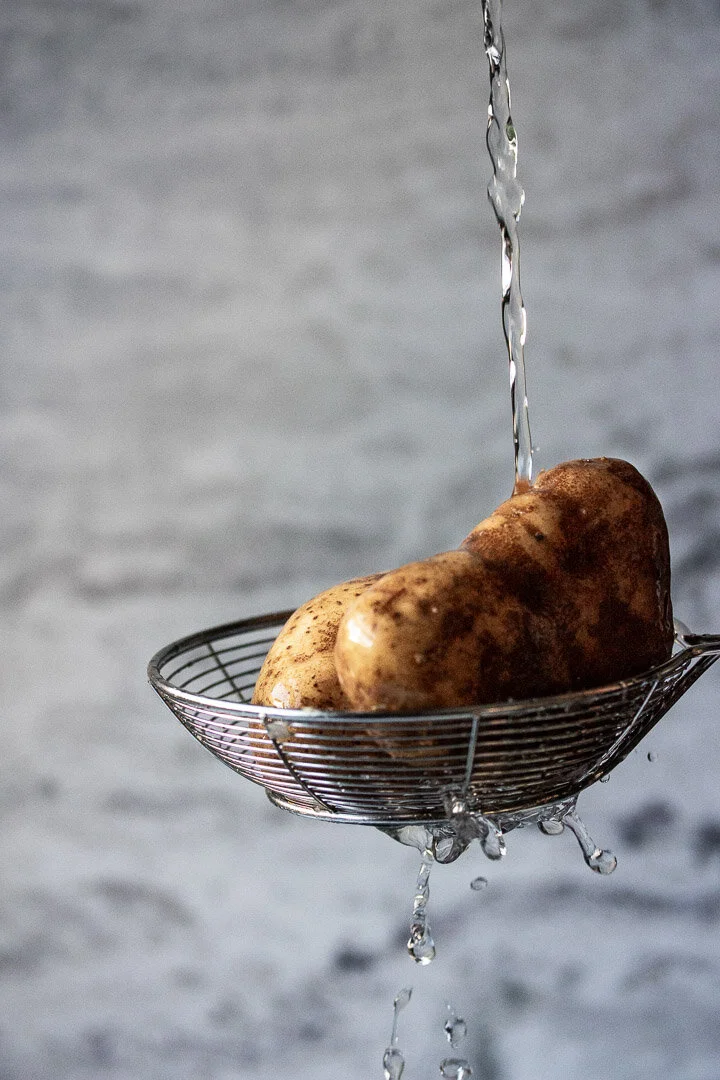
In a medium soup pot, cover the peeled and chopped potatoes with cold water. Bring to a boil over a high flame. Once boiling, continue cooking at a rolling boil (you may need to turn the flame down if the water threatens to boil over) for 8-10 minutes or until the potatoes are fork tender.
While the potatoes are boiling, clean and chop your leeks and set aside.
Add the butter to a small pan or pot and heat over a medium flame until the butter has melted and begins to bubble vigorously and pop slightly. If the popping is too much or too dangerous, turn the flame down slightly, but you want to maintain the bubbling. Let the butter cook for 1-2 minutes and check to see if little brown bits are separating and falling to the bottom of the pan beneath the bubbles. The butter should smell nutty. This may take a few minutes longer depending on your pan and how cold your butter was to start, so keep checking regularly.
Once the browning has begun, add the leeks and ¼ tsp salt to the pan and cook, stirring occasionally, for about 5 minutes, until the leeks also begin to brown. If the browning happens too quickly, turn down the flame.
Drain the potatoes and add ¼ tsp salt. Mash well.
Add ¼ cup heavy cream to the mashed potatoes and whip vigorously with a spatula or whisk. When the leeks and butter are sufficiently browned, add them to the potatoes. Season with the remaining ½ tsp of kosher salt and ¼ tsp of pepper, or more to taste.
Almond and coconut energy balls
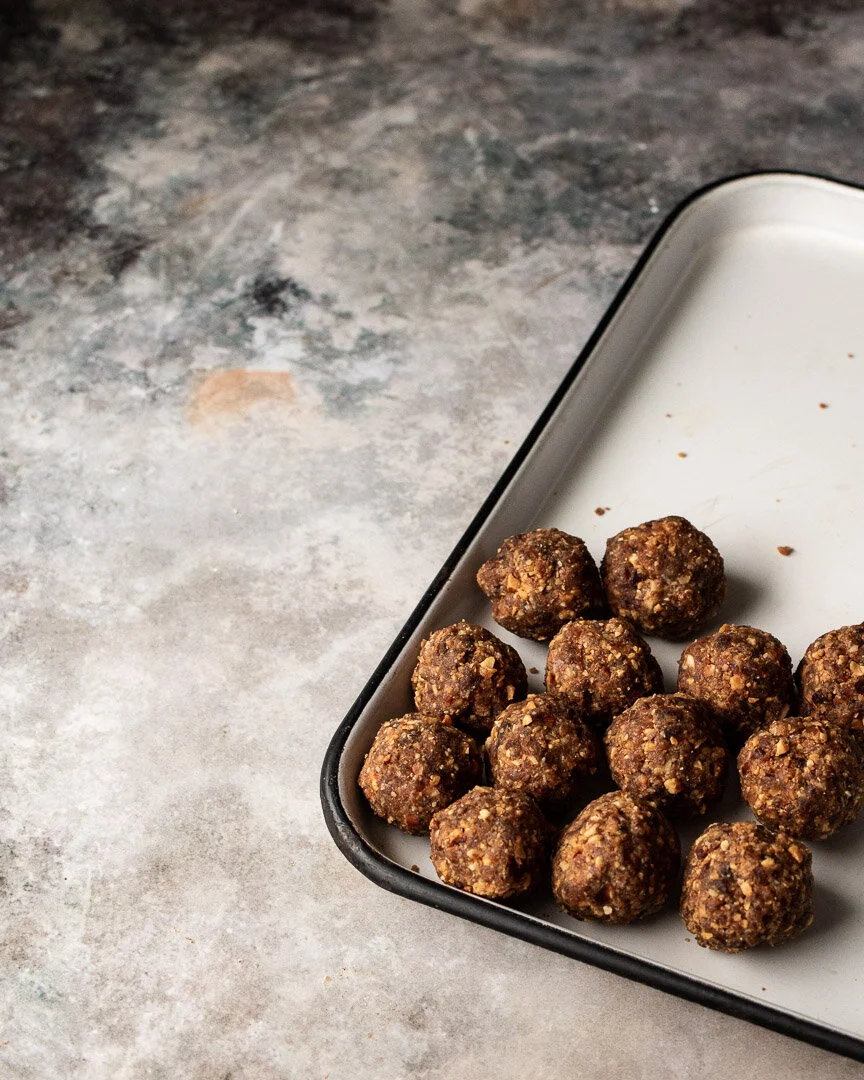
These throw-together snacks are easy to make and store for a filling, quick bite on the go.

Let’s talk energy balls, shall we? Sometimes called “energy bites,” these sticky, two-bite goodies are naturally sweetened with dates and come together in a food processor in minutes. They require minimal ingredients, can be modified to suit your tastes, and are surprisingly filling for such a tiny treat. Best of all, when stored in the fridge, they last for weeks.
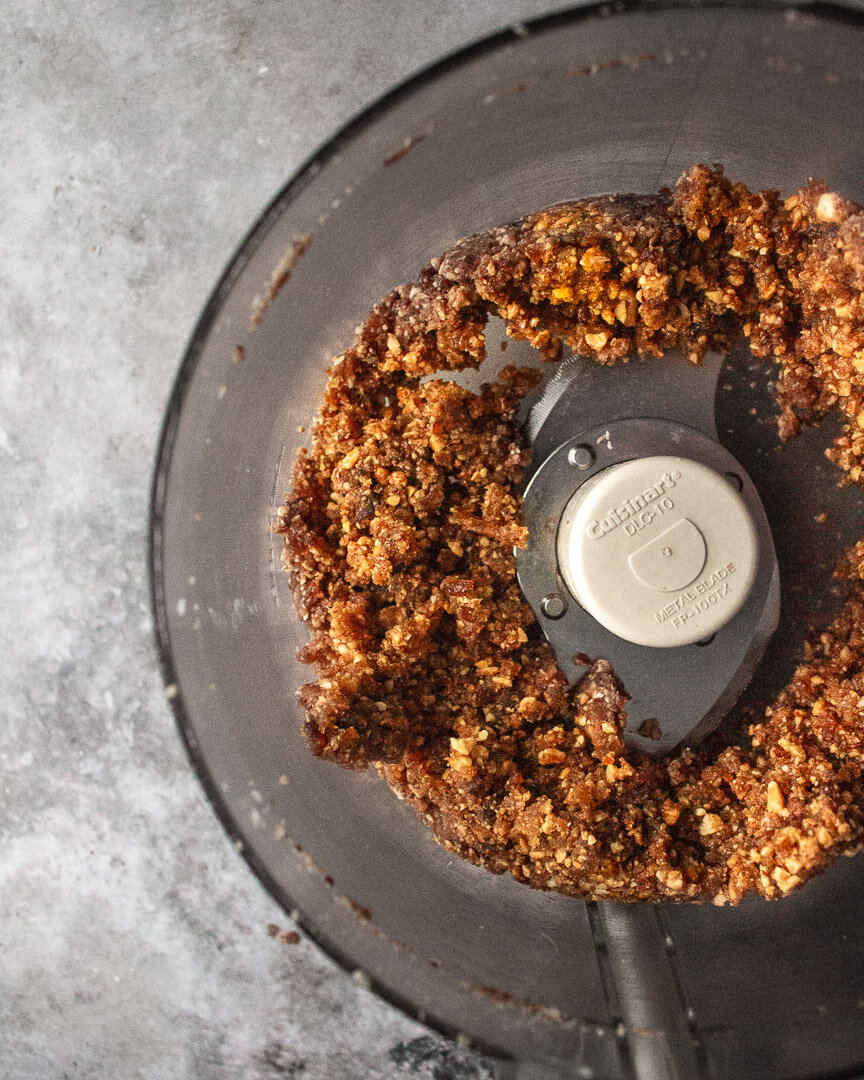
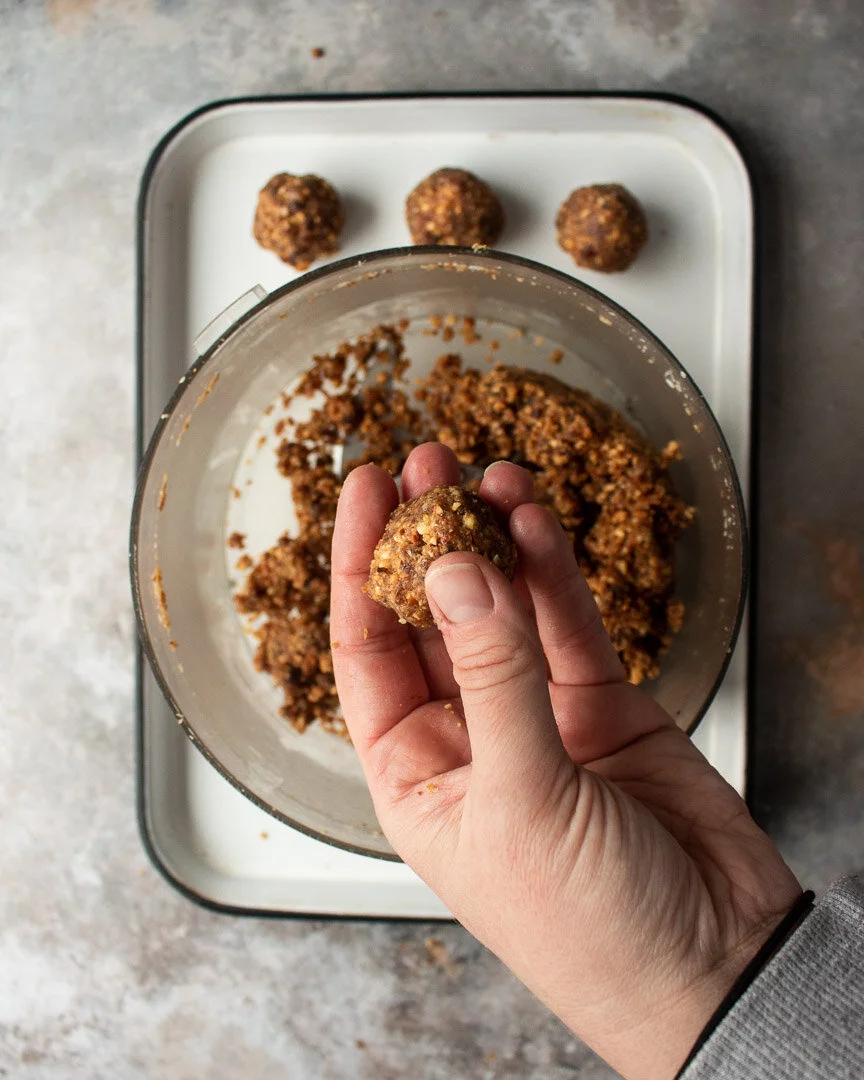
This is the thing I grab when I absentmindedly open the fridge, looking for something (in both food and existential senses).
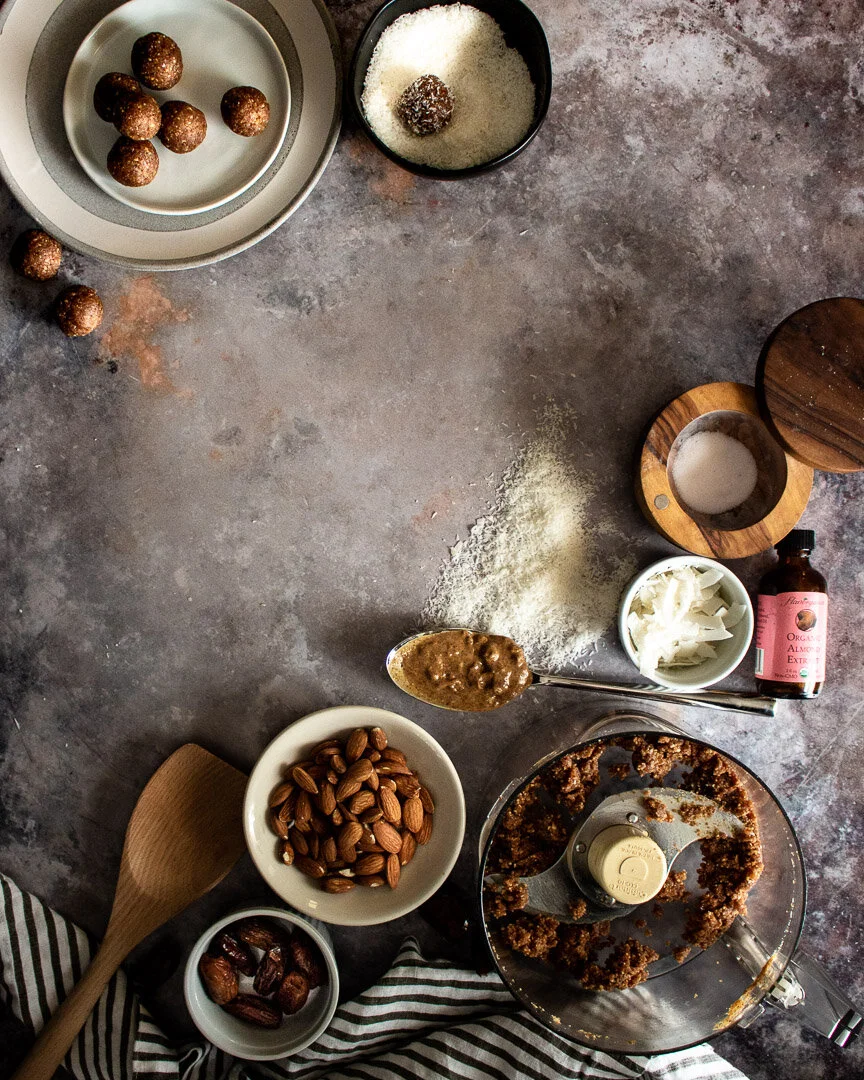
A couple of notes:
Make the balls small! The mixture is pretty caloric, so I make them no more than about 1 Tbsp each.
Do toast the almonds and coconut. That little bit of browning really enhances the flavor and makes the balls less sweet.
Test your dates before using. If they don’t squish almost effortlessly, they may be a bit too tough or dry. If that’s the case, cover them with boiling (or just really really hot) water and let sit for 5 minutes.
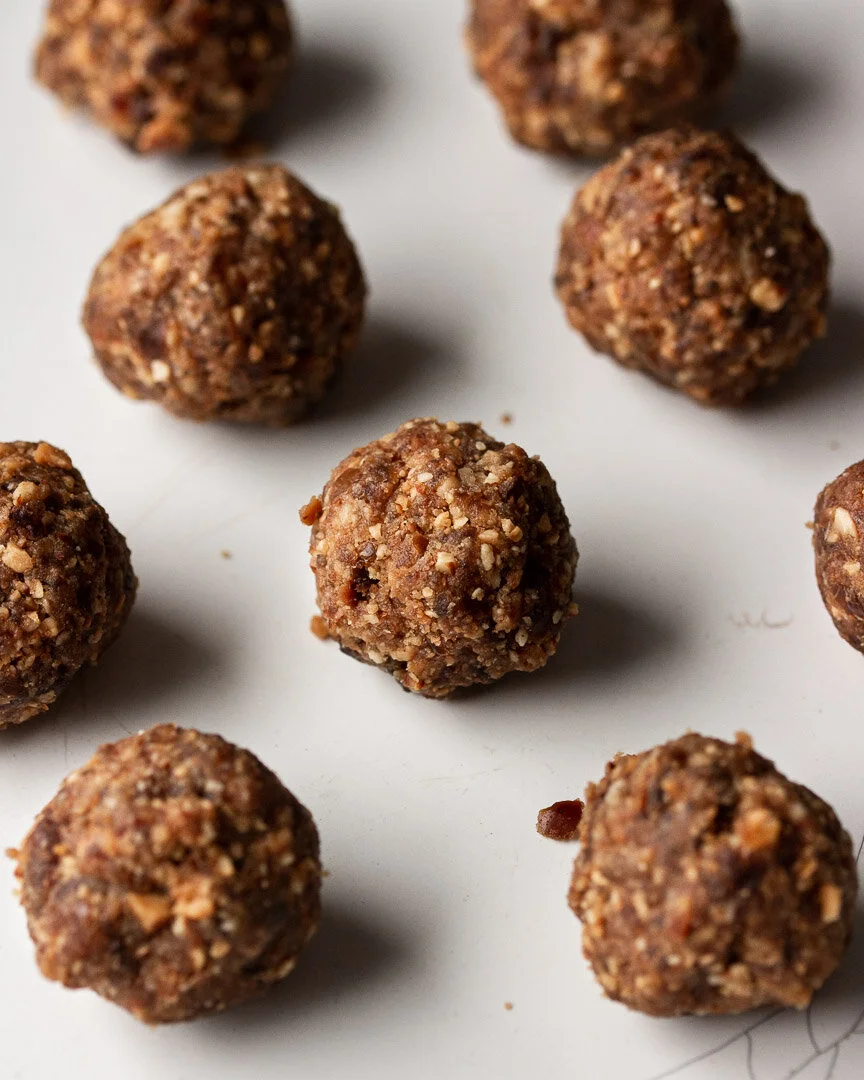
Almond and coconut energy balls
Time: 15 minutes
Yield: 16 balls
1/2 cup raw almonds
1/2 cup unsweetened shredded or flaked coconut
16 pitted dates, rehydrated if too tough or dry
2-3 Tbsp almond butter
1/8 tsp almond extract
Pinch of salt
Water, as needed
Preheat the oven or toaster oven to 350. Spread the almonds and coconut out onto a baking sheet and toast until the coconut is just beginning to brown on the edges and the mixture smells nutty, about 3 minutes. Keep a close eye on the mixture to ensure that it doesn’t burn.
Put the toasted almonds and coconut in a food processor along with the dates, almond butter, almond extract, and salt. Whizz in the processor until the mixture comes together in one large mass, about 4-5 minutes. If the mixture doesn’t come together, sprinkle in about 1/2 tsp of water and try again, repeating about every 30 seconds until you have a large mass.
Scoop about 1 Tbsp of the mixture into wet hands and roll into a ball.
Chill the balls in the refrigerator to help them set.
Koginut squash soup

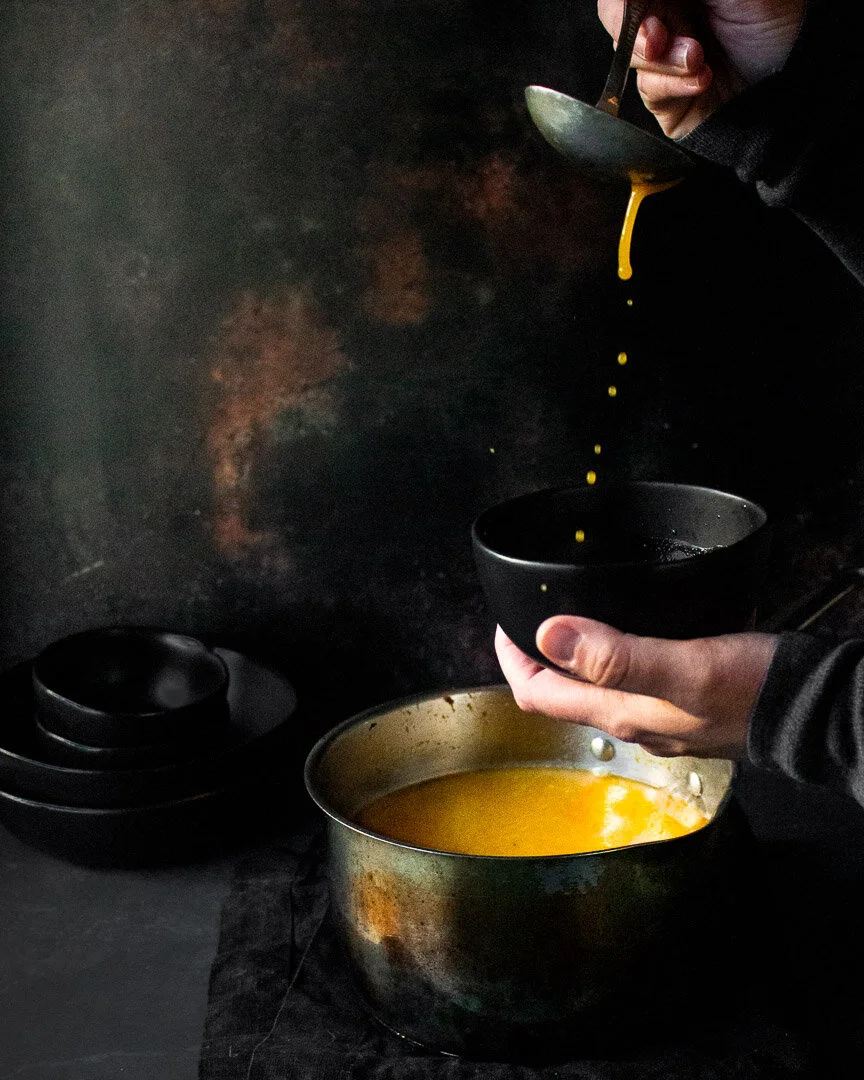
This soup is so creamy, herby, warm, and comforting—everything a bowl of soup should be. I use Koginut, which is a cross between the butternut and kabocha varieties of squash, but use anything you have on hand!
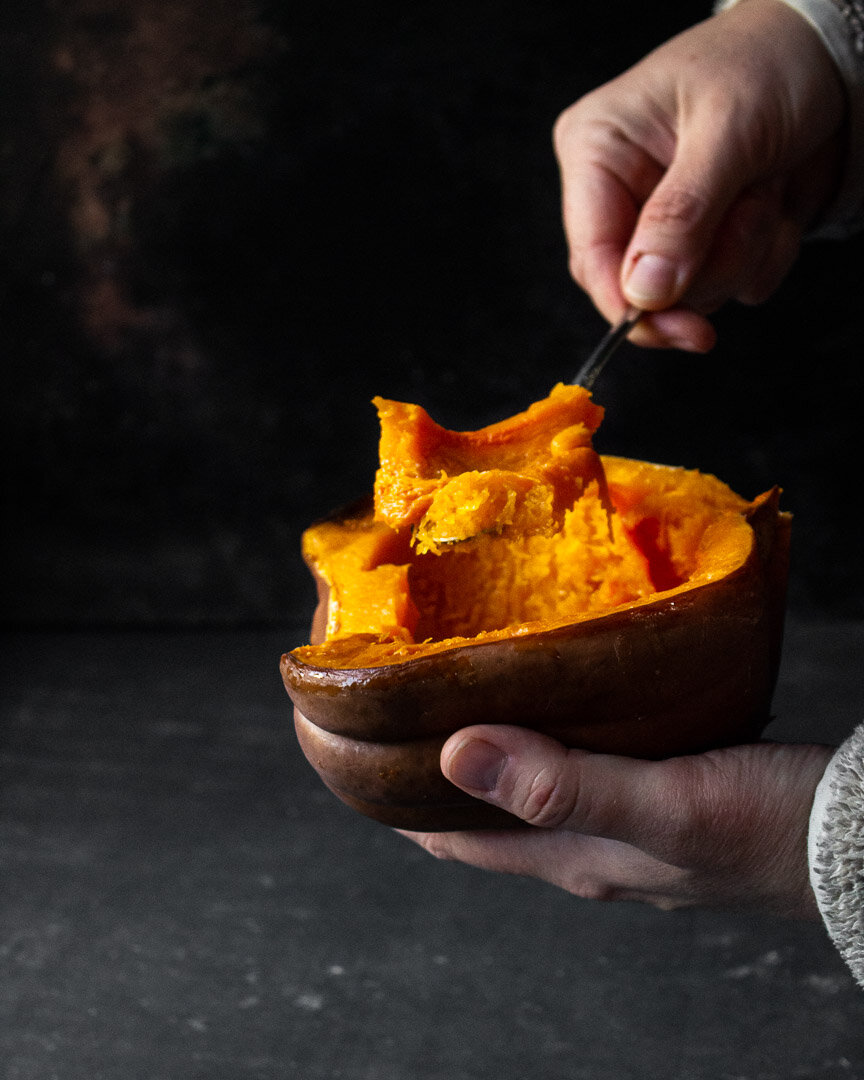
The koginut is my new favorite squash. It has the thick, creamy flesh of a kabocha squash but the mellow, sweet flavor of a butternut. If you can’t find one, have no fear. Basically any winter squash variety would be perfect here and all roast in roughly the same way. I’ve also used 2 extra large sweet potatoes in a pinch and the soup turned out equally delicious.
A note about roasting: One important element of this roasting method is to NOT trim the tops and bottom of the squash. Leaving them whole means that the steam gets trapped in the cavity of the squash so that it roasts and steams at the same time.
Also! In the recipe, you’ll note that I put the milk high up on the ingredients list even though we don’t add it until the end. That’s because, bringing it to room temperature and even microwaving it a bit makes it less likely that the milk solids will separate, which can happen if the cold milk is shocked by the hot soup. You can warm it in a pan on the stove while the soup simmers, but who wants to make another dish or worry about something scalding?


Koginut squash soup
Time: About 90 minutes, less than half of it active
Yield: 10 cups of soup
3 cups roasted squash, about 1 medium winter squash or 2 very large sweet potatoes
½ cup heavy cream or half and half
1 Tbsp olive oil
½ large onion or 2 large shallots, roughly chopped
5 large garlic cloves, roughly chopped
1 Tbsp butter
3 stems fresh thyme or ¼ tsp dried
Heaping ¼ tsp cumin
Heaping ¼ tsp paprika
1 tsp sea salt
4-6 cups low sodium chicken stock
2 Tbsp brown sugar (optional)
Heat oven to 425. Halve the squash and scoop out the seeds and stringy flesh inside. Place the squash cut side down on a parchment-lined baking sheet and roast for 30-45 minutes, until the squash is fork tender.
Using a kitchen towel or oven mitt to protect your hands, scoop out the cooked flesh from the inside of the squash and set aside.
Measure out the cream or half-and-half. Let sit at room temperature while you prepare the rest of the soup.
In a large stock pot, heat the olive oil over a medium-low flame and then cook the onion until beginning to brown, about 5-6 minutes. Add the garlic and cook for 1 minute until fragrant.
Add the butter and let melt and bubble slightly.
Add the spices, stir well, and cook for 1 minute until fragrant.
Add the squash and stir well to combine. Add the stock, stir well again, increase the flame to high, and let the liquid come to a boil.
Turn down the flame to low and let simmer for 15 minutes.
Puree the soup.
Add the puree back to the original pot. Test the milk to see if any chill remains. If it feels cool to cold, microwave it for 30 seconds at a time until it feels room temperature or warmer. Add to the soup and stir.
Test for seasoning and adjust as necessary. If desired, add 2 Tbsp of sugar (brown or white) and stir to combine.