Cauliflower Parmesan
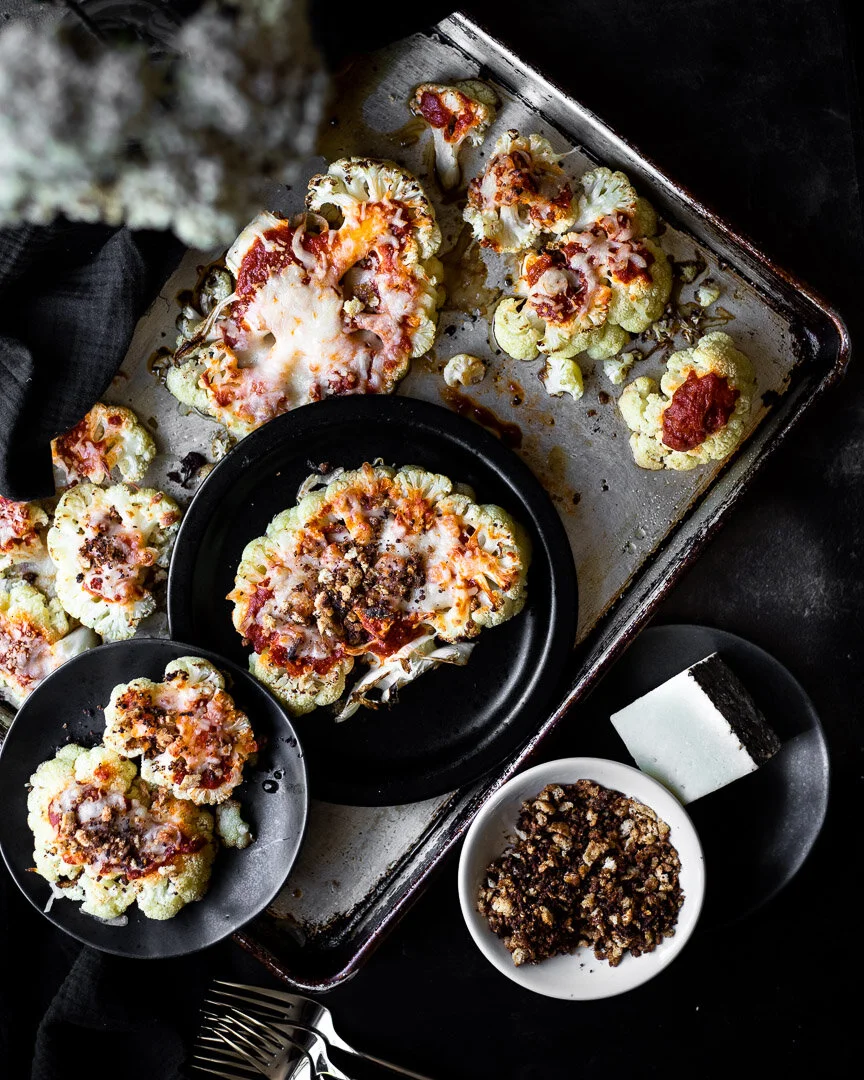
Swap the meat and heavy breading with cauliflower and a crunchy, salty panko topping, and you have a hearty, satisfying pescatarian dish that’s quick, easy, and pleases everyone in the family. #meandthemoose #cauliflowerparmesan #lightercomfortfood #comfortfood #sheetpandinner #dinnerrecipes
This recipe replaces meat with cauliflower steaks and uses some crispy, briny, magical breadcrumbs to add a crunch that mimics breading without any dredging or frying necessary!

Swap the meat and heavy breading with cauliflower and a crunchy, salty panko topping, and you have a hearty, satisfying pescatarian dish that’s quick, easy, and pleases everyone in the family. #meandthemoose #cauliflowerparmesan #lightercomfortfood #comfortfood #sheetpandinner #dinnerrecipes
I put on real clothes for the first time post-pandemic and postpartum for a wedding last weekend and it felt…strange. Like, I’ve completely lost track of the parameters of my body. I ordered a couple of dresses that were all either wildly too big or wildly too small. Have clothes changed a lot in the past 23 months? Or do I need to add body dysmorpia to the list of fun things I have to deal with now???
Anyway, I need to get a grip on a lot of things. Firstly, clothes. Secondly, time. The pandemic made time seem both short and interminable. But one nice benefit to having my husband working from home for the past year was that I could hand him a baby monitor while Z napped or leave him with a barely moving infant while he worked so I could handle the 5-year-old. Now that Z is a one-toddler wrecking crew and Ethan will head back to the office soon, I have to account for the whereabouts of two children who are doing activities in the real world again. Ugh.
Well, this cauliflower parmesan sheet pan dinner solves both problems. Well, not SOLVES necessarily, but definitely fits the bill for a fast, light meal that everyone likes.

Swap the meat and heavy breading with cauliflower and a crunchy, salty panko topping, and you have a hearty, satisfying pescatarian dish that’s quick, easy, and pleases everyone in the family. #meandthemoose #cauliflowerparmesan #lightercomfortfood #comfortfood #sheetpandinner #dinnerrecipes

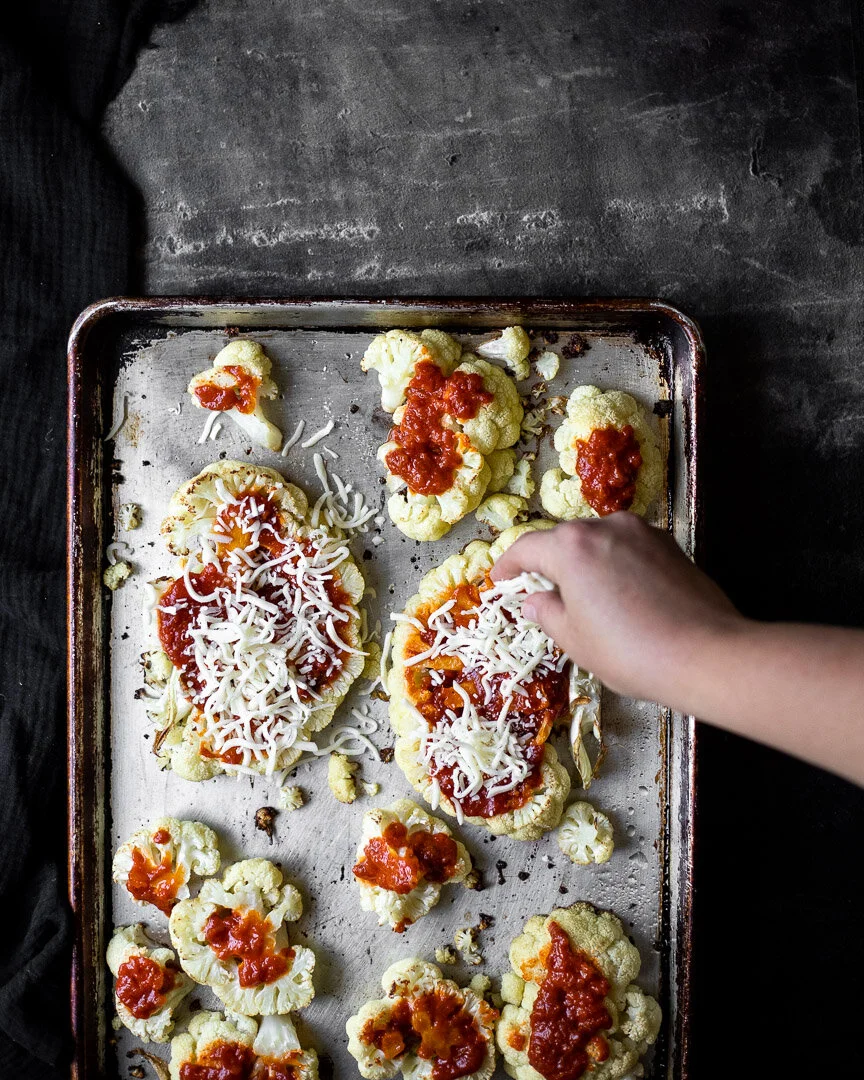
A couple of notes:
This recipe leaves a lot of wiggle room for more sauce, cheese, and breadcrumb topping to suit your tastes.
I use cauliflower here, but you could certainly use meat or any other vegetable you like topped with sauce, mozzarella, parmesan, and magical breadcrumbs.
I find this meal really filling for something sans meat, but my husband always asks for a sausage or some leftovers from another meal to go with it, so use this guy as a side or a main as you see fit.
I barely salt the cauliflower. Usually, it needs a lot of seasoning, but since the breadcrumbs are so salty, I don’t want to overdo it. You can always add, but you can’t subtract.
The cooking time will depending on how thinly you slice the cauliflower. Check it after 10 minutes and stop roasting when the stems are just fork tender.
Swap the meat and heavy breading with cauliflower and a crunchy, salty panko topping, and you have a hearty, satisfying pescatarian dish that’s quick, easy, and pleases everyone in the family. #meandthemoose #cauliflowerparmesan #lightercomfortfood #comfortfood #sheetpandinner #dinnerrecipes
Cauliflower Parmesan
Time: About 30 minutes, all active
Yield: 2-3 mains or 4-5 sides
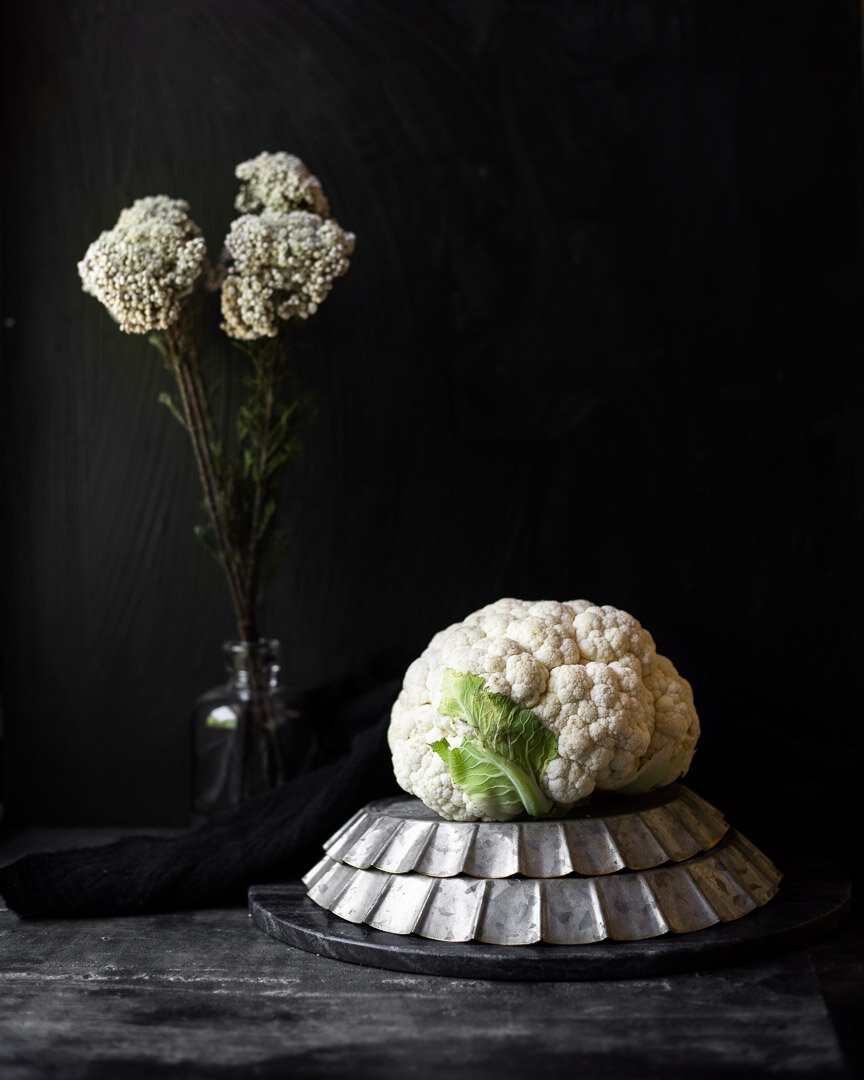
1 very large or 2 medium heads of cauliflower, stems intact
¼ cup olive oil
Pinch of salt
1½ -2 cup tomato sauce (plus extra for dipping)
1½ cup shredded mozzarella
¼ cup shredded or grated parmesan
1 cup Magical breadcrumbs (recipe below)
Preheat oven to 425.
Remove the leaves at the bottom of the cauliflower, but leave the stem intact. Cut the cauliflower into 1-inch thick slices and spread on a baking sheet. Some may break into florets and that’s okay!
Spray or brush on half of the olive oil. Flip the cauliflower and spray or brush the other sides. Season one side of the cauliflower with a pinch of salt.
Roast for 15-20 minutes, or until the stems of the cauliflower are fork tender. Start checking around 10 minutes.
While the cauliflower roasts, make the breadcrumbs (recipe below)
When cauliflower is fork tender, remove it from the oven and turn on the broiler.
While the broiler is heating, top the cauli steaks with 1 cup of the sauce and all of the mozzarella.
Broil until the cheese is golden brown, about 2 minutes.
Top with the parmesan and magical breadcrumbs to taste.
Magical breadcrumbs
2 Tbsp olive oil or butter
2 whole anchovy filets (or 4 split filets depending on how your anchovies are canned)*
1 heaping cup panko
2 large garlic cloves, minced (about 2 Tbsp)
Heat olive oil in a large skillet over a medium-low flame. Add the anchovies and cook, breaking them up with a wooden spoon or spatula until they’re completely dissolved, about 3-4 minutes.
Add the panko and cook, stirring frequently, for 3-4 minutes. If the breadcrumbs start to darken, turn the flame down.
Add the garlic and stir well. Let the mixture cook, untouched for 2-3 minutes or until the bottom of the breadcrumbs start to turn golden. Turn off the flame and mix the breadcrumbs. Let cool for a few minutes in the pan before using.
If saving for later, let the breadcrumbs cool completely and then store, covered loosely, in the fridge for up to 4 days.
Shortcut chicken soup
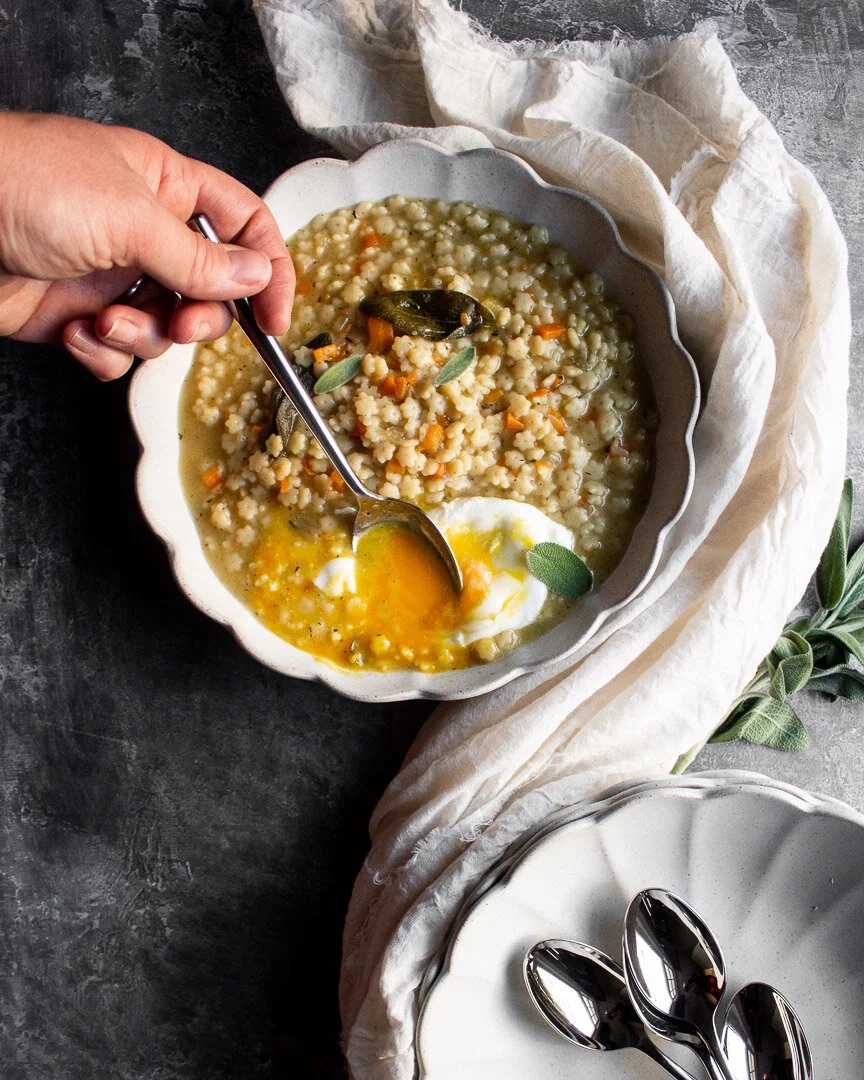
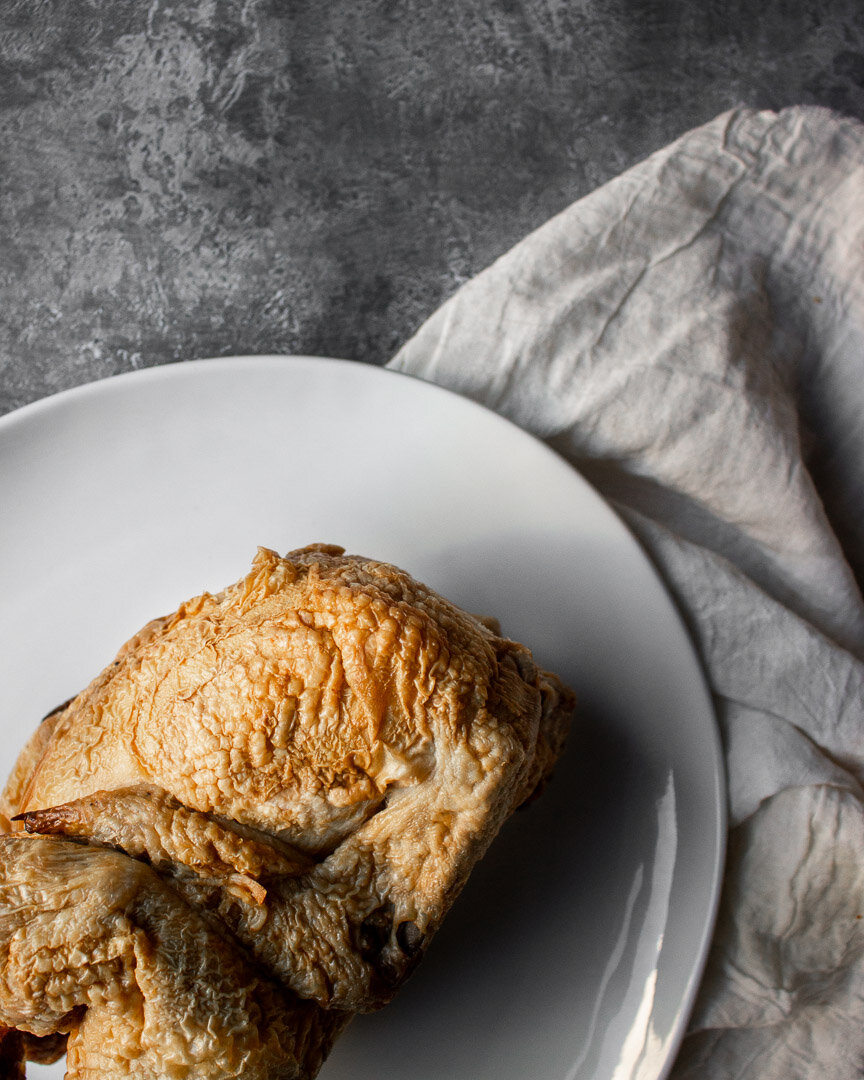
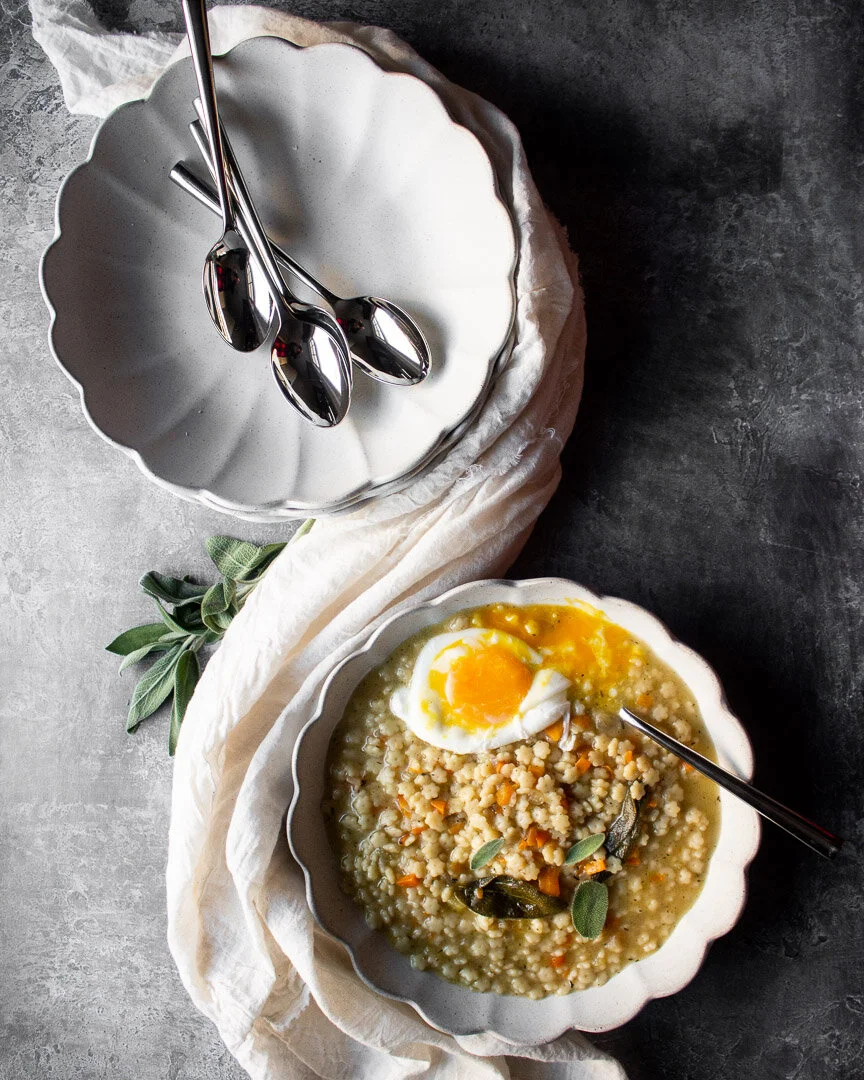
This chicken soup uses a few shortcuts like rotisserie chicken and store-bought broth to speed up the process, but gets extra oomph from plenty of aromatics, a little extra cooking oil, and teeny tiny pasta cooked right in the broth. A poached egg on top adds even more richness and depth.
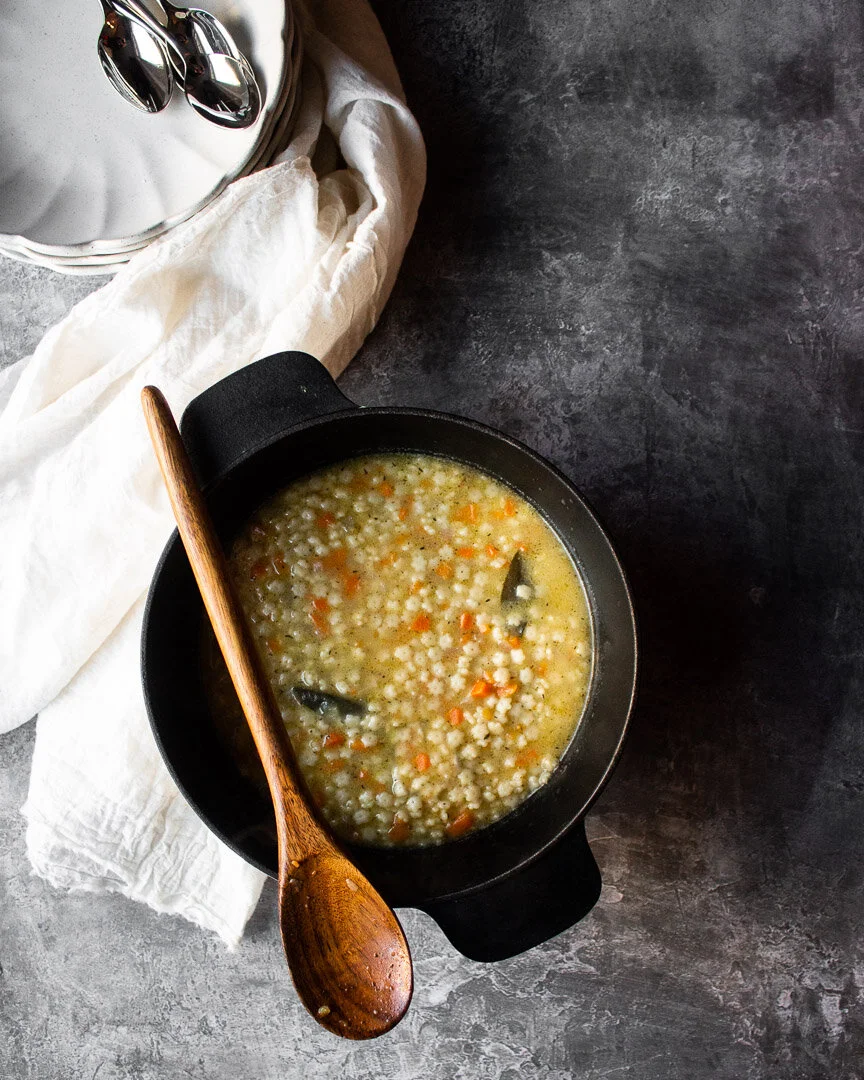
I originally called this “Quick and rich chicken soup,” but it sounded too much like a country band. However, the moniker still applies because this guy is indeed quite rich and quite quick (for a soup that tastes this good, that is!).
I’m not a huge fan of the chicken broth that comes in a box or a can. I mean, it’s fine as a replacement for water when cooking grains and beans, but for soup? It’s a little thin and bland for me. But, I don’t always have homemade stock in the freezer or the wherewithal to make it. (But if I do, this is my recipe!)


To spice and thicken it up, I use any combination of these:
Butter: Adding a little extra cooking fat when you start sautéing your aromatics adds richness to the final product.
Tiny pasta: The teenier the better! Orzo, stelline, ditalini, anilline, or any other pasta that’s about the size of a pencil eraser works perfectly. When cooked in the broth, the starch from the pasta thickens the broth significantly.
Cheese: Adding some grated cheese at the end is one strategy, but tossing in the leftover rind of any hard cheese adds salt, depth, and richness.
Salt: This might sound weird because a lot of canned and boxed broths have A LOT of salt in them, but if you use the unsalted or low salt variety, be sure to add enough salt back in.
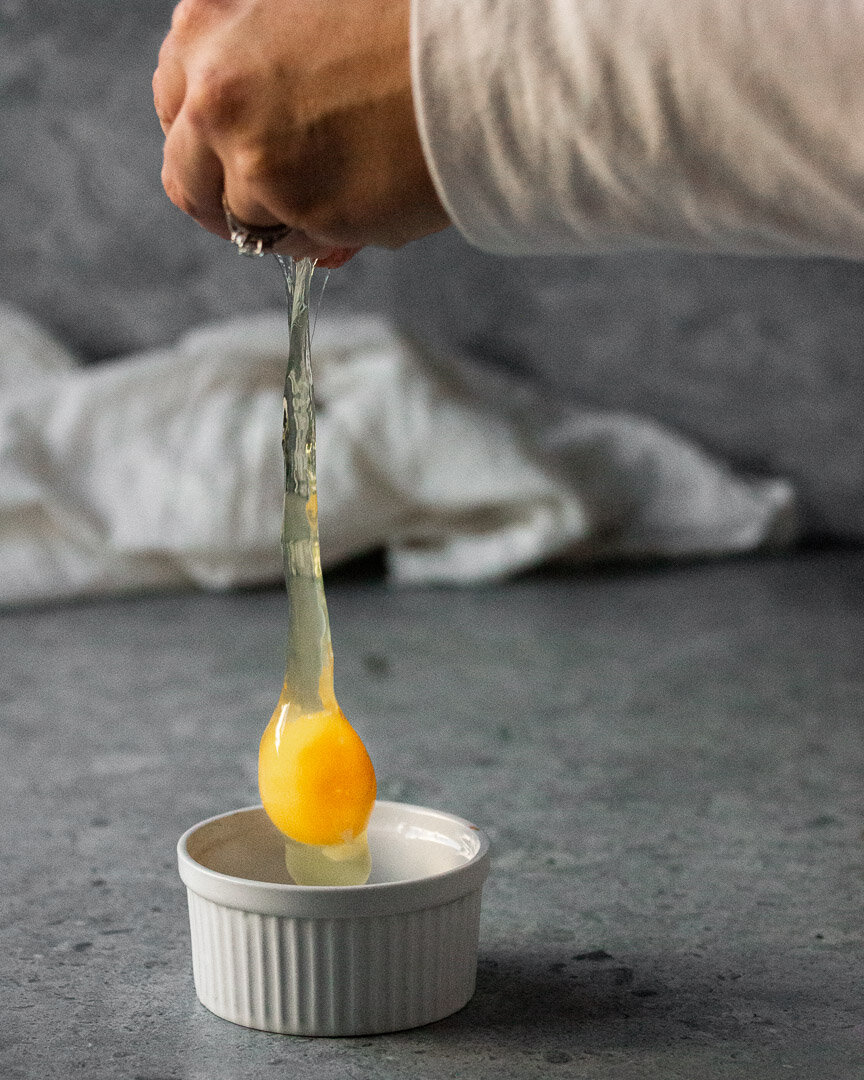
Poached egg: When the soup is done, adding a poached egg on top enriches it even more!

In this soup, I used pasta and a poached egg to give it a rich, silky texture. I included a range for the amount of liquid to add depending on how much liquid you like in your soup. Six cups makes the soup very thick, eight cups make it less so.
Shortcut chicken soup
2 Tbsp olive oil
1 small onion, diced
1 medium carrot, peeled and diced (heaping ½ cup)
1 small stalk celery, diced (scant ½ cup)
6 large fresh sage leaves
½ tsp dried thyme
1 bay leaf
1 tsp kosher salt
Black pepper to taste
6-8 cups chicken stock
1 cup tiny pasta
1-2 cups shredded, precooked chicken
Serving sugggestions:
Poached egg, parmesan cheese, more seasonin to taste
Time: About 45 minutes, mostly active
Yield: About 6-8 cups of soup, depending on how much water and chicken you add
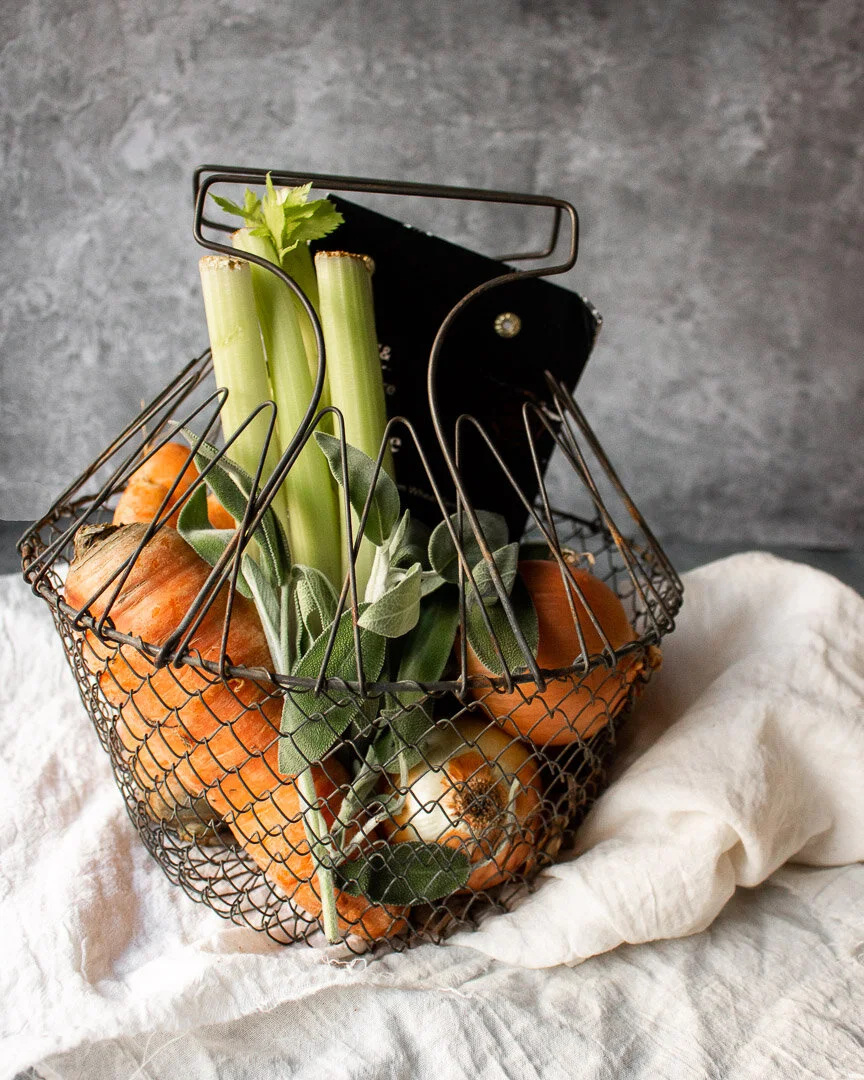
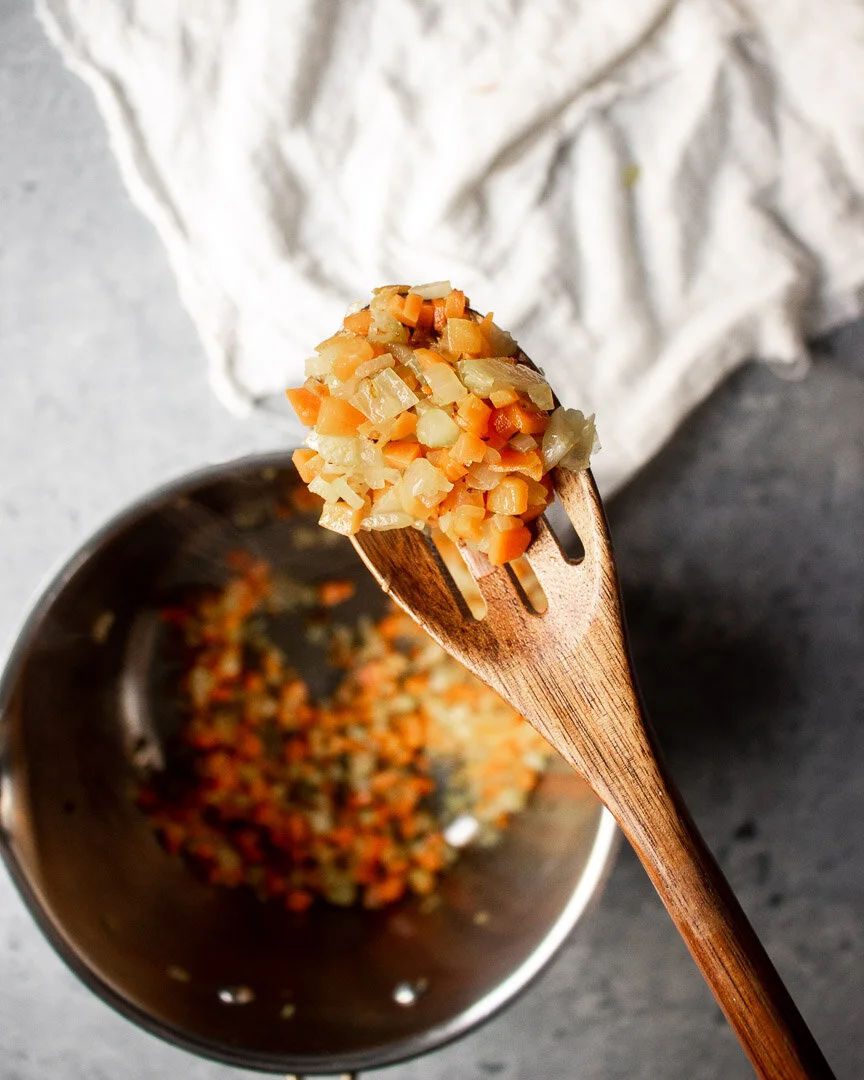
Heat the olive oil in a large, deep pot over medium high heat. Add the minced onion, carrot, and celery and cook, stirring frequently, until the veggies begin to brown and the onions are translucent, about 6-8 minutes.
Add the sage and thyme and cook until fragrant, about one minute.
Add the bay leaf, salt, pepper, and chicken stock and mix well. Bring to a boil, reduce the heat, and simmer, covered, for 20 minutes.
While the soup simmers, shred the chicken and set aside.
Bring back to a boil and add the pasta. Cook according to package directions until al dente.
Add the shredded chicken and stir.
Quick(ish) Meat Sauce

Meat sauces are usually long and slow affairs, but this version speeds things up with high heat and beef stock to mimic the flavor of a cooked-all-day sauce in a fraction of the time.
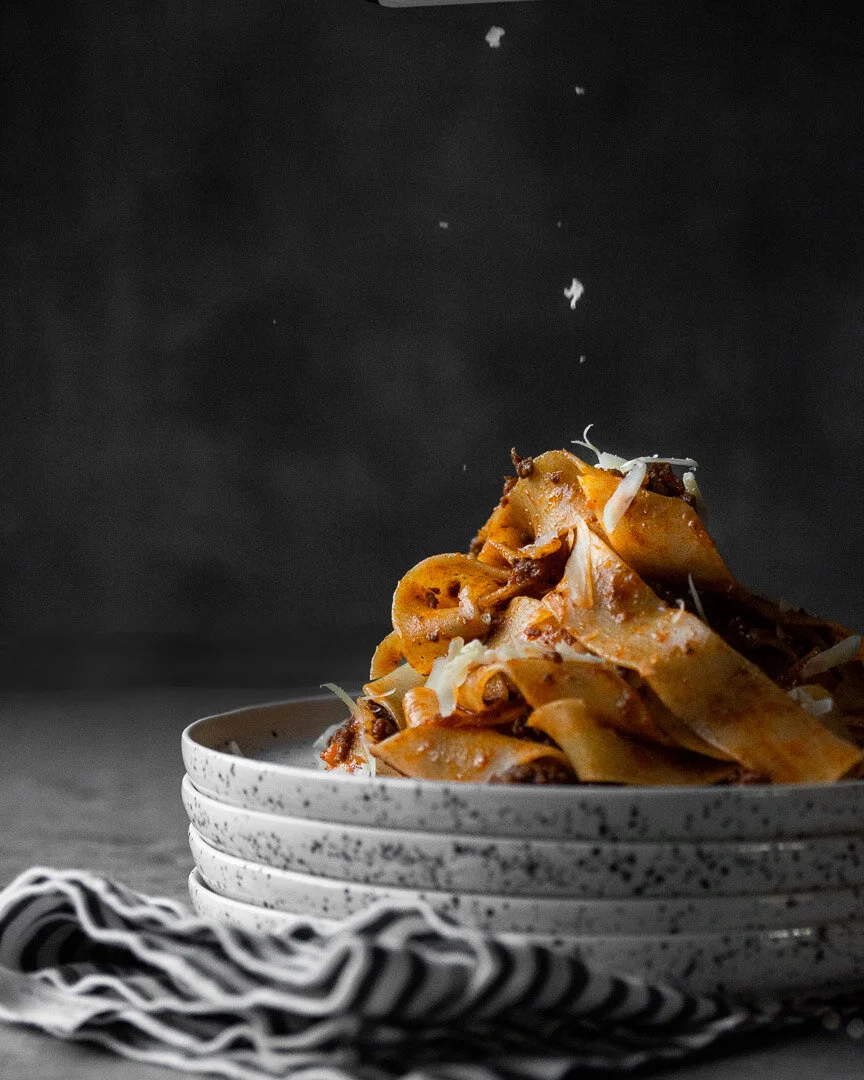
I love a great, long-simmered, deeply flavored, unctuous Bolognese more than almost anything. That falling apart meat with a hint of acidic tomatoes all clinging to some wide flat noodles with a sprinkle of salty, nutty parmesan? Swoon.
But realistically, we never have time to make one. Even during these quarantined weekends we need flexibility for when the children inevitably short circuit and need a change of scenery.
It’s hard to achieve that depth of flavor without the long, slow simmer, but I’ve tried! And I think succeeded! However, there’s a reason why I call this a “meat sauce” and not “Bolognese.” It’s not the original. But it is a delicious approximation in about an hour.

A couple of notes:
Use the leanest beef you can find. If you can’t get 90/10 or 85/15, use half of the amount of pork listed or leave it out entirely
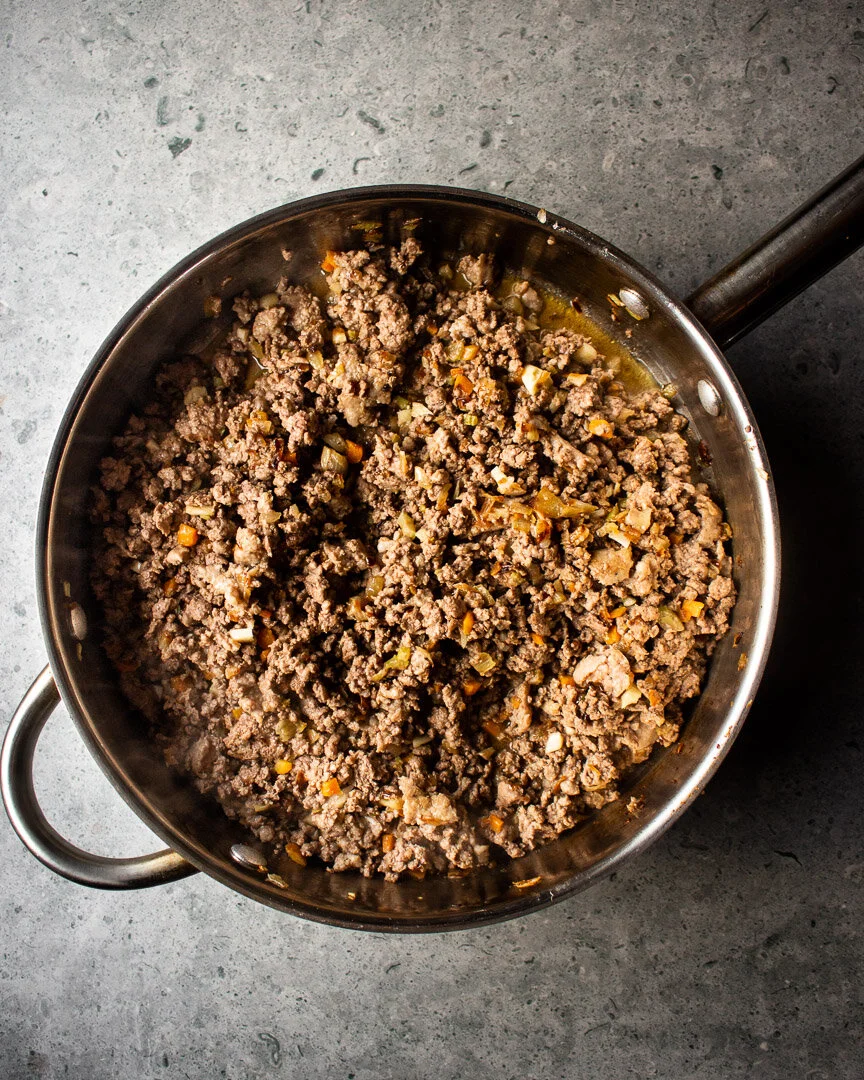
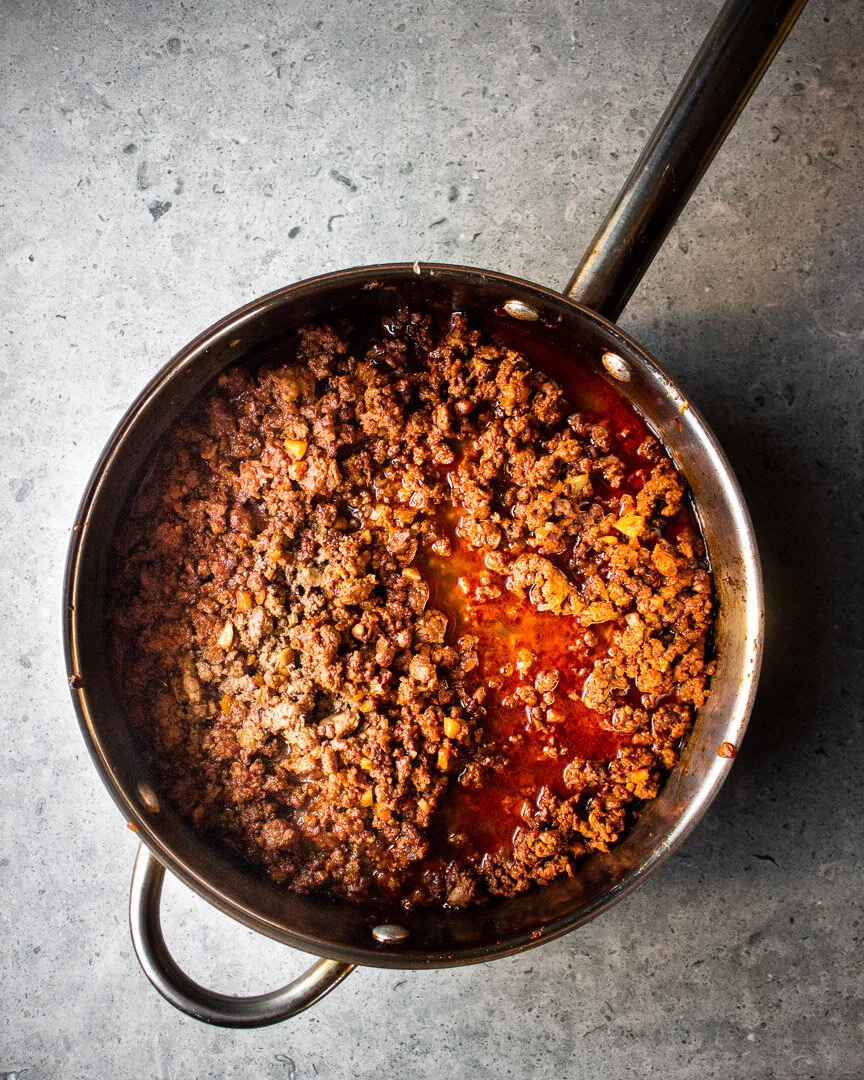
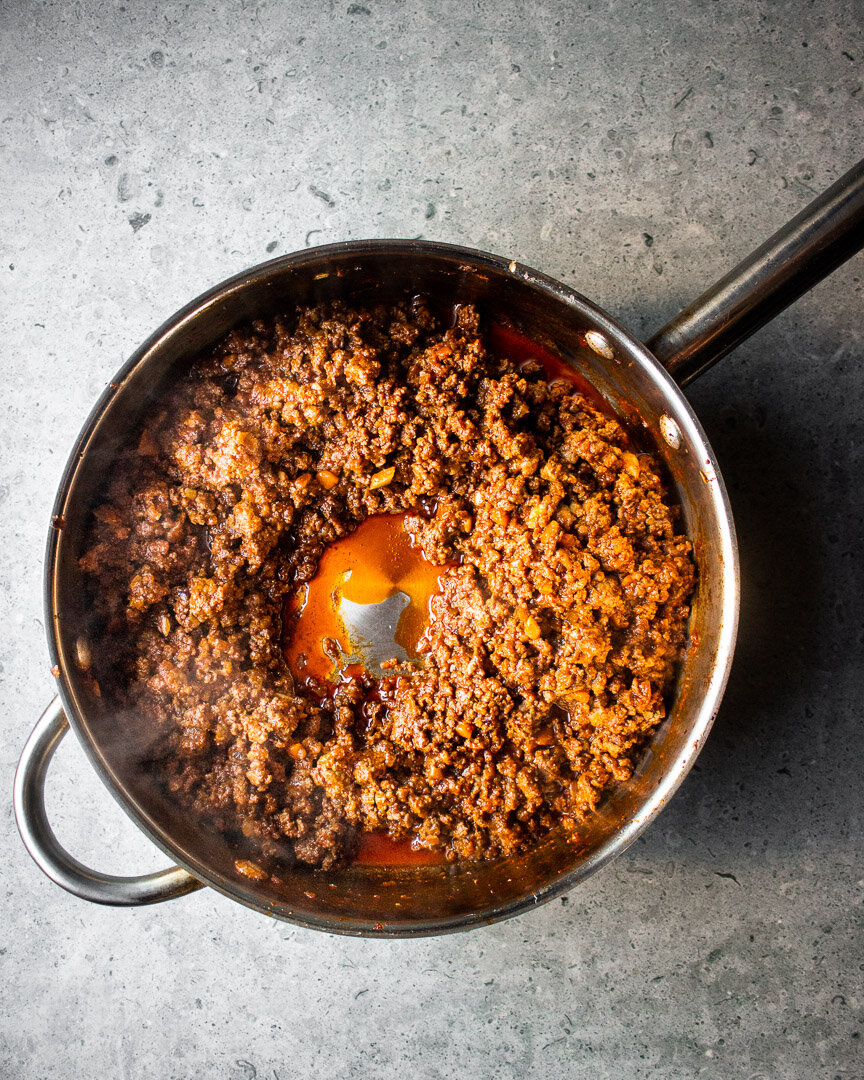
This recipe is meant to be made mostly at high temperatures, but you’ll need to keep an eye on the sauce at every step to ensure that the liquids are evaporating fast enough, but that nothing is burning. We want the heat to caramelize and brown everything, but we don’t want anything to burn and turn bitter. You may have to do a significant amount of fiddling with the temperature throughout the cooking to speed things up or slow them down at intervals.
I list a range of amount of the tomato paste. I like it less tomato-y, but my husband likes it with a little more. The largest amount (6 oz) is one small can of tomato paste.

Quick (ish) meat sauce
2 Tbsp olive oil
½ large onion, finely chopped (about 1 cup)
1 large stalk celery, finely minced (about ½ cup)
1 small carrot, finely minced (about ½ cup)
5 large garlic cloves, smashed
1 lb ground beef (90/10 if you can find it)
¼ lb ground pork or sausage, casings removed
1 tsp kosher salt
4-6 oz tomato paste (5-6½ tbsp)
¼ cup red wine
2 cups beef broth
Pepper to taste
Time: about 1 hour for the sauce and the pasta, mostly active
Yield: 3-4 cups of sauce, or enough for 1 lb of pasta
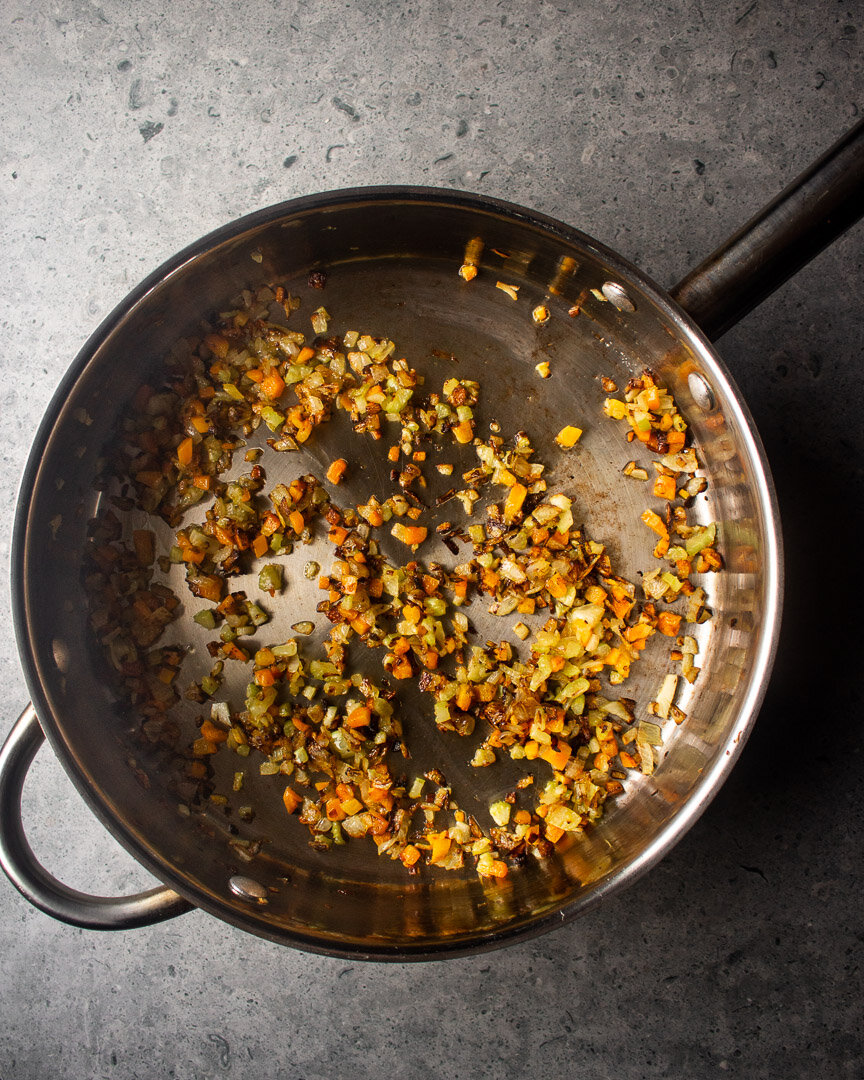
Heat a skillet over a medium flame. Add the oil and heat until the oil is shimmering and slips easily around the pan. Add the onion, celery, and carrots, and cook for about 10 minutes, stirring frequently, until the veggies soften and begin to brown.
Add the garlic. Cook until fragrant, 1-2 minutes, being careful not to burn.
Add the meat and turn the heat back up to medium if you turned it down earlier. Stir and chop up the meat with your spatula breaking it into small pieces while cooking until no pink remains, about 5 minutes.
Stop stirring and let the meat cook, undisturbed, until browned on the bottom, about 5 minutes. You should hear it sizzling and bubbling. If not, turn up the flame.
Add the tomato paste and wine and stir well to combine and deglaze the pan. Cook, stirring constantly, until the wine has evaporated, about 2 minutes.
Add 1½ cup of beef broth and cook, stirring often, until it has evaporated, about 8-10 minutes. If the liquid isn’t evaporating fast enough, turn up the flame.
Add the final ½ cup of broth, turn the heat all the way down, and cover. Let simmer on the lowest heat while you cook your pasta.
Bring your water to a boil and cook the pasta according to its package directions. Stir the sauce every few minutes while the pasta cooks.
Combine and serve.